
Digital Trust in 2026: Is Crime Check Australia Legit?

In the fast-moving professional world of 2026, employers now require a background check alongside the traditional resume.Whether you’re applying for a role in the booming tech sector of Melbourne or volunteering with a community group in Sydney, employers will likely ask you to provide a Nationally Coordinated Criminal History Check (NCCHC). With a dozen different websites popping up on page one of Google promising instant results, it is natural for a savvy candidate to pause and ask: is crime check australia legit? At Rapid Screening, we believe that skepticism is a vital part of digital literacy. In an era of deepfakes and sophisticated data phishing, handing over your Passport, Driver’s Licence, and Medicare details to a website should never be a click and hope situation. This guide helps you navigate the landscape of Australian police checks, decode accreditation jargon, and identify a trustworthy provider in 2026. Why Skepticism is Your Best Friend in 2026 The reason so many people search for is crime check australia legit often comes down to brand confusion. Crime Check Australia is a well-known name in the industry, but because there are so many similar sounding services; National Crime Check, Criminal Check Australia, Rapid Screening, the average user can feel overwhelmed. In 2026, scammers have become better at mimicking official government portals, making it harder to tell the difference between an accredited agency and a data-harvesting front. Legitimacy isn’t about having a professional-looking website; it’s about a direct, legal pipeline to the Australian Criminal Intelligence Commission (ACIC). If a company cannot prove they are an Accredited Body, then they are essentially a middleman with no legal authority to access your criminal record. The Gold Standard: ACIC Accreditation When you find yourself wondering is crime check australia legit, the first place you should look is the footer of the website. To operate legally in Australia, the Australian Criminal Intelligence Commission (ACIC) must accredit a screening provider. What Accreditation Actually Means ACIC accreditation isn’t a one and done certificate. It is a rigorous, ongoing commitment to data security and privacy. The National Police Checking Service (NPCS) entrusts an accredited body with direct access to police databases, allowing it to submit your details directly. How to Verify Accreditation Don’t just trust a logo on a homepage. In 2026, you can verify any provider by visiting the official ACIC website. They maintain a public list of accredited bodies. If a company such as Rapid Screening does not appear on that list, the regulator does not authorise it to handle your check. This is the most objective way to answer the question: is crime check australia legit? Red Flags of Non-Legit Screening Sites As you browse your options, keep an eye out for these danger zones that often signal a site is not operating with your best interests at heart. If you see these signs, you have a clear answer to whether that specific version of is crime check australia legit holds up. The Rapid Screening Difference: Trust Through Transparency At Rapid Screening, we’ve built our reputation on the 70/30 Rule. In 2026, technology allows for incredible speed, but legitimacy requires a human touch for the complicated bits. The 70%: The Instant Trust We return approximately 70% of checks within 1 to 2 hours. This happens because our system is directly linked to the ACIC. If a candidate has a unique name and no criminal history, the system automates the result. This high speed return is often what leads people to ask is crime check australia legit; because it feels too fast. In reality, it’s just efficient technology at work. The 30%: The Human Shield The remaining 30% of checks are referred to police agencies for manual vetting. This occurs if there is a name match or complex history. A legit provider doesn’t hide this; we provide you with a tracking dashboard so you can see exactly where your application is in the queue. Security in the Age of AI: Protecting Your 100 Points of ID When you provide your 100 points of ID, you are essentially handing over the keys to your identity. A legitimate provider treats this data with the same level of security as a major bank. 256-Bit Encryption and the Privacy Act Every application at Rapid Screening is protected by 256 bit encryption. We strictly adhere to the Australian Privacy Principles. This means that once your check is finalized, your sensitive documents are deleted from our active servers after a mandatory 90 day retention period required by the ACIC. If you are still asking is crime check australia legit, checking a company’s data retention policy is a great way to find the truth. Biometric Liveness Testing In 2026, the risk of identity theft is at an all time high. By using biometric liveness testing, we ensure that no one can steal your identity and perform a check in your name. This level of investment in security is a hallmark of a legitimate, high tier provider. Industry-Specific Requirements: NDIS, Healthcare, and Beyond Legitimacy is also about knowing which check you need. In 2026, one size fits all no longer applies. The NDIS vs. Standard Police Check A common point of confusion is whether a standard police check is sufficient for NDIS work. A legitimate provider will clarify that while an NCCHC is a vital part of the process, the NDIS Worker Screening Check is a separate, more specialized requirement managed by state based NDIS commissions. Corporate and Bulk Screening For businesses, the question isn’t just is crime check australia legit, but is it scalable? We provide centralized dashboards for HR managers to track hundreds of checks at once, ensuring that the company remains compliant without the administrative headache of manual filing. The Verdict: How to Hire and Apply with Confidence So, is crime check Australia legit? The answer is a resounding yes, provided they are ACIC accredited. However, legitimacy is the floor, not the ceiling. You should look for a provider that goes beyond legit and offers
Check My Crime History: A Proactive Guide to National Police Checks in 2026
The professional landscape of 2026 is faster, more transparent, and more digitally integrated than ever before. In a world where on demand is the standard, the hiring process has followed suit. Today, waiting weeks for a background clearance is a relic of the past. For many Australians, the first step toward a new career path isn’t just updating a resume, it’s the decision to proactively check my crime record to ensure their professional profile is as clean as their aspirations. At Rapid Screening, we’ve moved past the era of paperwork and post office queues. We understand that whether you are a volunteer, a healthcare professional, or a corporate executive, your criminal history is a sensitive piece of your professional identity. This guide explores the why and how of self screening in 2026, ensuring you have the clarity needed to navigate your next big opportunity with confidence. Why You Should check my crime Record Before Your Next Interview In 2026, many professionals are choosing to perform a self check before an employer even asks for one. Why the shift toward proactivity? It boils down to a single word: certainty. Avoiding Background Check Anxiety We’ve all been there, the nervous wait while an HR department runs a background check. Even if you believe your record is clear, there is always a lingering doubt about that forgotten traffic fine or a minor court matter from your university days. When you choose to check my crime history yourself through an accredited provider, you eliminate the fear of the unknown. You go into your interview knowing exactly what an employer will see. Correcting Potential Errors While the National Police Checking Service is highly accurate, data entry errors can occur. If an old matter that should have been spent still appears, it is much easier to resolve this on your own terms rather than explaining it to a recruiter during a high stakes onboarding process. Taking the time to check my crime profile early allows you to challenge discrepancies before they impact your employment. Understanding the Process: How to check my crime Record in 2026 The methodology for obtaining a National Police Check (or Nationally Coordinated Criminal History Check) has been revolutionized by biometric technology. In 2026, you don’t need a witness or a stamp; you just need a smartphone. The Digital Identity Revolution To check my crime history today, you utilize a Liveness test. This involves taking a quick selfie that our AI matches against your official ID documents. This ensures that only you can access your sensitive information, maintaining the highest levels of privacy and data security. Steps: How Rapid Screening Simplifies Your Check If you’ve decided it’s time to check my crime record for a specific role or just for peace of mind, our 2026 platform makes it a four-step process that you can complete while waiting for your morning coffee. 1. Data Entry and Purpose You’ll start by entering your personal details, including a full five year address history. You must also select the Purpose of your check. Whether it’s for General Employment or Working with Children, the purpose determines which spent convictions are legally allowed to be disclosed. 2. The 100 Point ID Verification To check my crime history legally, you must prove your identity. Our system guides you through the 100 point requirement. Document Category Points Examples Commencement 70 Australian Passport, Birth Certificate, ImmiCard. Primary 40 Australian Driver’s Licence, Marriage Certificate. Secondary 25 Medicare Card, Credit Card, Bank Statement. 3. Biometric Match Smile for the camera! Our 2026 biometric link ensures that the person holding the ID is the person making the request. This eliminates the need for physical signatures or Justice of the Peace verifications. 4. Fast Result Delivery Once the police agencies finalize the search, we send a secure link to your email. You can download your PDF certificate immediately and share it with potential employers or keep it for your personal records. What Information Will Show Up on My Certificate? A common question people ask when they decide to check my crime history is, What exactly will the police reveal? The information released on a certificate is called a Disclosable Court Outcome. Disclosable Court Outcomes (DCO) A DCO includes: Non-Disclosable Outcomes When you check my crime history, you generally won’t see: Why Rapid Screening is Australia’s Trusted Choice In 2026, the market is full of providers, but not all are created equal. When you choose to check my crime record with Rapid Screening, you aren’t just getting a PDF; you’re getting a service built on speed and Australian based support. Unmatched Speed We don’t believe in office hours. Our 24/7 automated system is directly linked to the ACIC. If your check is among the 70% that are processed instantly, you will have your result in as little as 120 minutes. Local Human Support While our tech is world class, our heart is local. If your application is referred for manual vetting and you’re worried about your check my crime status, our Melbourne based team is just a phone call away. We don’t use offshore call centers or frustrating AI chatbots; we provide real answers from real people. Managing Your Reputation: The Long Term View In 2026, your professional reputation is your most valuable asset. Just as you might monitor your credit score or your LinkedIn profile, the choice to check my crime history periodically is a wise one for anyone in a regulated industry. Periodic Renewals Many sectors, such as the NDIS and Aged Care, require a fresh check every 1 to 3 years. By staying on top of your renewals, you ensure that you are always work ready. Rapid Screening can even set up automated reminders for you, so you never have to worry about an expired clearance affecting your shifts. Global Opportunities Are you planning to work overseas? Most international employers or visa departments will require a background check. When you check my crime record through an accredited agency like ours, you receive a
Your Guide to National Crime Check Contact and Reliable Support
In the fast paced Australian job market of 2026, a background check is often the final bridge between you and your dream role. Whether you are entering the healthcare sector, finalizing a high-level corporate contract, or stepping into a volunteer position, the pressure to get your results quickly is real. However, the process isn’t always a straight line. Many applicants find themselves needing assistance midway through, leading them to search for a national crime check contact to resolve delays or clarify identity requirements. At Rapid Screening, we believe that transparency is just as important as speed. While we provide 70% of our results within one to two hours, we know that the other 30%, those referred for manual vetting, can be a source of anxiety. Understanding how to find a reliable national crime check contact and knowing what to expect during the screening process can turn a stressful wait into a manageable step in your career journey. Why People Search for a national crime check contact Applying for a police clearance in 2026 is a digital-first experience, but digital systems occasionally require human intervention. Most people searching for a national crime check contact are facing one of three common scenarios: 1. The Manual Referral Delay The National Police Checking Service (NPCS) is highly efficient, but it isn’t fully automated. About 30% of all checks are flagged for a manual referral. This happens when your name, date of birth, or gender matches a record in the national database. It does not mean you have a criminal record; it simply means a police officer must manually verify the data. 2. Identity Verification Errors The Document Verification Service (DVS) is the backbone of modern identity checks. If a passport photo is blurry or a middle name is missing from a driver’s licence scan, the system may halt the application. Finding a national crime check contact becomes the first priority for applicants who need to re-upload their ID or fix a typo in their address history. 3. Business Compliance Queries For HR managers and business owners, the need for a national crime check contact is often about integration. They may need help connecting their Applicant Tracking System (ATS) to a screening portal or setting up a bulk invoicing system for a large seasonal intake of staff. The 70/30 Rule: Understanding the Timeline To manage your expectations, it is vital to understand the 70/30 Rule that governs all ACIC-accredited bodies, including Rapid Screening and National Crime Check Pty Ltd. Instant vs. Manual Results If you are in the 30% bracket, your first instinct might be to find a national crime check contact number to speed things up. It is important to know that once police refer a check, no accredited body has the power to accelerate the police department’s internal vetting process. However, having a support team to confirm that your application is moving through the correct channels can provide significant peace of mind. How Rapid Screening Redefines Support and Communication While there are many providers in Australia, the difference often lies in the quality of the support team. When you are looking for a national crime check contact, you aren’t just looking for a phone number, you are looking for an expert who understands the nuances of Australian privacy law and police procedures. Local Australian-Based Support In 2026, many services will move to offshore call centres or AI-only chatbots. At Rapid Screening, we maintain an Australian-based support team. This ensures that when you reach out, you are speaking to someone who understands the difference between a Working with Children Check (WWCC) in Victoria and an NDIS Worker Screening in Queensland. Proactive Tracking Rather than making you hunt for a national crime check contact, our portal is designed to keep you informed. You can track your application in real time. If the police require more information or our system rejects your ID scan, our system sends an immediate alert via email and SMS, allowing you to resolve the issue without ever having to pick up the phone. The 100-Point ID Challenge: Getting it Right the First Time The most effective way to avoid needing a national crime check contact for troubleshooting is to ensure your identity documents are flawless. The 100 point ID check is a federal requirement that must be strictly followed. The Document Hierarchy To reach the 100 point threshold, you must provide a combination of documents: Tips for a Perfect ID Scan Business Solutions: When Your Organization Needs a Direct Line For companies, background screening is a high-volume necessity. If you are an HR professional, having a dedicated national crime check contact within your provider’s team is essential for maintaining your hiring pipeline. Integration and Dashboards Rapid Screening offers a business portal that allows you to: If your company is searching for a national crime check contact to discuss API integration, our technical team is available to help your IT department bridge the gap between your HR software and our secure screening gateway. Security and Compliance: Why the Provider Choice Matters In 2026, data security is the top priority. When you perform a police check, you are sharing your most sensitive personal information. It is crucial that the national crime check contact you choose belongs to an ACIC accredited body that follows strict security protocols. 256-Bit Encryption At Rapid Screening, all data is encrypted to the same standards used by major Australian banks. We use your ID documents solely for the purpose of the check and store them in a secure cloud environment that meets all Australian Privacy Principles. Conclusion: Transparency You Can Trust Navigating the compliance requirements of 2026 doesn’t have to be a solo mission. While the search for a national crime check contact often starts from a place of confusion or delay, it highlights the importance of choosing a provider that prioritizes human support alongside digital speed. At Rapid Screening, we aim to be more than just a certificate provider; we aim to be your compliance partner. By
Why Your National Crime Check Phone Number Matters?
In the fast-paced world of Australian recruitment and professional compliance, time is the most valuable currency. Whether you are an individual applying for a dream role or a business manager onboarding a fresh team, the background screening process is often the final hurdle before the start date. It is during this high stakes period that many applicants find themselves searching for a national crime check phone number. When an application status remains pending for longer than expected, or a technical glitch prevents the submission of identity documents, the need for immediate, human centric support becomes paramount. At Rapid Screening, we understand that while the digital revolution has made police checks faster than ever, it hasn’t eliminated the need for personal assistance. A national crime check phone number shouldn’t just lead to an automated recording; it should be a direct line to an expert who can resolve compliance issues in real time. In this guide, we’ll explore why having access to a responsive support team is critical and how Rapid Screening sets the standard for accessibility in the background checking industry. Why You Might Be Searching for a National Crime Check Phone Number Australian police agencies process most police checks without a hitch. However, the 20 to 30% of cases that require manual intervention often lead to anxiety and frustration. If you find yourself hunting for a national crime check phone number, it is likely due to one of the following scenarios. Tracking an Urgent Application For many, a police check is the final piece of the puzzle for a job application. When you need a result within 24 hours to secure a contract, the online portal’s status updates might feel insufficient. Applicants often look for a national crime check phone number to verify. If the police refer their check for manual vetting or if the government’s central processing system delays the process. Resolving Identity Verification (DVS) Issues The Document Verification Service (DVS) is the backbone of online identity checks in Australia. However, if you enter a driver’s licence number incorrectly or if a passport has recently expired, the system may reject the application. Speaking to a support specialist via a national crime check phone number allows for the manual review of these documents, often resolving a failed ID check in minutes rather than days. The Critical Role of Human Support in Background Screening The background screening industry is increasingly moving toward no touch automation. While this is great for speed, it can leave users stranded when things don’t go according to plan. This is where the value of a reliable national crime check phone number truly shines. Automated vs. Human Centric Support Many providers rely solely on email tickets or chatbots. While these tools can handle basic queries, they struggle with the nuances of Australian spent convictions law or complex identity discrepancies. We believe that when your career or your company’s compliance is on the line, you deserve to speak with a local expert based right here in Australia. Clarity in the Referral Process One of the most common reasons for calling a national crime check phone number is to understand why a check is taking 10 to 15 business days. This is usually due to a potential name match referral to the police. A knowledgeable support agent can explain that this is a standard legal requirement and provide a realistic timeframe, helping to manage the expectations of both the applicant and the employer. How to Avoid Common Pitfalls and the Need for Urgent Calls While we are always here to help, the smoothest police check is the one that doesn’t require a call to a national crime check phone number. Accuracy during the initial submission is the key to bypassing delays. Ensuring Data Accuracy A single typo in a middle name or a date of birth can trigger a manual review by the Australian Criminal Intelligence Commission (ACIC). Before hitting submit, double check that your details match your identity documents exactly. If you realize an error has been made after submission, calling our support team immediately can often allow us to correct the data before it enters the government queue. Choosing the Right Identity Documents To meet the 100 point ID requirement, you must provide a specific combination of Commencement, Primary, and Secondary documents. If you are unsure if your particular visa or birth certificate is valid, it’s better to check our online resources or use our national crime check phone number for clarification before completing the form. This proactive step prevents the application from being flagged or rejected later. Comparing Providers: The Support Factor When choosing a screening partner, price and speed are important, but accessibility is often overlooked until something goes wrong. A provider that obscures their national crime check phone number or makes it difficult to find contact details is often a red flag for poor customer service. Transparent Contact Channels Rapid Screening prides itself on transparency. Our contact details are clearly visible on every page of our website because we are confident in our ability to help. Whether you need a status update or have a question about a disclosable court outcome, we want you to reach out. The peace of mind that comes from knowing you can call and get an answer is what differentiates a premium service from a budget one. Local Expertise Matters Background checking is a regulated industry in Australia. When you call a support line, you want to speak with someone who understands the ACIC guidelines and the various State and Territory legislations. Our Australian based team is trained specifically in these areas, ensuring the advice you receive is both accurate and legally sound. Conclusion: A Partnership Based on Accessibility In the digital era, the measure of a great service is how it handles the exceptions. A national crime check phone number is more than just a sequence of digits; it is a gateway to certainty and professional support during a critical time in your career. Rapid Screening is
Taking Control: How to Check My Criminal Record in Australia
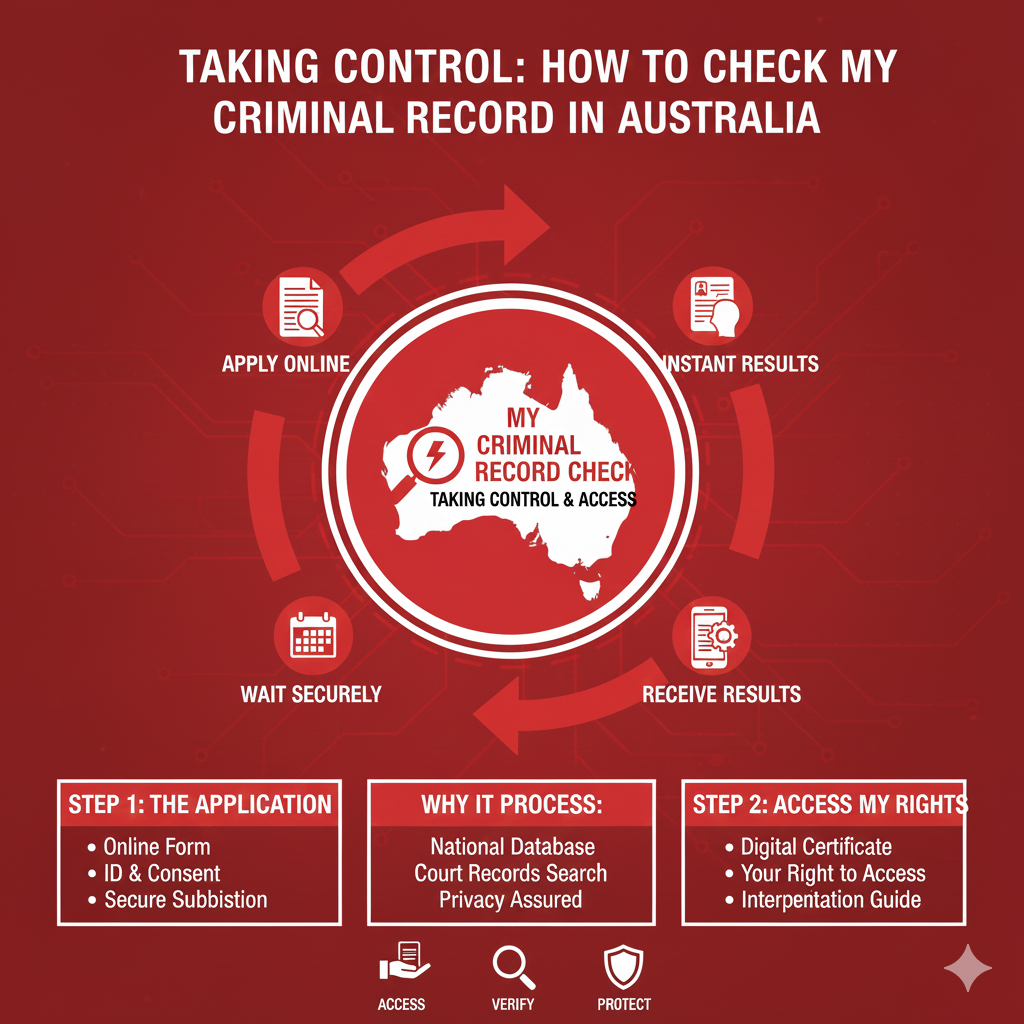
The Power of Proactivity Whether you’re starting a new job, volunteering, or simply seeking clarity on your personal history, knowing how to check my criminal record is a crucial step in taking control of your professional narrative. For Australian citizens and residents, this process has been simplified and digitised, allowing individuals to obtain their official document, the Nationally Coordinated Criminal History Check (NCCHC), quickly and securely. A personal police check provides you with the exact information that an employer, licensing body, or volunteer organisation would receive. This allows you to verify its accuracy, understand what the law allows to be disclosed, and prepare for any questions that may arise during the hiring process. As an ACIC accredited provider, Rapid Screening offers the fastest and most compliant way to achieve this essential compliance goal. Understanding the Official Document When you ask how to check my criminal record, you are referring to the Nationally Coordinated Criminal History Check, commonly known as a National Police Check or a police clearance certificate. The Single Source of Truth The NCCHC is a document sourced from the National Police Checking Service (NPCS), which is overseen by the Australian Criminal Intelligence Commission (ACIC). This system draws on police records from all state and territory jurisdictions in Australia. Who Can Conduct the Check? You have two primary options for obtaining your personal check: For speed and convenience, you should use an accredited online body for standard employment and personal checks. Step by Step: How to Check My Criminal Record Online An accredited provider like Rapid Screening has designed the online process to be completed in minutes. Step 1: Complete the Online Application You will need to visit the accredited provider’s website and fill out a secure application form. This involves providing: Step 2: Provide Informed Consent Legally, a police check cannot proceed without your explicit, informed consent. You must read and digitally sign a consent form that confirms you permit the submission of your personal information to the NPCS for verification and that you understand how the system will release any disclosable court outcomes. Step 3: Complete Digital Identity Verification (IDV) This is the most critical stage for security and speed. Instead of visiting a post office or having documents certified, you complete the 100 point identity check digitally. Step 4: Secure Submission and Tracking Once the system verifies your ID and processes the payment, it immediately submits the application electronically to ACIC for processing. You will receive an immediate confirmation and often a tracking number, allowing you to monitor the status of your check via the provider’s online portal. Understanding the Results: What Your Check Reveals The certificate you receive will detail your disclosable criminal history. It will show one of two primary outcomes: 1. No Disclosable Court Outcomes (NDCO) This means the search found no releasable criminal history. This includes applications where: For the vast majority of checks that result in an NDCO, the system returns the result very quickly, often within minutes to a few hours, demonstrating the speed of the digital process. 2. Disclosable Court Outcomes (DCO) This means the certificate lists one or more records that the law permits to be disclosed for the purpose stated on the application. A DCO can include current convictions, certain findings of guilt, or pending charges. If you receive a DCO, it’s vital to remember: The Shield of Spent Convictions Understanding how to check my criminal record involves knowing the protection provided by the Spent Convictions Schemes. These federal and state laws prevent the disclosure of minor offences committed long ago when the individual has demonstrated a crime free period. This is critical for rehabilitation and reintegration into the workforce. When You Might Need to Check My Criminal Record While many checks are employer initiated, obtaining your own check is valuable for several personal and professional reasons. Proactive Career Management In competitive hiring environments, having a current, personal police check ready to submit with an application can significantly speed up the hiring process and give you a competitive edge. It shows preparedness and eliminates the usual waiting period. Licensing and Accreditation Many professional bodies and trades require a personal police check as part of their licensing or accreditation process. This is common for: Peace of Mind and Verification A personal check is the only guaranteed way to know exactly what information police agencies hold against your name. If you have any uncertainty about old records, name matches, or compliance, a personal check provides the definitive answer. Conclusion: Confidence in Compliance Knowing how to check my criminal record is the first step toward responsible personal and career management. By utilising an ACIC-accredited online provider, you ensure you receive a legally valid, nationally recognised, and timely document. This proactive approach gives you the necessary confidence to apply for jobs, pursue licences, and manage your professional reputation effectively. Frequently Asked Questions (FAQs) Q) How long does it take to get my personal criminal record check? For the majority of applications, the result is typically returned within minutes to one business day of submission. If your check is referred for manual processing due to a potential name match, it can take longer, usually between 10 and 15 business days. Q) Does a personal check expire? There is no official expiry date, as the certificate is a record at the date of issue. However, most Australian organisations require the check to be current, meaning it was issued within the last three to six months to ensure the most recent history is covered. Q) Can I get an Australian criminal record check if I live overseas? Yes. As long as you can meet the 100-point identity check requirements using the accepted combination of Australian or foreign documents, you can apply for an Australian NCCHC through an ACIC-accredited online provider, regardless of where you currently reside. Q) Will a record from a Children’s Court appear on my check? Children’s Court convictions and findings of guilt can appear on an adult police check, subject
Certainty in Compliance: Role of the Criminal History Records Check
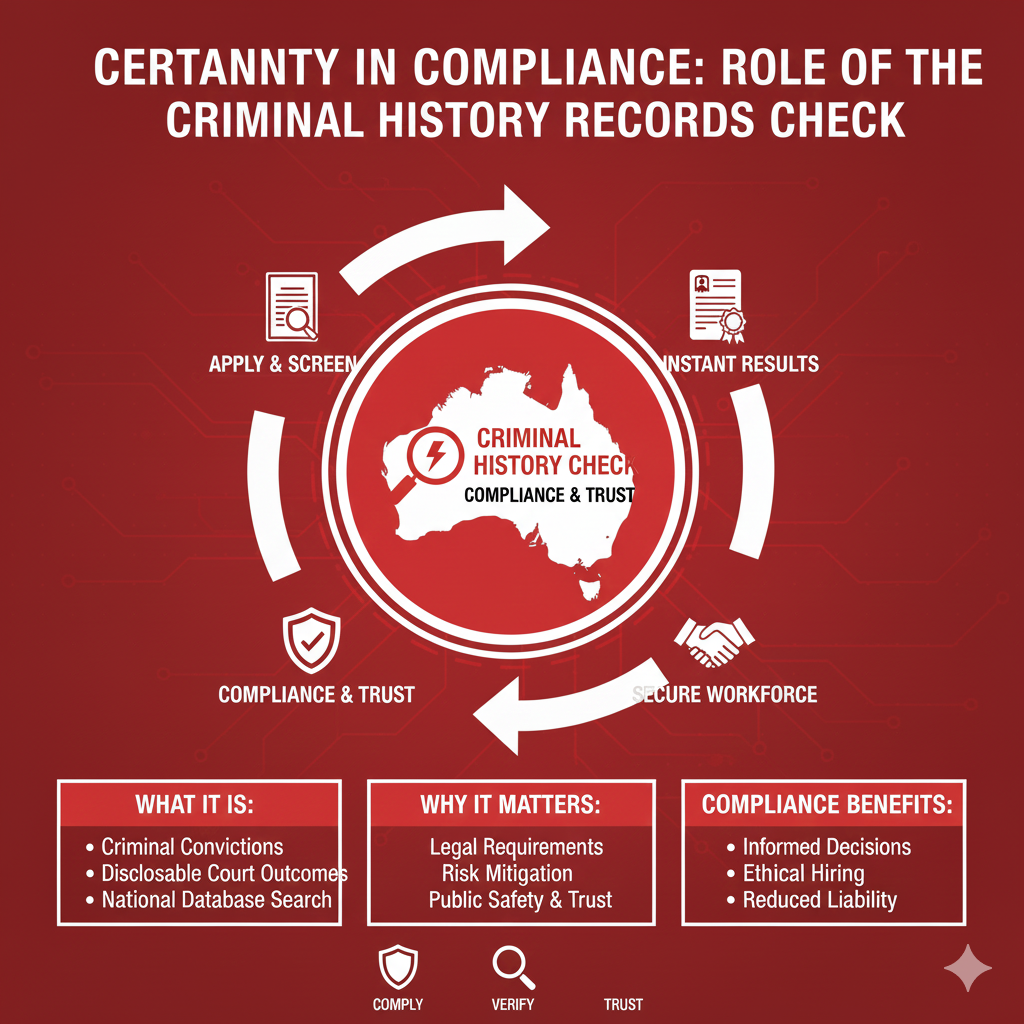
The Foundation of Australian Screening In Australia, the pursuit of a new job, a volunteer position, or professional licensing is often accompanied by a requirement for a Criminal History Records Check. This document, formally known as a Nationally Coordinated Criminal History Check (NCCHC) or often just a National Police Check, is an indispensable tool for organisations seeking to uphold safety, manage risk, and comply with regulatory standards. The good news is that obtaining a Criminal History Records Check has evolved from a slow, paper-based process into a fast, secure, and entirely online procedure. Rapid Screening, as an ACIC-accredited provider, simplifies this process, ensuring both individuals and employers receive fast, valid, and legally compliant results nationwide. Defining the Criminal History Records Check Before you apply, you need to understand the nature and scope of the document being requested. One Check, Many Names The official source of the check is the Australian Criminal Intelligence Commission (ACIC), which administers the National Police Checking Service (NPCS). The various names; Criminal History Records Check, National Police Check, or NCCHC, all refer to the same standardised document that details an individual’s disclosable court outcomes (DCOs) recorded across all Australian police jurisdictions. What the Check Discloses When authorities process a Criminal History Records Check, they produce a summary of the applicant’s disclosable criminal history up to the date of issue. This typically includes: Crucially, the law requires authorities to process the check in strict accordance with Australian legislation, including the relevant Spent Convictions Schemes, which filter out certain older, minor offences from disclosure. The Advantages of an Online Criminal History Records Check The transition to a fully digital platform has revolutionised the speed and accessibility of the screening process. Speed: Minutes, Not Weeks The most significant benefit of using an ACIC accredited online provider is the dramatic reduction in processing time. Security and Accuracy via Digital ID Verification To ensure the check is valid and reliable, identity verification must be stringent. Online providers have adopted advanced digital systems to meet the strict 100 point check requirement: The Process Explained: How Your Check is Conducted Understanding the official steps ensures clarity, especially when an application takes longer than expected. Step 1: Application and Consent The process begins with the applicant providing their personal details and, most importantly, their informed consent. A Criminal History Records Check cannot legally proceed without the explicit permission of the individual, outlining how the information will be used and disclosed. Step 2: Submission and Matching The accredited body verifies the applicant’s identity and electronically submits the details to the ACIC’s National Police Checking Service (NPCS). The NPCS system performs an automatic name-based search against the national police database. Step 3: The Referral Process (Manual Vetting) If the system finds a potential match between the applicant’s details and a database record, even due to a common name, it refers the check to the relevant police agency for manual processing. Step 4: Result Release Once the vetting process is complete, authorities release the final result, either NDCO or DCO, to the accredited provider, which then securely delivers it to the applicant and/or the requesting organisation. Legal Compliance: Spent Convictions and Filtering A critical factor that differentiates a Criminal History Records Check in Australia from similar checks in other countries is the application of conviction filtering. The Role of Spent Convictions Australian law uses Spent Convictions Schemes to support rehabilitation. When a conviction is minor and the required crime free waiting period has passed, the law treats that conviction as spent. The system must filter the conviction out of the final report for most employment and volunteer purposes. For an applicant, this means the Criminal History Records Check will show an NDCO, and they can legally state they have no criminal record. Exempt Roles and High-Risk Sectors It is important to note that the filtering rules have exceptions. Certain high risk roles, such as those involving children, aged care, or national security, are often legally exempt from the Spent Convictions Schemes. Conclusion: Confidence in Your Compliance The Criminal History Records Check is a necessary security measure that underlies trust in the Australian workforce and community. When you choose an ACIC accredited online provider, you ensure they handle this mandatory compliance step with maximum speed, security, and legal accuracy. Whether you are a job seeker looking for a swift result or an employer requiring robust risk management, the modern online check provides the certainty you need. Frequently Asked Questions (FAQs) Q) What is the difference between a Criminal History Records Check and a Working with Children Check? A Criminal History Records Check provides a national police check for general employment. State authorities manage a separate Working with Children Check that assesses an individual’s suitability to work with children and is often required in addition to the national check. Q) If I have a common name, will my check take longer? Your check is more likely to trigger a potential match, prompting authorities to refer it for manual processing. While the majority of these referrals quickly confirm that the record is not yours, the need for manual confirmation by police agencies does add to the processing time, typically extending it to 10 to 15 business days. Q) How long is the certificate considered valid? A Criminal History Records Check is a record at the date of issue and has no official expiry date. However, most Australian organisations require a current check, which typically means they accept only certificates issued within the last three to six months of an employment or licensing application. Q) Can I get an overseas Criminal History Records Check through Rapid Screening? Rapid Screening specialises in the Australian Nationally Coordinated Criminal History Check. For roles that require checks from countries outside of Australia, you would need to contact the relevant national police authority or use a specialised international screening agency.
Mastering the National Crime Check Australia Online
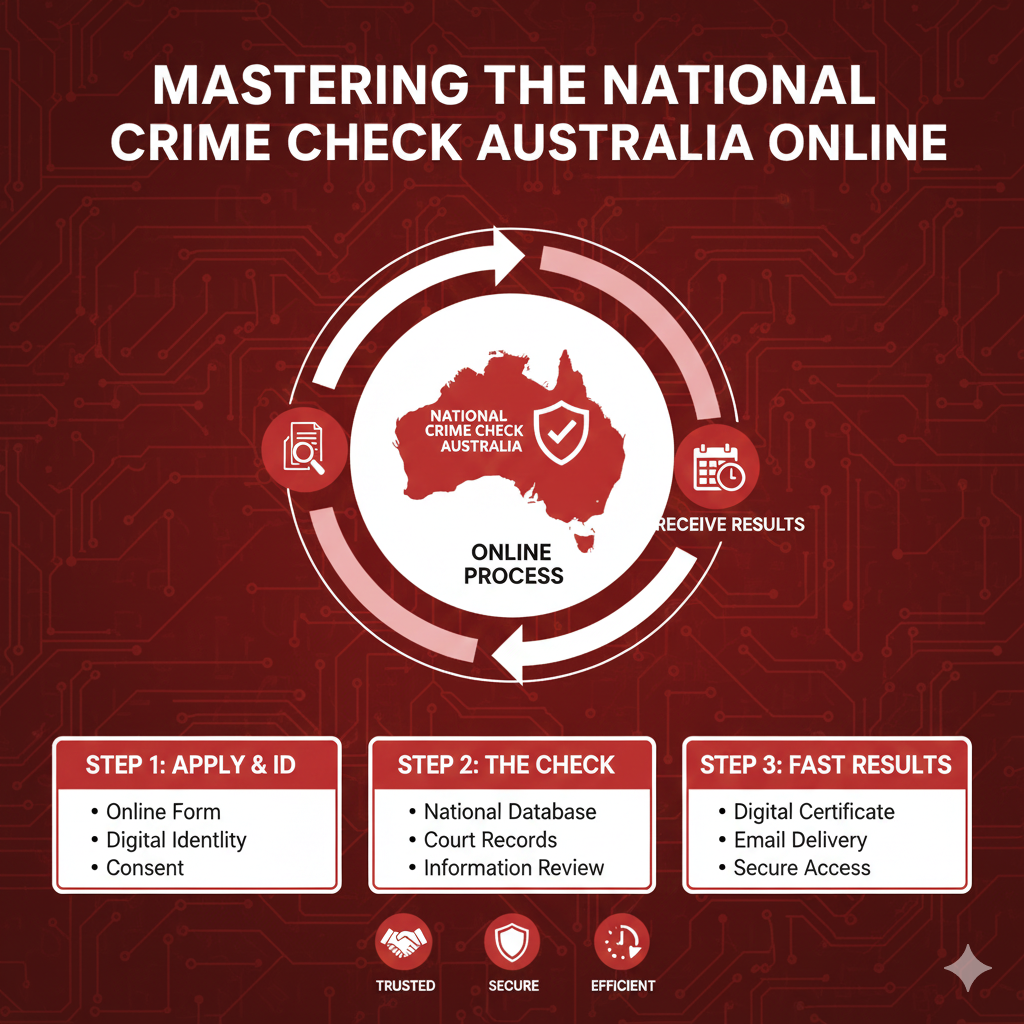
Why the Check is Essential In Australia, the pursuit of new employment, volunteer work, or specific professional licensing almost always requires a National Crime Check Australia, officially known as a Nationally Coordinated Criminal History Check (NCCHC) or National Police Check (NPC). This document is the cornerstone of trust and safety across many sectors. While the term National Crime Check Australia is widely used, it all points to the same official document, a record the Australian Criminal Intelligence Commission (ACIC) compiles to summarise an individual’s disclosable criminal history from all state and territory police jurisdictions. ACIC-accredited online providers like Rapid Screening have fully digitised the process of obtaining this critical certificate, offering an unprecedented level of speed and convenience. Defining the Document: The National Crime Check Australia It’s important to clarify the terminology often used interchangeably in Australia to refer to this mandatory document. The Various Names, The Single Source The names you might encounter include: Regardless of the term, the information is sourced from the same central system: the National Police Checking Service (NPCS), administered by the Australian Criminal Intelligence Commission (ACIC). This central control ensures that all authorities across Australia recognise the final document and that it complies with Australian law. Choosing an ACIC-accredited provider is the only way to guarantee the validity. What Information is Disclosed? A National Crime Check Australia report provides a snapshot of an individual’s disclosable criminal history up to the date of issue. This can include: Crucially, the check applies relevant state and federal legislation, such as the Spent Convictions Schemes, and releases only the information that the law permits on the final certificate. The Superiority of the Online Process The modern method of securing your National Crime Check Australia through an accredited online provider offers clear advantages over traditional paper-based systems. 1. Unmatched Speed and Efficiency For a vast majority of applicants, the online process dramatically reduces turnaround time. This speed allows the system to handle your compliance efficiently, enabling you or your new employee to focus on the role instead of waiting in administrative limbo. 2. Secure Digital Identity Verification The online application for a National Crime Check Australia replaces the need for in-person document viewing with advanced, encrypted digital verification systems. 3. Transparent Status Tracking Unlike paper based applications that disappear into a black box, a National Crime Check Australia submitted online allows applicants and employers to monitor progress via a secure online dashboard, providing full transparency and managing expectations throughout the process. Common Scenarios for Needing a National Crime Check Australia The versatility and necessity of this document mean it is required for a broad range of life and career events. Employment and Professional Licensing The primary driver for seeking a National Crime Check Australia is employment suitability. Most organisations, particularly those in regulated sectors, mandate it as part of their risk management strategy. This is particularly true for: Having an official check ready to go demonstrates professionalism and readiness to employers. Volunteer and Community Roles Many community and non-profit organisations, particularly those that receive government funding or work with sensitive groups, require volunteers to obtain a National Crime Check Australia. Often, a subsidised or reduced-fee volunteer check is available for this specific purpose, acknowledging the valuable contribution of volunteers to the community. Visa and Immigration Requirements While the Australian Federal Police is the specific body for Australian visa and immigration police checks, understanding the nature of the National Crime Check Australia is vital. The core information pulled for both checks originates from the same national police database, confirming the individual’s history for administrative and governmental purposes. Addressing Processing Times: The Referral Process While the online system is fast for most, it’s essential to understand why some National Crime Check Australia applications take longer. The Potential Match Referral The ACIC system refers approximately 30% of all checks to one or more police agencies for manual processing. This happens when the applicant’s name and details generate a ‘potential match’ with a record in the national database. Reasons for referral include: ff This process can take 10 to 15 business days or occasionally longer, depending on the complexity and the workload of the relevant police agency. Crucially, the online submission method does not avoid this manual referral, but it ensures the check enters the queue immediately. Conclusion The National Crime Check Australia is a cornerstone of compliance and safety. By choosing an ACIC-accredited online provider like Rapid Screening, you are opting for the most efficient, secure, and transparent pathway to obtaining this crucial document. The online application method provides the speed necessary for today’s fast-paced job market, delivering results in minutes for the majority of applications while maintaining the highest levels of security and legal compliance. Secure your National Crime Check Australia online today and move forward with confidence in your career or compliance requirements. Frequently Asked Questions (FAQs) Q) How is a National Crime Check Australia different from a Working with Children Check (WWCC)? A National Crime Check Australia (NCCHC) is a national document that lists disclosable court outcomes for all purposes. A Working with Children Check (WWCC) is a separate, state-based clearance that specifically assesses an individual’s suitability to work with children. You will often need both if you work in a school or childcare environment. Q) Will a minor, old offence appear on my National Crime Check Australia? If the offence meets the criteria of the relevant Spent Convictions Scheme, the system will legally filter it and will not show it on your check. The law requires accredited providers to apply these filtering rules to protect your privacy and support rehabilitation. Q) If my application is referred for manual checking, can I speed it up? Unfortunately, no. Once an application is referred to a police agency for manual vetting, neither the accredited provider nor the applicant can legally intervene to speed up the process. This manual check is mandatory to ensure accuracy and compliance. The best approach is to submit your application as early as possible. Q) Does
The Essential Guide to How and Why You Should Check Crime Record in Australia

In today’s environment, trust, safety, and compliance are paramount for Australian businesses and community organisations. Whether you are an employer making a crucial hiring decision, a licensing body verifying an applicant, or an individual seeking employment or volunteer work, the need for accurate background screening has never been greater. A fundamental step in this process is to secure a comprehensive criminal history check. Understanding the complexity of legal requirements and police databases can be daunting. This is where a trusted, accredited provider becomes invaluable. If your goal is to efficiently and reliably check crime record for yourself or your candidates, you need a service that adheres to the strict guidelines set out by the Australian government. A reliable check ensures you have the necessary information to maintain a safe, compliant, and trustworthy environment. Understanding the Australian Criminal Record Check A criminal record check, often referred to as a National Police Check (NPC), is a nationwide process that verifies if an individual has any disclosable court outcomes or pending charges in Australia. It is a mandatory requirement for millions of roles across the country annually, forming the bedrock of many employment, licensing, and accreditation decisions. What is a National Police Check (NPC)? The NPC is a name and date of birth police check, conducted by searching the centralised databases of all Australian police agencies. The process is coordinated through the Australian Criminal Intelligence Commission (ACIC). When a check is submitted, ACIC coordinates with police forces across all states and territories (including the Australian Federal Police) to search for potential matches against an applicant’s details. It is crucial to understand that a National Police Check is not a real-time check. It reflects the individual’s police history up to the date of issue. The system compiles the search results into an official certificate that details any Disclosable Court Outcomes (DCOs) in line with the relevant spent conviction legislation. The Importance of a Reliable Check Crime Record Service You can apply for an NPC directly through some state police agencies, but an ACIC-accredited body such as Rapid Screening almost always provides the fastest and most efficient route. These accredited agencies use direct electronic access to the ACIC system, ensuring they process applications quickly and accurately. Choosing a reliable service to check crime record offers several key advantages: The Official Process to Check Crime Record The NPC application process follows strict standards to maintain integrity and security, but an accredited provider significantly simplifies the journey. Following the correct steps is vital to ensure the check is valid and accepted by the requesting organisation. Applying Through Accredited Bodies (Like Rapid Screening) To check a crime record quickly and compliantly, the system streamlines the process into three main stages: application, identity verification, and police processing. Information Required for the Check Crime Record A complete and accurate submission is essential for a fast result. Applicants are typically required to supply: If you omit or enter incorrect information, you may trigger a manual review and experience significant delays. Processing Time and Verification One of the most common questions is, “How long does it take?” The timeframe can vary, but using an accredited online service offers the highest chance of a rapid result. Step Detail Timeframe (Approx) 1. Application Submission Applicant completes online form and pays the fee. 5-10 minutes 2. Identity Verification 100-point digital ID check completed and verified. Immediate to 1 hour 3. Police Database Search ACIC submission and automated/manual database comparison. 70% of checks are instant (cleared) 4. Manual Review (If Required) Checks that find a potential match or require clarity are manually reviewed by police. 1-15 business days (or longer in rare complex cases) 5. Certificate Issuance The official digital certificate is issued to the applicant. Upon clearance Most checks are processed almost instantly, but the 30% that require manual police review can take up to several weeks, which highlights why you must submit accurate application data the first time. What Information is Revealed on a Criminal Record Check? The goal of the NPC is not to present an applicant’s entire history, but rather to reveal only the relevant, disclosable information according to state and federal legislation. Disclosable Court Outcomes (DCOs) vs. Non-Disclosable Information The certificate will list Disclosable Court Outcomes (DCOs), which typically include: Critically, the certificate will not typically include: Spent Convictions Schemes The Spent Convictions Schemes operate at both the Commonwealth (Federal) and State/Territory levels. These schemes exist to give individuals with older, minor criminal records a second chance by limiting the disclosure of certain offences after a specified “crime-free” period (usually 10 years for an adult and 5 years for a juvenile). If a conviction becomes “spent,” the police agencies generally do not release it on the NPC. They only release it when the check is for a specific, sensitive role (such as working with children, vulnerable people, or in law enforcement) where exemptions apply. The police agencies automatically apply the rules of the Spent Convictions Scheme before they issue the certificate. Who Needs to Check Crime Record? The requirement to obtain a police check touches nearly every industry and community sector in Australia. Organisations committed to due diligence use it as a key risk management tool. Employment Screening Many industries require their employees, contractors, and volunteers to successfully check crime record as a condition of engagement. This is particularly prevalent in sectors that involve a high degree of public trust or access to sensitive information or vulnerable populations, including: Volunteer and Community Roles Checks are also vital for community safety. Organisations involved in sports, youth programs, and community services routinely require checks to ensure the safety of participants, particularly children and vulnerable adults. While a dedicated Working with Children Check (WWCC) is mandatory in these areas, an NPC often serves as a primary layer of screening. Licensing and Regulatory Requirements Many professional licenses and regulatory accreditations depend on a clear criminal history. This includes: Common Misconceptions About Checking Crime Records Navigating the landscape of criminal history checks can lead to
Your Essential Guide: Mastering the Check Police Process in Australia
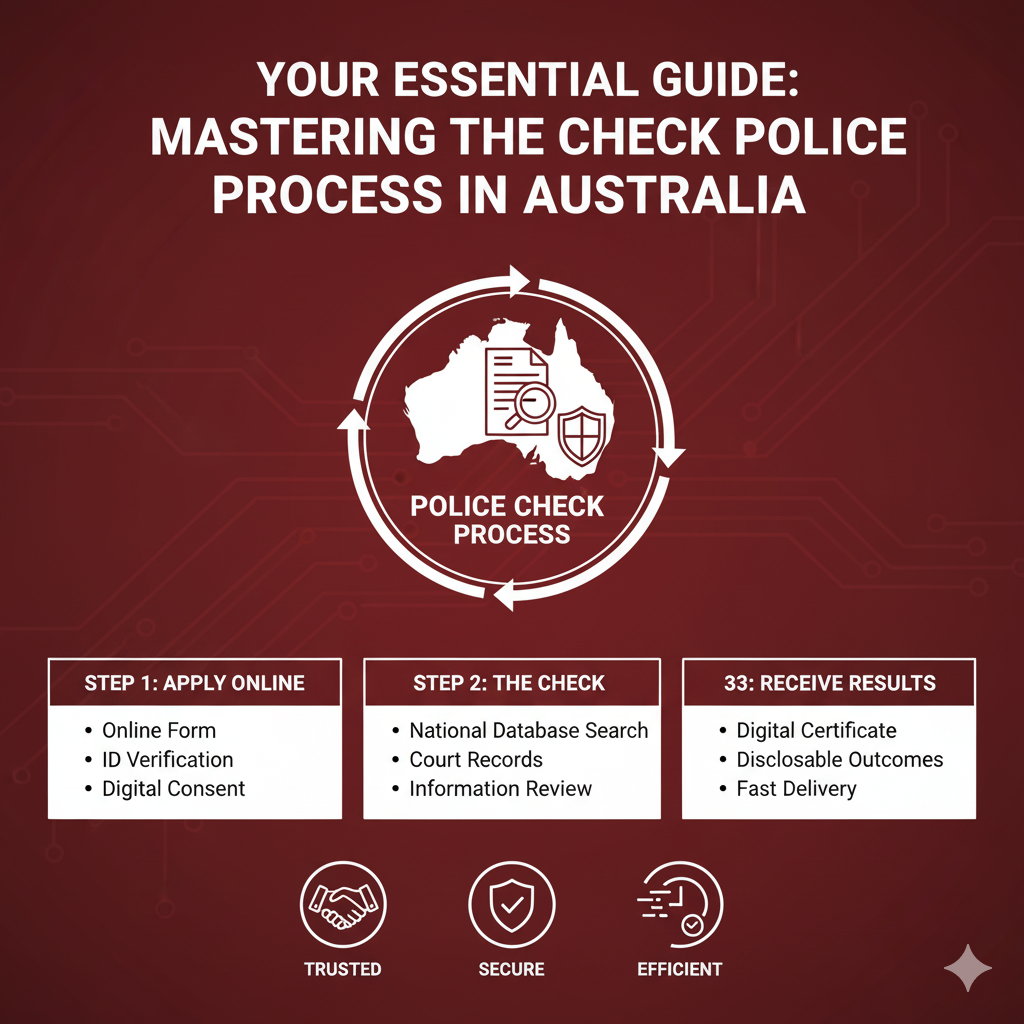
In the Australian job market, employers, volunteer organisations, and licensing bodies almost universally require one document: the National Police Check (NPC), often simply referred to as a police check. This document is your official clearance, confirming your suitability for a position of trust. While the process of obtaining this clearance can seem complicated, choosing an ACIC-accredited provider like Rapid Screening transforms the experience. We offer the fastest route to compliance, delivering 70% of all check police results within just 2 to 4 hours of application. This comprehensive guide will demystify the check police process, clarify its purpose, explain the different results, and show you exactly how to get your certificate quickly and securely. Check Police Basics: What Is the National Police Check? The official name for the check police is the Nationally Coordinated Criminal History Check (NCCHC). It is a national-level search that draws information from the databases of all Australian police agencies across every State and Territory. The Purpose of the Check Police The primary purpose of the check police is to verify a person’s identity and criminal history at a specific point in time. This information is vital for organizations to fulfill their duty of care, ensure public safety, and maintain the integrity of their workforce. Sector Why the Check Police is Essential Aged Care/Childcare Mandatory to protect vulnerable persons from individuals with relevant records of violence or abuse. Finance/Banking Essential to prevent financial crime and fraud by screening individuals with records of dishonesty. Government/Public Sector Required for all roles involving public trust, sensitive information, or security clearances. Volunteering Ensures the safety and suitability of individuals engaging with community groups and events. ACIC Accreditation and Validity The entire system is managed and overseen by the Australian Criminal Intelligence Commission (ACIC). When you apply through Rapid Screening, an ACIC-accredited body, you are guaranteed: Speed and Processing: How Long Does a Police Check Take? The question of how long does a police check take is central to the hiring process. The answer hinges entirely on the processing method. Rapid Screening: 70% of Checks in 2 to 4 Hours We utilize a direct electronic link to the ACIC system, ensuring the fastest possible submission and digital delivery. Common Reasons for Manual Vetting Delays A manual referral does not indicate a criminal record; it simply requires human verification. This occurs due to: Understanding the Results: DCOs and Spent Convictions When you receive your check police certificate, it will state one of two outcomes. Police agencies legally permit a DCO to be released as the criminal information on your certificate. Disclosable Court Outcomes (DCOs) The police make the decision on what to disclose, carefully applying State and Commonwealth legislation. The Spent Convictions Scheme The Spent Convictions Scheme protects Australians by preventing most police certificates from disclosing older, minor offences. Conviction Status Disclosure Rule Spent Not disclosed for general employment checks, promoting rehabilitation. Exempt Always disclosed for specific high-risk roles (e.g., Working with Children Check), overriding the Spent Convictions law. If a conviction meets the criteria (e.g., a 10-year crime-free period for minor adult offences), the law treats it as non-existent for most employment applications. Conclusion: Get Your Check Police Quickly and Securely The check police process is a fundamental step in ensuring trust and safety in the Australian workplace. By choosing an ACIC-accredited provider like Rapid Screening, you secure a fully compliant Nationally Coordinated Criminal History Check while benefiting from the fastest available turnaround time. Don’t let waiting slow down your career. Start your secure, instant application today and join the 70% who receive their check police result in 2 to 4 hours. Frequently Asked Questions (FAQs) Q1) If my application is delayed (the 30%), can I speed it up? Once the applicant refers an application for manual review, Australian police agencies control the process, and no provider can expedite the legal vetting process. You must wait for the police to complete their necessary investigation. Q2) Does the check police include my overseas criminal history? No. It only covers criminal history records held by Australian police agencies. If you have lived or worked overseas, your employer may require a separate International Criminal History Check (ICHC).
Cybersecurity Breaches: Protect Your Business Today

Cybersecurity and breaches are enormously crucial in a greatly operational modern age that virtually relies on digital settings. Rapid technological innovations and the mounting level of intricacy of digital settings have served to assure a dire need for robust ways to defend sensitive information. Methods of acquiring proper cyber security strategies and their implementation are very significant towards the safety of personal and organizational databases. What is Cyber Security? Cybersecurity, in simple terms, refers to the protection of these systems, networks, and data through visibility and traceability. It offers them protection from damage, theft, or unauthorized access. More accurately, cybersecurity borders on a pretty wide collection of technologies, processes, and practices in information integrity, confidentiality, and availability. As nearly everything nowadays is becoming digitized, requirements to ensure that general measures of cybersecurity are in place become tighter and tighter. The important parts of cyber security involve: Firewall This refers to a boundary of trusted and untrusted networks with devices or a collection of devices configured to disallow unauthorized access to or from the network. Encryption This is the process by which data is altered into a form that assures secure delivery of information in such a way that even if another person accesses it, he or she will not be in a position to understand it. Intrusion Detection Systems (IDS): This form of system can monitor network activities that are suspicious and may be perceived as a threat. Regular Security Updates These are updates performed on the system to protect against known vulnerabilities. Effective cybersecurity strategies will make sure to fight against a variety of threats and vulnerabilities. It is called multi-layer protection, hence minimizing the risks of having sensitive information disclosed. Considering a career where compliance matters? Explore NDIS police check requirements and how they relate to cybersecurity in the care sector. Course in Cyber Security Every person who wishes to learn and have experience on the field in their career is taught with a course of cybersecurity. Courses provide knowledge and practical skills that help in what would have otherwise been the very challenging world of cybersecurity. They include the fields of Network Security, safeguarding network infrastructure against attacks. Ethical Hacking a set comprising the process of scanning, manipulating system vulnerabilities for the betterment of system security. Risk Management including risk assessment and possibly examples of actions associated with digital assets. Cybersecurity and breaches courses often have labs and simulations, thus allowing a student to put his theoretical knowledge into practice. Almost all of these courses normally lead to certifications, hence increasing employability in the competitive cybersecurity job market. Cybersecurity Jobs Cyber security jobs have been so demanding over time, and one never fails to get a job at the end of their studies. The common roles for them include: Security Analyst: A security incident monitoring job responsible for responding and having countermeasures in place in regard to the protection of data and systems. Ethical Hacker A professional who should conduct authorized penetration testing against an organization to identify the weaknesses of the organization’s security to protect the organization before its weaknesses are ever known by other than unauthorized entities. Information Security Manager The person responsible for the design of security policies and procedures that will safeguard organizational assets and comply with set regulatory standards. All these jobs require a rigorous understanding of the concepts of cybersecurity and breaches and also ask the individual to keep himself updated with the new threats and upcoming technologies. In general, this is what makes working on cyber security careers very rewarding because one is working on the digital frontier. Our business police check services make employee vetting simple and secure. Cyber Security Breaches Even the most thought out measures of cyber security have breaches quite highly possible. The incidents about gaining access to confidential information have been termed as cybersecurity breaches. Quite often, lost data and financial losses follow and finally lead to reputational damage. Common types of cyber security breaches are: Phishing Attacks: Fraudulent activities veiled under efforts to retrieve sensitive information from people. Much of the time, this would contain totally professional-looking emails or texts that may go with the sole aim of trying to dupe the target into revealing personal information. Ransomware A class of malware that encrypts a victim’s computer information with the motive of extorting their money for a decoding key. An attack with ransomware may slow down all your operations and may result in colossal financial losses. With that consideration in mind, therefore, the organization should develop and put in place effective mechanisms of cyber security that make sure that breaches are detected and blocked. An essential part of vetting staff who handle sensitive data is to know about the cost of a police check in Australia. Cyber Security NSW Cyber Security NSW allows for participation in building a safe digital environment as part of the overall concerted efforts that Australia is already undertaking. The New South Wales government itself has participated in several initiatives and frameworks of better cyber-secure environment building within the state. Some of these include: Public Awareness Campaigns This will be relevant in distributing feed and information on the best practices to undertake regarding Cyber Security and breaches and the dangers it holds. This will create awareness of a secure online behavioral practice. Regulatory Steps Formulation of rules and regulations that will guide the operations concerning the needs of Cyber Security and breaches in both the private and public sectors will allow for conformed policy on securing the digital environment in most sectors. Support Programs They avail the resources and offer support to the businesses to ensure that they meet their goals; having a better cyber security status. Findings will give the way forward on how best practice can be implemented and on how to handle the different security issues. NSW Cyber Security Initiatives The New South Wales State Government addresses cybersecurity and breaches through the following main initiatives, which we will now highlight: Cyber Security Strategy An integrated strategy