
Are Police Checks for Healthcare Workers Essential?

The importance of safety and trust in the healthcare sector cannot be emphasized. Whether you’re hiring nurses, doctors, medical assistance personnel, one of the most important aspects of the hiring process is the health care police check. However, is it required by law? Or just a proposed best practice? This lesson covers the importance of police checks, whether they are mandatory or optional for Australian healthcare workers, and how they protect patients, staff, and healthcare providers. What Is a Healthcare Police Check? A healthcare police check is one type of Nationally Coordinated Criminal History Check that searches for criminal crimes that are disclosable, such as past convictions, court appearances, and current charges. On behalf of the Australian Criminal Intelligence Commission (ACIC), these investigations are managed by accredited agencies such as Rapid Screening. This check is typically required for: Making sure the patient is safe is the main objective, especially for vulnerable groups including children, the elderly, and those with disabilities. Is a Healthcare Police Check Mandatory? In fact, in most healthcare settings, a healthcare police check is required. Due to a number of laws, industry-specific regulations, and company policies, all healthcare personnel are required to submit to a police check before starting work and often on a continuing basis. Key Legal Requirements Include: Why Healthcare Police Checks Are Essential 1. Protecting Vulnerable People Patients who are weak physically or mentally are frequently around medical professionals. A healthcare police check helps make sure that these employees don’t endanger the safety and well-being of the people they are responsible for. 2. Risk Mitigation for Employers Healthcare organizations run a serious danger of financial fraud, abuse, and negligence when they hire someone without doing a complete background check. The first line of defense in risk management procedures is a police check. 3. Building Public Trust The healthcare industry depends heavily on trust. Patients want to know whether the caregivers have undergone screening and approval. By demonstrating professionalism and a commitment to safety, requiring police inspections enhances an institution’s reputation. When Should These Checks Be Conducted? Instead of being an afterthought, police checks ought to be included into every stage of the recruiting process. The candidate must submit and pass a recent police check before beginning work. What’s Included in a Healthcare Police Check? It provides a thorough summary of an individual’s criminal history in every Australian state and territory. The following results might become apparent: The level of disclosure will depend on the nature of the function and any exemptions or legal protections, like the Spent Convictions Scheme. Who Needs a Police Check in the Healthcare Sector? A police check is necessary for many jobs in the healthcare sector in order to safeguard the security and confidence of both patients and staff. Organizations closely examine not only medical personnel but also administrative and support staff. The following roles require a healthcare police check: How to Get Obtaining a health care police check can be simple when you work with Rapid Screening, an ACIC-accredited company. Steps: A trustworthy provider will complete your check quickly, securely, and in full compliance with Australian privacy regulations. If you want to know more then contact us. What Happens if a Record Is Found? If a criminal record is discovered during an applicant’s police check, firms have to decide if it is significant to the role. Employers must connect their responsibility of care with equitable hiring procedures and prevent unlawful harassment based on irrelevant records. Why Choose Rapid Screening for Healthcare Police Checks? Rapid Screening is one of Australia’s most credible and reliable background check organizations, especially for the medical industry. We commit to delivering a smooth, secure, and fully legal screening process tailored to your needs, recognizing the unique compliance requirements healthcare professionals face. Physicians, nurses, and healthcare organizations nationwide make use of rapid screening for the following reasons: Rapid Screening speeds up the screening process, saving you time, lowering risk, and guaranteeing complete compliance at every stage, whether you’re an HR coordinator managing dozens of clinical staff or a lone practitioner handling your own credentials. Conclusion The healthcare industry avoids shortcuts because the law requires thorough procedures, and doing so is essential for maintaining public trust, organizational integrity, and patient safety. Healthcare facilities and individual staff greatly benefit from conducting police checks regularly, fairly, and accurately. In most cases, the law also requires it. Frequently Asked Questions (FAQs) Q. Does Australia’s law mandate that all healthcare staff undergo a police check? Yes. The law mandates police checks for most healthcare occupations, especially in hospitals, assisted living centers, and elder care facilities. Authorities enforce this requirement through various legislation, including the Aged Care Act of 1997 and state-level health standards. Q. How frequently must police checks in the healthcare industry be renewed? Probably every three years. Organizations must update positions governed by the Aged Care Act or other state statutes every three years. However, depending on their own risk management criteria, organizations could require more frequent inspections. Q. Can I work in a healthcare setting if I have a criminal record? The type of offense will determine this. The conviction’s relevance to the position will be evaluated by the employer. Serious or recent transgressions, particularly those involving harm or dishonesty, may disqualify a candidate but minor, unrelated offenses would not. Q. Do a conventional police check and a healthcare police check differ from one another? No, a nationally coordinated criminal history check is the same as a core check. However, the healthcare industry evaluates its implementation differently, placing greater emphasis on patient safety and an employee’s fitness for tasks involving vulnerable individuals. Q. Do hospital administrative staff need a police check? Yes. Clinics and hospitals usually require even non-clinical staff—such as administrative personnel, medical receptionists, and IT personnel with access to sensitive information—to undergo a police check to meet organizational compliance. Q. Can employees in the healthcare industry use the same police check for more than one employer? Not usually. Although the police check is valid nationwide,
Police Check in Education Sector: Best Practices
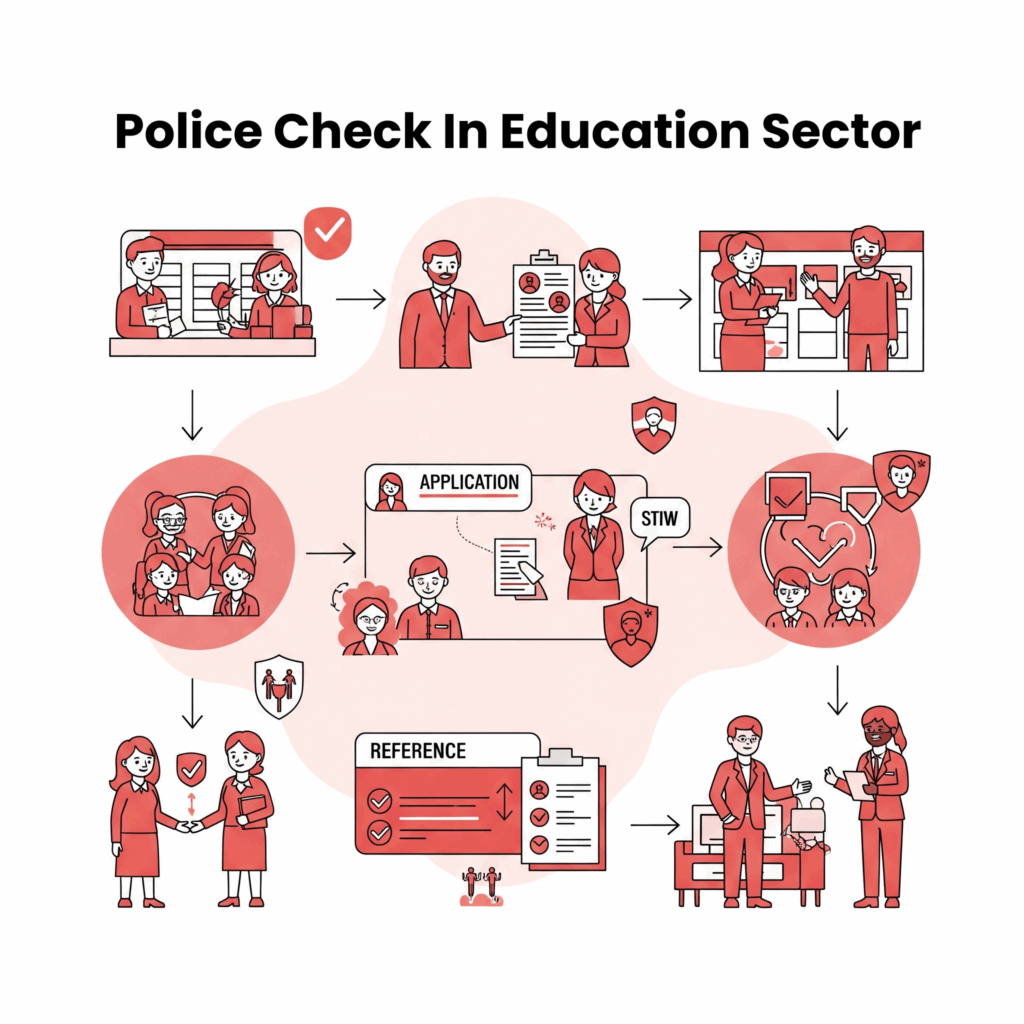
Ensuring the safety and well being of students is a non negotiable priority in every educational environment. Whether it’s a childcare centre, primary school, high school, or university, the role of proper background screening is pivotal. A comprehensive police check in education sector forms the foundation of a safe, responsible, and compliant educational workplace. In this article, we explore the critical importance of police checks in education, who requires them, how they should be conducted, and best practices to ensure thorough and lawful implementation. Why Are Police Checks Essential in the Education Sector? Educational institutions have a duty of care towards their students, especially minors and vulnerable individuals. One of the strongest safeguards is the police check in education sector, which helps identify individuals with criminal backgrounds that may pose a risk to student safety or institutional reputation. Key reasons why police checks are vital in education: Without a properly conducted police check in education sector, institutions expose themselves to serious operational, ethical, and legal consequences. What Is a Police Check in Education sector? A police check in education sector is a type of criminal history screening tailored specifically for individuals working in educational environments. While it draws from the same database as a general Nationally Coordinated Criminal History Check, it often includes additional sector specific requirements. These may include: Such checks are vital before employment begins, particularly for roles that involve direct or indirect contact with children, young adults, or vulnerable populations. Who Needs a Police Check in the Education Sector? The education sector encompasses a wide range of positions each with varying degrees of responsibility and exposure to students. Therefore, different roles may require different levels of screening. However, a police check in the education sector is generally mandatory for all staff and contractors engaging in day to day operations. Typical roles requiring an police check in education sector: Even volunteers or guest presenters, if regularly interacting with students, should undergo at least a basic police check in education sector. National vs State Based Requirements Australia’s education system is regulated both federally and at the state and territory level. While some jurisdictions have specific additional requirements, Rapid Screening ensures that the police checks we provide are valid across all Australian states and territories, offering a nationwide solution that ensures consistency and full compliance. Some roles may require additional clearances based on state specific regulations, such as: Best Practices for Conducting Police Check in Education Sectors To maintain a consistent, fair, and legally compliant screening process, institutions should adopt a strategic approach to background checks. 1. Develop a Formal Screening Policy Create a documented policy that outlines: By offering checks that are valid in all Australian states, Rapid Screening provides a streamlined solution that simplifies the process for both employers and employees. 2. Partner with Accredited Providers Use ACIC accredited agencies like Rapid Screening for police checks. This ensures: Education sector police checks conducted through verified providers help institutions avoid administrative bottlenecks and data privacy risks. 3. Re screen Periodically A police check only reflects criminal activity up to the date of issue; it is not “valid” indefinitely. Best practices for rescreening: Continual review ensures that your staff remains eligible and compliant with legal expectations. 4. Tailor Checks by Role A one size fits all approach may result in unnecessary administrative strain. Instead, align education sector police check requirements to the risk level of each position. For example: Customising your process ensures thorough risk coverage without burdening resources. What If a Criminal History Is Found? Occasionally, a disclosable court outcome may be revealed in an education sector police check. This doesn’t necessarily mean the individual is automatically disqualified. Institutions must assess risk carefully and fairly. Guidelines for managing criminal findings: Maintaining fairness in the process is as important as safeguarding your institution. How Long Does a Police Check Remain Valid? A common misconception is that education sector police checks are valid indefinitely. However, since the report reflects data only up to the date of issue, rescreening is highly recommended on a routine basis. Suggested timelines: Institutions should maintain internal alerts and compliance schedules to ensure no staff member remains unscreened over long periods. Data Privacy and Record Keeping Educational institutions handle sensitive information. As such, education sector police check results must be stored in accordance with privacy regulations such as the Australian Privacy Principles (APPs). Best practices include: Proper documentation ensures readiness for audits, inspections, or legal reviews. Benefits of Using Rapid Screening for the Education Sector Choosing a trusted provider such as Rapid Screening simplifies and accelerates the police check process for schools, universities, and childcare services. Key benefits: By outsourcing to a dedicated screening partner, your institution can ensure accuracy, security, and efficiency without overburdening internal resources. Conclusion: Prioritising Safety Through Smart Screening A robust police check in education sector process is more than just a regulatory requirement; it’s a commitment to protecting children, creating safer schools, and fostering trust within the learning community. By combining policy, technology, and accredited providers, institutions can build screening processes that are consistent, lawful, and student first. As risks evolve and regulations grow more complex, proactive background screening will continue to be the cornerstone of effective risk management in education. Include police checks in your hiring and compliance processes to prioritize safety and trust in the educational sector. Frequently Asked Questions (FAQs) Q) Significance of a police check in the education sector? One form of criminal history check intended especially for employees of educational institutions like schools, colleges, TAFEs, and childcare facilities is the police check in education sector. Identifying relevant legal rulings or charges that could influence the ability of an individual to work among kids or other individuals who are vulnerable is made simpler with this help. Q) In the education sector, who needs a police check? Most individuals working in the education sector, including teachers, administrators, maintenance staff, and contractors, have to submit to a police check. Each function could call for an alternate form of screening,
Aged Care Jobs 2026: Start a Fulfilling Career Now!

Aged care is one of the fast-growing sectors in the healthcare industry with urgent and continuous surges in demands for aged care workers across Australia. As people age, and as life expectancy increases, so does the need for dedicated care professionals. The sector provides stable job opportunities with meaning. Whether you are looking to find an aged care job near you or want to know more about considering an aged care job in Sydney and yet do not know where to start with no experience, this comprehensive guide will set out what one is likely to expect and how to get started in this field. Why Choose a Career in Aged Care? In addition to pursuing conventional jobs in aged care, more specialized services are now available, including rapid screening. In fact, these days, fast screening is considered an essential service required by aged care providers. Therefore, some of the reasons a person may choose an aged care career are: It is a calling more than a job; it is a vocation to work in aged care. Older workers are important for elderly people to achieve their most basic and everyday needs, not to mention their emotional necessities. It is about helping with daily living activities, provision of medical care as a nurse, or just being a friend, but they will always make a difference in someone’s life. In addition, excellent job security exists in aged care. The Australian government has been well-investing into the industry to ensure quality care for the elderly. This sustained demand for care workers creates a stable and reliable career path, with job opportunities being available both in cities like Sydney and rural regions, including aged care jobs in Victoria. How to Get a Job in Aged Care with No Experience? The most frequently asked question is how to get into an aged care job with no experience at all. The good news in this regard, however, is that aged care is accessible, with a wide door for entry-level opportunities for those who just come in. Steps to Get Started: Certificate III in Individual Support (Aged Care): Most work in aged care does not have a formal requirement for entry, but a certificate III in Individual Support (Aged Care) would improve your opportunity to secure employment. Volunteering: Aged care facilities often accept volunteers. Many of you may know about aged care or be exposed to it through volunteer experience. This experience will give you valuable hands-on time and teach you about the kind of jobs aged care does. Basic Certifications: Most employers will expect you to have at least first aid and CPR qualification; however, this remains bare minimum for any kind of work in aged care. ### Apply for Entry-Level Roles: Apply for entry level positions including personal care assistants and home care workers. These jobs commonly include on-the-job training; thus, it would be ideal for job seekers who have not had any experience yet. Gaining Experience If you are a new entrant to the industry and worried about how to get aged care work with no experience, focus on getting the necessary training and volunteer; it is only in such readiness and true intent that serves others that you can be an excellent candidate for a job. Aged Care Job Near Me: Finding Opportunities Search for an aged care job near me and never again have to wonder where best to find work. With the increasingly rising demand for professional-aged care in Australia, so is the number of openings in many cities like Sydney, Melbourne, and Victoria. How to Find Aged Care Jobs Near You: Job Search Websites: There is an extensive list of job postings on websites such as Seek, indeed, and Jora. Such websites enable you to filter by region and it is easy to find a job close to you Aged Care Facilities: You can directly call local-aged care facilities and inquire whether there are any vacancies in your region. Networking: Reach out to the current aged care employees or get registered on the appropriate job discussion forums to explore the job opportunities in your locality. If you are specifically looking for aged care job vacancies near me, set up alerts on job search platforms to ensure you’re notified whenever a position becomes available. Aged Care Job in Sydney: A City Full of Opportunities Sydney is the liveliest city in the world in job opportunities concerning the aged care sector. Due to the vast population and its increasing population of the aged, there is always a high demand for aged care workers in Sydney. Job Roles Available in Sydney: Personal Care Assistant (PCA): A personal care assistant in Sydney helps the elderly dress up, get bathed, and among other daily living activities. Aged Care Nurse Jobs: If you are a registered nurse, aged care facilities abound in Sydney which offer the elderly an opportunity to receive specialized medical care. Home Care Worker: Aged care is one of the fast-growing sectors in the healthcare industry, with urgent and continuous surges in demands for aged care workers across South Australia. As people age and as life expectancy increases, so does the need for dedicated care professionals. Aged Care Job in Victoria: High Demand in Rural and Urban Areas Like Sydney, aged care work is also very abundant in Victoria. Victoria offers both metropolitan and regional environments, hence a job seeker would find work either in the big cities of Melbourne or small towns, which are a bit easier going. Aged care workers are always in demand in Victoria because the population is fast ageing and ageing. As such, personal care workers and specialist nursing professionals are also in demand in Victoria. Why Work in Victoria? High Demand: With more elderly, home care and facility-based positions abound in Victoria. Regional Opportunities: Regional Opportunities: Melbourne offers the most aged care jobs, but places in country Victoria often mean a regional job with lower living expenses at the same time. Long-Term Costs and Job
Disability Support Worker Cover Letter Tips & Examples

The Role and Importance of Disability Support Workers Disability support workers are crucial for working on the personal satisfaction for individuals with handicaps in a public that tries to be comprehensive. By providing individualized care, these specialists enable people with intellectual, physical, or sensory problems to lead as independent a life as feasible. As well as accommodating its clients’ fundamental necessities, their work additionally gives them the devices they need to live cheerful, satisfied lives. The significant job that disability support workers play, the challenges they experience, and the significant impacts they have on the networks they serve are totally canvassed in this blog. Understanding the Role of Disability Support Workers Various administrations are presented by disability support workers determined to assist individuals with debilitations in their day-to-day routine. The jobs are changed and incorporate helping with family errands, offering consistent reassurance, helping with versatility, and giving individual consideration. These laborers frequently become a pivotal piece of their clients’ lives, building connections that depend on trust, regard, and sympathy. Support is custom-made to the requirements of every person, it is essentially as compelling and significant as conceivable to guarantee that consideration. For some’s purposes, this could mean assisting with essential cleanliness and dinner arrangement, while for other people, it could include helping with complex clinical necessities or supporting their association in local area exercises. For each situation, incapacity support laborers endeavor to advance autonomy and poise. In cities like Melbourne, the demand for these professionals is growing. With an increasing focus on person-centered care, disability support workers in Melbourne are essential in helping to bridge the gap between disability and independence. They are the backbone of a system that values the rights and dignity of every individual, regardless of their abilities. The Importance of Personalization in Disability Support One of the key aspects of disability support is personalization. Support workers for disability must acknowledge and accommodate the fact that no two people with disabilities are alike. Understanding each person they support is particular requirements, preferences, and objectives is a necessary component of personalization. This method guarantees that the care given is both efficient and empowering. For example, a support worker may need to modify their strategy based on whether their client has an intellectual disability (like autism) or a physical condition (like paralysis). While help for an individual with an intellectual impairment may involve more behavioral and communication-based tactics, assistance for someone with a physical handicap may concentrate more on mobility and access. The ability to personalize care also means being culturally sensitive. Disability support workers must be aware of and respect the cultural backgrounds and practices of their clients. This includes understanding different communication styles, dietary restrictions, and religious practices. By offering culturally competent care, support workers help ensure that their clients feel respected and valued. Challenges Faced by Disability Support Workers Disability support professionals have a great job, but they also encounter many difficulties. The job’s physical and emotional demands are among the most important. It is frequently physically demanding, and emotionally taxing, and involves long hours to support people with disabilities. Employees need to be resilient, sympathetic, and adept at stress management. The complexity of the care needed presents another difficulty. Disability support professionals must be informed with a range of medical illnesses, therapies, and assistive technologies because they frequently work with clients who have complicated and varied requirements. To stay current with best practices and deliver the best possible treatment, these employees must engage in ongoing training and professional development. Additionally, the nature of the job can occasionally cause workers to become socially isolated. How to Find Disability Support Workers For families and individuals in need of care, the process of finding disability support workers can be daunting. Selecting an individual with the appropriate abilities and personality to align with the requirements and preferences of the person in need of support is crucial. The following advice will help you locate the ideal support worker: Use Reliable Organizations: Numerous organizations focus on offering skilled disability assistance staff. Usually, these organizations take care of the screening procedure, making certain that the employees they supply have the appropriate training and expertise. Using search phrases like “disability support workers near me” might assist those looking for services in a particular area in finding nearby resources. Conduct Interviews: Interviewing potential support workers is essential once they have been identified. This enables families or individuals to determine if the employee is a suitable match for their requirements. During an interview, it’s important to have a clear awareness of the client’s needs, empathy, experience with certain disability, and communication skills. Examine the Reviews and References: Request references whenever possible, and try to get in touch with former customers. This can give important information about the worker’s dependability, professionalism, and level of caring. Trial Periods: Before committing to an agreement for the long term, customers can take advantage of trial periods offered by certain agencies and independent support workers. This may be a useful strategy for guaranteeing service satisfaction and compatibility. The Growing Need for Disability Support Workers in Melbourne In Melbourne, the interest for disability support workers is especially high. As one of Australia’s biggest urban communities with a different populace, Melbourne has a critical number of people who require inability support administrations. The city’s medical services foundation is advanced, however the requirement for customized, in-home consideration has been developing consistently. Disability support workers in Melbourne are sought after in metropolitan regions as well as in rural and country parts of the city. The administrations given by these experts are fundamental for permitting people with handicaps to take part in local area life, go to work or school, and keep up with social associations. The job of helping laborers is likewise significant in helping with the change from institutional consideration to free living, a pattern that is turning out to be more common as a feature of more extensive handicap change endeavors. With the Public Handicap Protection Plan (NDIS) going all out