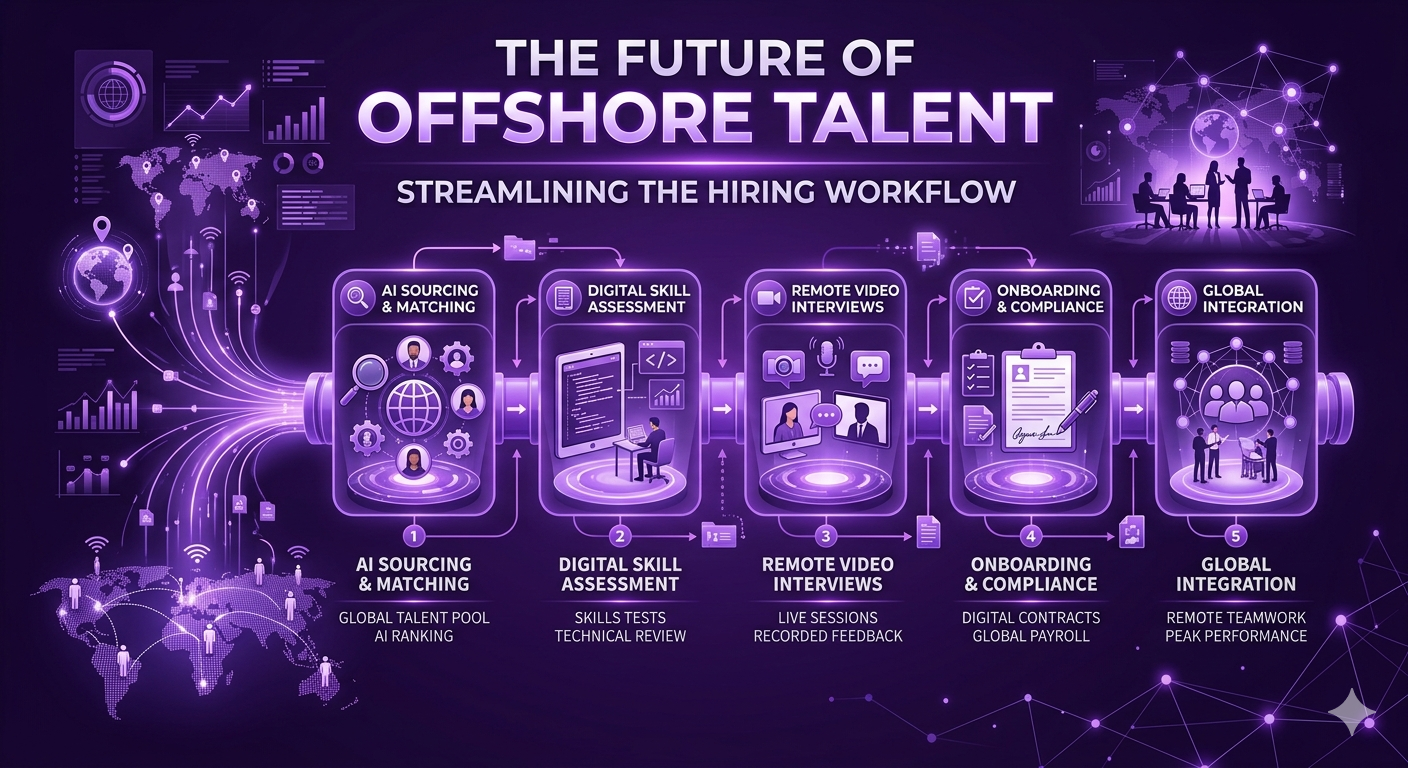
The global business landscape has undergone a seismic shift. In 2026, the question is no longer whether a company should hire offshore talent, but how quickly and efficiently they can do so. As businesses in the USA, Australia, the UK, and Canada increasingly turn to virtual assistants and specialized offshore professionals to scale their operations, the traditional recruitment model has hit a breaking point. The old way of posting a job, wading through hundreds of generic resumes, and enduring weeks of scheduling conflicts is no longer sustainable. To remain competitive, modern organizations must prioritize streamlining the hiring workflow to secure the best talent before their competitors do.
Offshore hiring has always promised cost-effectiveness and access to a global talent pool. However, for many business owners and HR managers, the reality has often been a series of logistical nightmares. From timezone headaches to the ghosting phenomenon, the friction in the hiring process often outweighs the potential benefits. This is where the concept of a streamlined, AI-enhanced recruitment process becomes a game changer. By removing the manual barriers that slow down decision making, companies can transform their hiring from a source of stress into a strategic advantage.
The Hidden Costs of a Broken Hiring Process
A fragmented hiring process does more than just delay a start date; it drains a company’s most valuable resources: time and focus. When a hiring manager spends three weeks interviewing candidates who aren’t even qualified for the role, the opportunity cost is staggering. Every hour spent on a get to know you call that leads nowhere is an hour taken away from core business growth. Furthermore, the mental fatigue of managing messy email threads and disjointed spreadsheets can lead to hiring burnout, where managers eventually settle for a mediocre candidate just to end the process.
In the world of offshore recruitment, these costs are amplified. The geographical distance and cultural nuances require a higher level of clarity and speed. If your process is slow, the top-tier virtual assistants, who are often in high demand, will likely accept another offer while you are still trying to find time for a second round interview. A broken process doesn’t just cost money; it costs you the very talent that was supposed to help you save it.
Why Streamlining the Hiring Workflow is Essential in 2026
As we move further into 2026, the competition for high-quality offshore talent has intensified. The most skilled professionals in hubs like the Philippines, India, and Eastern Europe are looking for employers who respect their time and offer a professional, tech-forward experience. Streamlining the hiring workflow is no longer just an internal efficiency goal; it is a critical component of your employer branding. A smooth, transparent, and fast moving recruitment process signals to a candidate that your company is organized, innovative, and ready to support their success.
Moreover, the shift toward asynchronous work has changed candidate expectations. Top talent prefers a process that allows them to demonstrate their skills on their own terms, rather than navigating the calendar dance of finding a 2 am slot for a live interview. By streamlining the hiring workflow, you are not only making your own life easier but also creating a more inclusive and attractive environment for the world’s best virtual assistants.
5 Strategies for Streamlining the Hiring Workflow
To achieve a truly optimized recruitment process, businesses need to move beyond traditional methods and embrace tools designed for the modern, remote first world. Here are five actionable strategies to consider.
1. Leverage AI-Driven Video Auditions
One of the biggest bottlenecks in hiring is the initial screening call. These 15 to 30 minute conversations are often repetitive and could easily be handled asynchronously. Platforms have revolutionized this by allowing candidates to record video auditions based on specific questions. This approach allows you to watch before you message, giving you an immediate sense of a candidate’s communication style, technical knowledge, and cultural fit. Streamlining the hiring workflow through video auditions ensures that you only spend live interview time with the absolute best candidates.
2. Automate Initial Screenings with Custom Questions
A resume only tells half the story. To truly understand if a candidate is right for your specific needs, you must ask role specific questions early in the process. Instead of waiting for a live interview to ask about their experience with specific software or their approach to a common problem, include these as mandatory questions in the application phase. By automating this initial screening, you are streamlining the hiring workflow by filtering out unqualified applicants before they ever reach your dashboard.
3. Eliminate Timezone Friction
The struggle of coordinating across continents is a primary reason many businesses give up on offshore hiring. When you are in San Francisco and your candidate is in Manila, finding a mutually convenient time for a call can take days of back and forth emails. Asynchronous tools remove this friction entirely. Candidates can complete their interviews and assessments during their working hours, and you can review them during yours. Streamlining the hiring workflow by removing the need for real time scheduling can shave weeks off your total time to hire.
4. Utilize AI Summaries and Transcripts
Reviewing hours of video footage can be just as time consuming as conducting live interviews. This is where AI-generated summaries and transcripts become invaluable. Instead of watching every second of every audition, you can quickly scan a transcript for keywords or read an AI-generated summary of the candidate’s strengths and weaknesses. This level of data driven insight is essential for streamlining the hiring workflow for busy hiring managers who need to make informed decisions quickly.
5. Centralize Candidate Management
If your hiring process involves jumping between LinkedIn, email, WhatsApp, and a shared Google Doc, you are losing information and wasting time. A centralized dashboard where every application, video interview, transcript, and CV is stored in one place is non-negotiable. Having a single source of truth for your recruitment efforts ensures that nothing falls through the cracks and that your team can collaborate effectively on hiring decisions, further streamlining the hiring workflow for your entire organization.
Revolutionizes the Offshore Experience
SourceU was built specifically to address the frustrations of traditional offshore hiring. By replacing the broken, manual process with a four step automated system, it allows businesses to go from job post to hire in days, not weeks. The platform’s core philosophy is centered on streamlining the hiring workflow by putting the candidate’s performance front and center.
With it, you don’t just read about a candidate; you see them in action. You set your own custom interview questions, and the platform’s AI handles the rest, interviewing every applicant on camera, providing transcripts, and generating summaries. This Smarter. Faster. approach ensures that you hire with complete confidence, knowing exactly who you are bringing onto your team before you ever book a single call.
Best Practices for Onboarding Your New Hire
The recruitment process doesn’t truly end when the contract is signed. To ensure the long-term success of your new offshore team member, you must transition smoothly from hiring to integration. This means having a clear onboarding plan, setting expectations from day one, and providing the necessary tools for communication and project management.
Remember that streamlining the hiring workflow is about creating a path of least resistance for both the employer and the employee. If your onboarding is as organized and efficient as your recruitment, your new hire will feel supported and empowered to start contributing immediately. This continuity of excellence is what separates successful global companies from those that struggle to scale.
Conclusion
The future of work is global, and the tools we use to build our teams must reflect that reality. By moving away from outdated, manual processes and embracing the power of AI and asynchronous communication, businesses can unlock the full potential of the offshore talent market. Streamlining the hiring workflow is the most effective way to reduce costs, save time, and, most importantly, secure the high-quality talent your business needs to thrive in 2026.
Whether you are looking for a dedicated virtual assistant or a specialized offshore professional, the goal remains the same: find the right person, as quickly as possible, with the highest level of confidence. Start streamlining the hiring workflow today with SourceU.ai and experience a smarter, faster way to hire.