- Last updated:October 14, 2026
Quick Answer
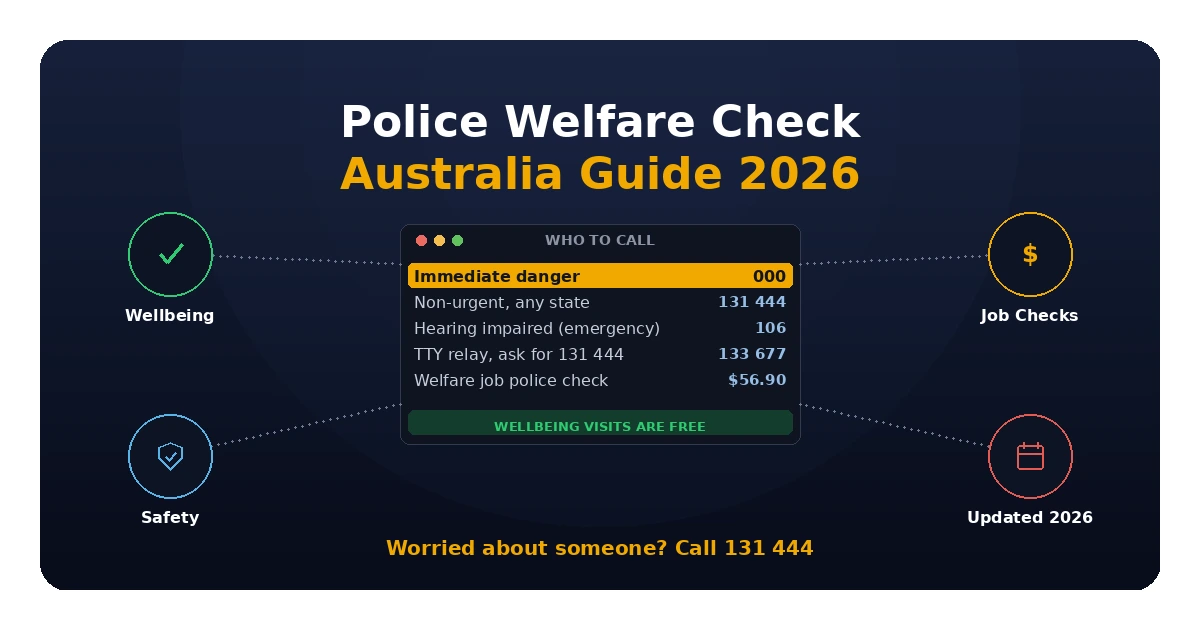
A police welfare check is when police visit to make sure someone is safe and well. To request one in Australia, call Triple Zero (000) if someone is in immediate danger, or the Police Assistance Line on 131 444 if it isn’t an emergency. "Welfare police check" can also mean the National Police Check needed for jobs in the welfare and community sector. Rapid Screening provides that check online for $56.90 including GST, with 70% of results back within 2 to 4 hours.
If you’ve searched for a police welfare check, you’re probably in one of two situations. Either you’re worried about someone and want police to make sure they’re okay, or you’re starting a job in community services and your employer has asked for a welfare police check. This guide covers both, starting with how to get a welfare check done and ending with everything you need to know about the police check for welfare work.
What Is a Police Welfare Check?
Terminology can be confusing. In a general sense, a welfare check can refer to a wellness visit conducted by police to ensure an individual is safe. However, in the context of employment and compliance, a welfare police check refers to a Nationally Coordinated Criminal History Check (NCCHC) specifically tailored for the welfare and community services sector.
| Police welfare check (wellbeing visit) | Welfare police check (for work) | |
|---|---|---|
| What it is | Police visit someone to check they’re safe | A National Police Check for welfare and community sector jobs |
| Who asks for it | Family, friends, neighbours, carers or services who are worried | Employers in aged care, disability, child protection and community services |
| How to get it | Call 000 (emergency) or 131 444 (non-urgent) | Apply online through an ACIC-accredited provider |
| Cost | Free | $56.90 inc. GST (employment) or $26.95 inc. GST (volunteer) with Rapid Screening |
| Shows criminal history? | No | Yes, disclosable court outcomes |
Police Welfare Check: When Police Check on Someone’s Safety
A police welfare check, sometimes called a wellness check, is when officers go to someone’s home or last known location to make sure they’re safe. It’s free, and anyone who is genuinely worried about someone can ask for one.
Why Do Police Do Welfare Checks?
Welfare checks by police usually happen when someone can’t be contacted, and there’s a real reason to be concerned. Common triggers include:
- An elderly relative or neighbour hasn’t been seen or heard from for an unusual amount of time.
- Someone has said things that suggest they may harm themselves.
- A person with a serious medical condition isn’t answering calls.
- There are signs of family or domestic violence.
- A child may be at risk of harm.
Police won’t do a welfare check for every concern, and the rules differ between states. In Western Australia, for example, the WA Government states that police will only do a welfare check when:
- There’s evidence of an imminent risk of serious harm or death.
- A criminal offence, including family violence, is alleged or likely.
- A child is at risk of serious harm.
- The person is reasonably suspected to have died.
How to Request a Police Welfare Check in Australia
- Decide how urgent it is. If someone’s life is at risk or they’re in immediate danger, call Triple Zero (000) straight away and ask for police.
- For non-urgent concerns, call 131 444. The Police Assistance Line works across Australia and connects you to police in the state you’re calling from.
- Have the person’s details ready. Their full name, address, description, any medical conditions, and when you last had contact.
- Explain why you’re worried. Tell the operator exactly what’s changed, for example, missed calls, worrying messages or a fall risk.
- Leave your contact details. Police may call you back with an update or to ask more questions.
The 131 444 line is busy. In just one week in April 2025, NSW Police’s Police Assistance Line took more than 10,000 calls, so keep your call clear and specific to help them assess it quickly.
Police Welfare Check Numbers by State
| State or territory | Emergency | Non-urgent police welfare check number |
|---|---|---|
| New South Wales | 000 | 131 444 |
| Victoria | 000 | 131 444 |
| Queensland | 000 | 131 444 |
| Western Australia | 000 | 131 444 (emergency situations only) |
| South Australia | 000 | 131 444 |
| Tasmania | 000 | 131 444 |
| Northern Territory | 000 | 131 444 |
| Australian Capital Territory | 000 | 131 444 (02 5127 0051 from interstate) |
If you’re deaf or have a hearing or speech impairment, dial 106 in an emergency. For non-urgent help, use the National Relay Service: call 133 677 (TTY) or 1300 555 727 (Speak and Listen) and ask for 131 444.
What Happens During a Police Welfare Check?
Officers go to the address, knock, and try to speak with the person. If they’re safe, police may simply let you know they’ve been checked on. If the person needs help, police can call an ambulance, contact family or refer them to support services.
Can Police Force Entry for a Welfare Check?
Only in limited situations. Police can enter a home without permission when the law allows it, such as to protect someone’s life or prevent serious harm. The exact powers are set by each state and territory, so they vary across Australia.
Does a Welfare Check Go on Your Record?
No, not on your criminal record. A welfare check isn’t a criminal matter, so it won’t appear on a National Police Check, which only lists disclosable court outcomes and charges. Police may keep their own internal note that they attended, as they do for most call-outs.
Can I Request a Welfare Check Online?
Generally, no. Because welfare concerns can be urgent, police ask you to call. Some states have online portals for non-urgent reports, but for a welfare check, call 131 444 or 000 in an emergency.
Police Welfare Check on a Child
If a child is in immediate danger, call 000. If you’re worried about a child but they’re not in immediate danger, call 131 444 or contact the child protection service in your state or territory.
Welfare Police Check for Community Sector Jobs
In the community services sector, trust is more than just a value; it is a regulatory requirement. As we move through 2026, the demand for social workers, youth mentors, and disability support staff continues to grow. For anyone entering these professions, obtaining a welfare police check is a critical step in the onboarding process. This screening helps make sure those entrusted with the care of our society’s most vulnerable members are fit for the task.
At Rapid Screening, we specialise in providing fast, accurate, and secure background checks. We understand that in the welfare sector, a delay in paperwork can mean a delay in providing life-changing support.
A Specialised Screening Tool
Unlike a standard check for a retail or office job, a check for the welfare sector is processed with a specific purpose. This tells the police agencies that the applicant will be working with children, the elderly, or people with disabilities. This distinction matters because it can affect which spent convictions are disclosed on the final certificate.
Why a Welfare Police Check Is Required for Community Workers
The welfare sector is built on the safety of the vulnerable. Whether you are working in child protection, domestic violence advocacy, or refugee support, a welfare police check serves as a frontline defence.
Protecting vulnerable groups. The primary goal is risk mitigation. Organisations have a legal duty of care to make sure their staff do not have a history that suggests a risk to those they serve. Certain serious offences, such as those involving violence or sexual misconduct, can rule a person out of a high-risk welfare role.
Meeting regulatory compliance. NDIS and aged care regulators have strict screening standards. Many roles now require an NDIS Worker Screening Check alongside a standard police check. A current welfare police check helps your organisation stay compliant with funding requirements and state-based safety standards.
| Welfare police check | Working with Children Check | NDIS Worker Screening Check | |
|---|---|---|---|
| What it checks | Disclosable court outcomes | Suitability to work with children | Suitability to work with people with disability |
| Who issues it | ACIC-accredited provider | Your state or territory screening agency | Your state or territory worker screening unit |
| Ongoing monitoring | No, a point-in-time check | Yes | Yes |
| How long it lasts | No expiry date (employers usually want one from the last 1 to 3 years) | Varies by state | 5 years |
How to Apply for Your Welfare Police Check Online
At Rapid Screening, the whole process is online. You don’t need to wait in line at a police station or find a Justice of the Peace to sign paper forms.
Step 1: The online application. You can start your application on any device. You’ll be asked for your full name, date of birth, and five years of residential history. Choose the correct purpose so your welfare police check meets your employer’s requirements.
Step 2: 100-point identity verification. You’ll need 100 points of ID, which are checked against government records through the Document Verification Service (DVS). You’ll typically need:
- Commencement document: an Australian passport or birth certificate
- Primary document: a current Australian driver licence
- Secondary documents: a Medicare card or a bank statement
Our guide to what documents are needed for a police check shows which combinations add up to 100 points.
Step 3: Fast processing. Once your ID is verified and payment is made, your application goes straight to the National Police Checking Service. You can apply for a National Police Check online in a few minutes.
Welfare Police Check Cost
| Check | Rapid Screening price | Who it’s for |
|---|---|---|
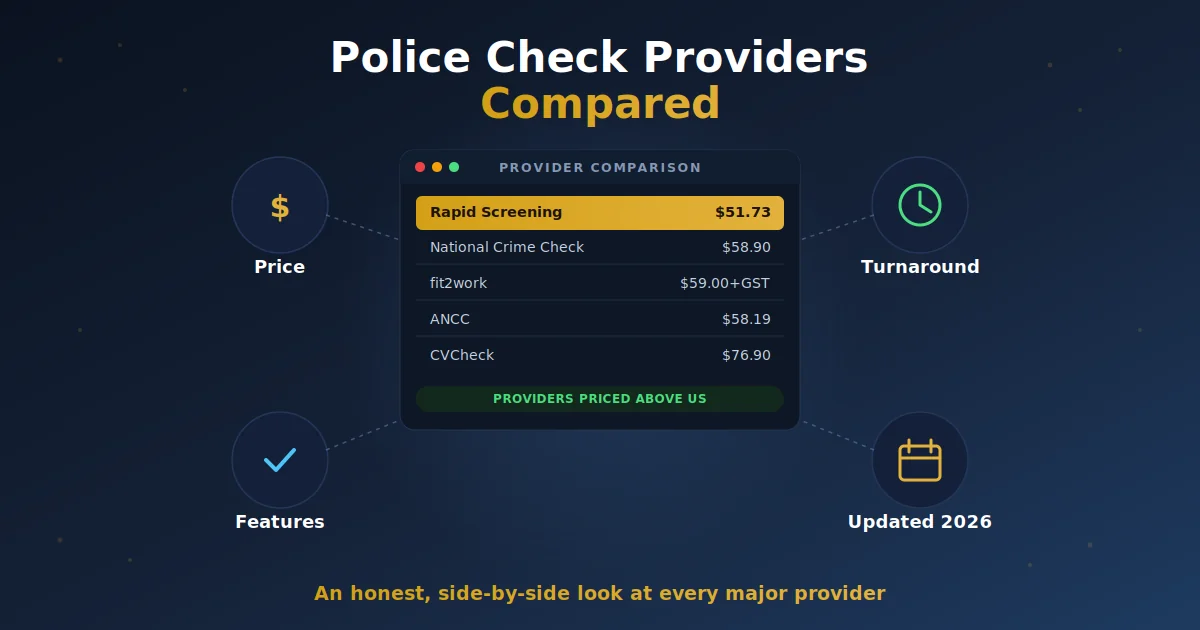
| Employment police check | $56.90 inc. GST ($51.73 + GST) | Paid roles in the welfare and community sector |
| Volunteer police check | $26.95 inc. GST ($24.50 + GST) | Unpaid volunteers only |
| AFP police check | $72.90 (GST free, includes postage) | Visas, citizenship and Commonwealth roles |
A police check isn’t free, even for volunteers, but volunteer checks cost much less. If you’re searching for a free police check online in NSW or elsewhere, our guide on whether a free police check exists in Australia explains your options. If you need an Australian Federal Police check for a visa, apply for an AFP police check online instead.
Understanding the Results: What Shows Up?
When your welfare police check is finalised, it will list your Disclosable Court Outcomes (DCOs). This includes:
- Charges that resulted in a conviction
- Findings of guilt without a conviction
- Any matters currently pending before a court
If nothing can be released, your result will show No Disclosable Court Outcomes.
The Role of Spent Convictions
In the welfare sector, spent conviction laws can work differently. While a minor offence from twenty years ago might be hidden for a standard job, it may still appear on a welfare police check if the role involves working with children or highly vulnerable adults. This allows employers to make a fully informed decision based on the safety of their clients. Our guide to spent convictions in Australia explains the rules.
Turnaround Times: How Quickly Can You Get a Welfare Police Check?
The Australian Criminal Intelligence Commission (ACIC) handled more than 7.26 million police checks in 2024-25, the most since its national system began in 2012. Most results come back quickly.
- 70% of results: processed automatically and often returned within 2 to 4 hours.
- 30% of results: referred to police agencies for manual checking. This can happen if you have a common name or a complicated address history. Manual referrals can take between 1 and 15 business days.
Because of this 30% possibility, we always recommend applying for your check at least two weeks before your expected start date. Our guide on how long a police check takes explains what causes delays.
Managing Bulk Welfare Police Checks for Organisations
For community service organisations and NGOs, managing hundreds of staff clearances can be an administrative nightmare. Rapid Screening’s business screening solutions give HR managers one dashboard to:
- Send bulk invitations to new hires
- Track the status of every application in real time
- Securely store and download digital certificates
- Set reminders for renewals
Using an accredited provider to manage your welfare police check volume reduces human error and keeps your compliance up to date.
Frequently Asked Questions
What Is a Police Welfare Check?
A police welfare check is a visit by police to make sure someone is safe and well, usually because a family member, friend, or neighbour is worried about them. The term can also refer to a National Police Check for jobs in the welfare and community sector.
Why Do Police Conduct Welfare Checks?
Police conduct welfare checks when there’s a real concern for someone’s safety, such as a risk of self-harm, a medical emergency, a vulnerable person who can’t be contacted, or a child at risk. In Western Australia, police only do welfare checks in emergencies.
Can You Call Your Local Police to Do a Wellness Check?
Yes. Call the Police Assistance Line on 131 444 for non-urgent concerns, which connects you to police in your state. If someone is in immediate danger, call Triple Zero (000).
How to Request a Police Welfare Check in Australia?
Call 000 if someone is in immediate danger, or 131 444 if it isn’t urgent. Give the person’s full name, address, and description, explain why you’re worried, and leave your contact details so police can follow up.
What Is the Police Welfare Check Phone Number?
In an emergency, call 000. For non-urgent welfare checks, call the Police Assistance Line on 131 444 from anywhere in Australia.
How Do Welfare Checks Work in Australia?
Police go to the person’s address and try to speak with them. If they’re safe, police may let you know. If they need help, police can call an ambulance, contact family or refer them to support services.
What Is Classed as a Welfare Issue?
A welfare issue is a concern about someone’s safety or wellbeing, such as a risk of harm, illness, neglect, abuse, or being unable to care for themselves.
Does a Welfare Check Go on Your Record?
No, not on your criminal record. A welfare check isn’t a criminal matter and won’t appear on a National Police Check. Police may keep an internal note that they attended.
Can I Request a Welfare Check Online?
Generally, no. Because welfare concerns can be urgent, police ask you to call 131 444, or 000 in an emergency.
Can Police Force Entry for a Welfare Check?
Only in limited situations set by law, such as to protect someone’s life or prevent serious harm. The exact powers differ between states and territories.
Is a National Police Check Free for Volunteers?
No, but it costs much less. A volunteer police check through Rapid Screening costs $26.95 including GST, compared with $56.90 for an employment check.
Does a Welfare Police Check Expire?
Technically, a police check is a point-in-time document and does not have an expiry date. However, most organizations in the welfare sector require a fresh check every 1 to 3 years to ensure continued safety and compliance.
Is This the Same as a Working with Children Check (WWCC)?
No. A National Police Check (or welfare check) is a list of criminal history. A WWCC is a more intensive ongoing assessment specifically for those in child-related work. Many welfare roles require both documents.
Can I Use a Volunteer Check for a Paid Welfare Role?
No. Volunteer checks are provided at a reduced rate and are legally only valid for unpaid work. If you are entering a paid position, you must apply for an Employment purpose check.
Do I Need a New Check If I Change Employers Within the Welfare Sector?
This depends on your new employer. Some organisations will accept a check issued in the last 6 months, while others insist on a brand new check to ensure they have the most recent data.
Conclusion
A police welfare check can mean two very different things. If you’re worried about someone, a police welfare check is a free visit from officers to make sure they’re safe: call 000 in an emergency or 131 444 if it’s not urgent. If you’re starting work in community services, a welfare police check is the National Police Check your employer needs before you start. Rapid Screening’s 100% online process and local support team make that part simple, with most results back within hours, so you can focus on the essential work of supporting people who need it.
Stay Informed
Get updates on police check requirements and processing times, straight to your inbox.
Get Your Police Check Now