In the landscape of 2026, the Australian workforce is more dynamic, mobile, and digitally integrated than ever before. With the rise of hybrid work models and the gig economy, organisations have replaced the traditional handshake deal with a data driven approach to professional trust. For employers and HR managers, the responsibility of maintaining a safe and productive environment has grown in complexity. Consequently, the value of a work background check has never been higher.
At Rapid Screening, we believe that compliance shouldn’t be a bottleneck to growth. Instead, it should form the foundation for building strong professional relationships. Whether you are a small business hiring your first employee or a national corporation onboarding hundreds of staff, understanding the intricacies of background screening is essential. This comprehensive guide explores why these checks are critical, what they entail, and how technology is making the process faster and more secure than ever.
The Rising Importance of the work background check in 2026
The professional world has changed. In 2026, verification isn’t just about ticking a box; it’s about risk management and cultural alignment. Employers are no longer just looking at a resume; they are looking for a verified history of integrity.
Mitigating Risk in a High Stakes Environment
The cost of a bad hire has escalated. Beyond the financial impact of recruitment and training, a single employee with a history of misconduct can damage a brand’s reputation and compromise workplace safety. By conducting a work background check helps identify potential red flags before a contract is signed, protecting your current team and your clients.
Industry-Specific Compliance Standards
Many sectors in Australia now operate under strict federal and state regulations.
- Aged Care and NDIS: The standards for working with vulnerable populations have reached a new peak in 2026, requiring ongoing monitoring rather than just a one-off check.
- Finance and Fintech: With the surge in digital banking, Dishonesty and Financial Crime checks have become mandatory for anyone with access to sensitive data.
- Education: Child safety standards continue to evolve, requiring a blend of police checks and Working with Children Checks (WWCC).
What Does a Comprehensive Work background check Entail?
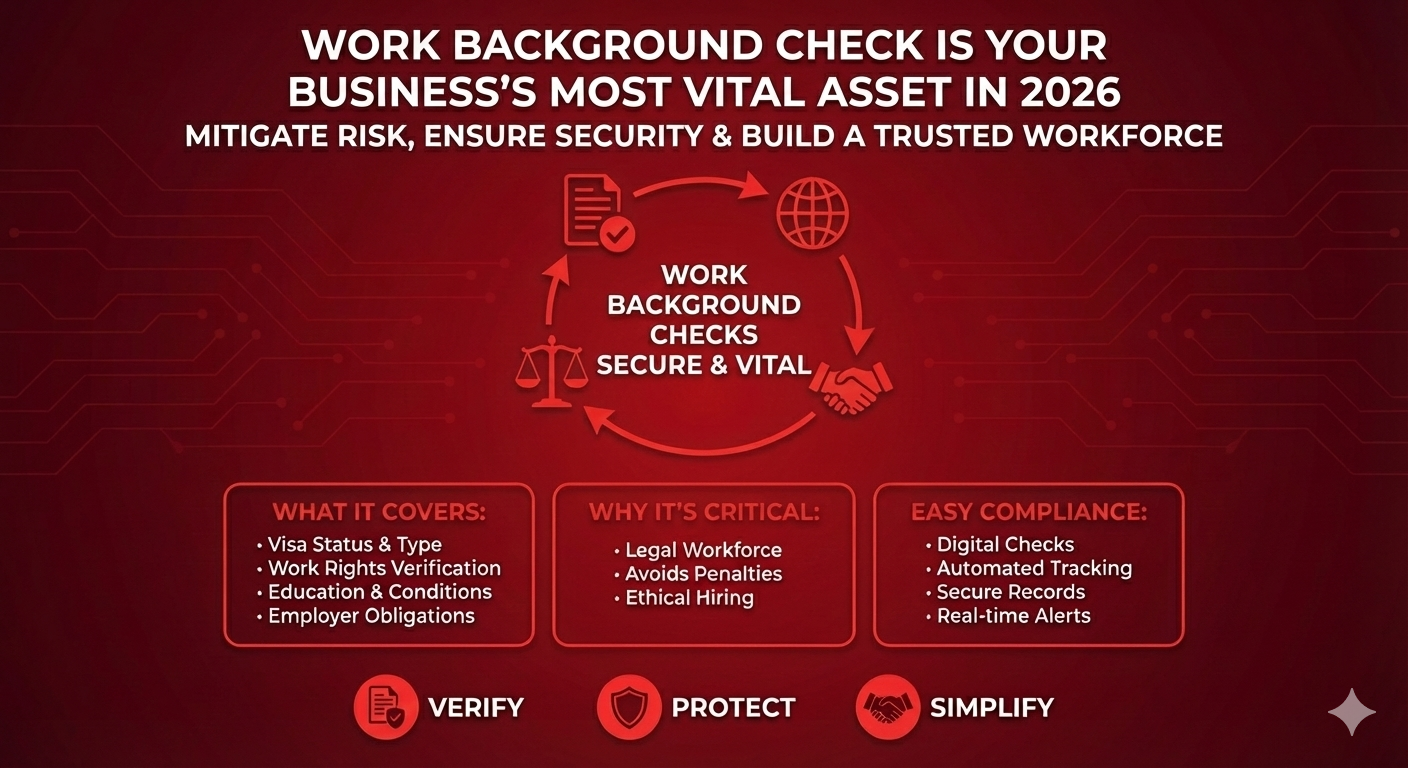
A background check is rarely a single document. Depending on the role, it can be a multi-layered report that provides a 360 degree view of an applicant’s professional and legal standing. The components of a standard work background check in Australia typically include the following elements.
1. Nationally Coordinated Criminal History Check (NCCHC)
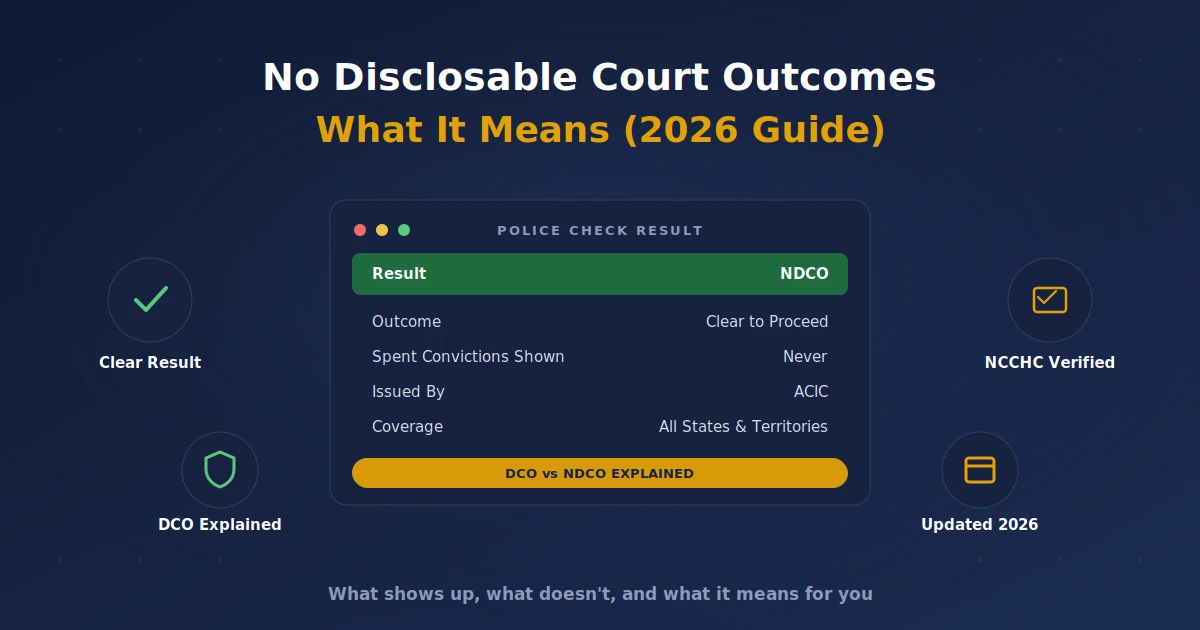
This is the core of most screening processes. It involves searching the National Names Index (NNI) maintained by the Australian Criminal Intelligence Commission (ACIC). It reveals Disclosable Court Outcomes (DCOs), including convictions, findings of guilt without conviction, and pending charges.
2. VEVO Checks and Right to Work
In our globalized economy, verifying a candidate’s right to work in Australia is a legal necessity. A VEVO (Visa Entitlement Verification Online) search is a crucial part of any work background check for international applicants. It confirms visa status, work limitations, and expiry dates, ensuring your business stays compliant with the Department of Home Affairs regulations.
3. Employment and Education Verification
In an era where AI-generated documents make resume padding easier, employers must verify past employment and academic qualifications. This step confirms that the candidate truly possesses the skills and experience they claim.
| Check Type | What it Verifies | Common Industry |
| Criminal History | Police records across all Australian states. | All Industries |
| VEVO | Right to work and visa conditions. | Hospitality, IT, Logistics |
| Credit Check | Financial reliability and bankruptcy history. | Banking, Real Estate |
| Qualification | Academic degrees and professional licenses. | Healthcare, Law, Engineering |
The Speed of Trust: How Rapid Screening Accelerates the work background check
One of the biggest pain points in recruitment is the waiting game. In a competitive market, top talent won’t wait two weeks for a background check to clear. At Rapid Screening, we have leveraged 2026’s latest technology to streamline the work background check for our users.
The 70/30 Processing Standard
While 70% of results are returned within 2 hours through our automated link to the ACIC, 30% are referred for manual vetting by police agencies. This referral doesn’t mean the candidate has a record; it just means a human officer needs to verify a name match. Our platform provides real-time tracking so you always know exactly where an application stands in that 30% window.
Mobile-First Identity Verification
We’ve eliminated the need for paper forms and physical witness signatures. Our biometric identity verification allows candidates to use their smartphones to scan their ID and take a liveness selfie. This tech ensures the person applying is who they say they are, finalizing a work background check in record time.
Note for HR Managers: Automation doesn’t just save time; it reduces human error. By removing manual data entry, the likelihood of false positives or typos that lead to manual referrals is significantly decreased.
Navigating Privacy and Data Security in 2026
As data breaches become more sophisticated, the security of personal information is a top priority for both employers and candidates. When you conduct a background screening, you are handling highly sensitive data.
Compliance with the Australian Privacy Principles (APPs)
Rapid Screening operates with Privacy by Design. We ensure that all data is encrypted at rest and in transit. Furthermore, we comply with the APPs, meaning we only collect the information necessary for the check and ensure it is disposed of securely once the legal retention period has passed.
Building Candidate Trust
Candidates are often anxious about background checks. Transparency is the best way to manage this. By using a portal that explains why the information is needed and how it will be used, you build a culture of trust even before the employee’s first day.
The Future of Screening: Continuous Monitoring
Looking forward, the trend in 2026 is moving away from one and doing checks toward continuous monitoring. In high risk industries, an annual check may soon be replaced by real time alerts. This ensures that if an employee incurs a relevant offence during their tenure, the employer is notified immediately, allowing for proactive risk management.
AI and Predictive Analytics
While we use AI to speed up document verification, we maintain a human in the loop approach for complex results. AI helps us identify patterns in data, but the final decision on a candidate’s suitability always remains with the hiring manager, supported by our expert Australian-based support team.
Conclusion: Empowering Your Business with Certainty
In the modern world, a background check is not about excluding people; it’s about including them with confidence. By implementing a robust screening policy, you aren’t just protecting your assets; you are validating the quality of your team.
Rapid Screening is proud to be Australia’s leading partner in this journey. We combine the fastest technology with the most accessible support to ensure your work background check is handled with the highest standards of accuracy and care. Don’t let compliance be a hurdle, make it your competitive advantage.
Frequently Asked Questions (FAQs)
Q) Is a police check valid for all of Australia?
Yes. A Nationally Coordinated Criminal History Check covers all states and territories in Australia. Whether you live in Perth or Sydney, the check searches the same national database.
Q) Can I get a refund if the candidate fails the check?
No. The fee is paid to the government (ACIC) for the service of searching the database. Once the search has been initiated, the fee is non-refundable regardless of the result.
Q) What is the difference between an individual and a business account?
Individuals pay for their own check one at a time. Business accounts allow for bulk invitations, monthly invoicing, and a centralized dashboard where HR managers can track multiple applications at once.
Q) Does the check expire?
A background check is a point in time document. It has no formal expiry date, but most employers require a new check every 12 months or 3 years, depending on industry standards and risk policies.
Stay Informed
Get updates on police check requirements and processing times, straight to your inbox.
Get Your Police Check Now