- Last updated:August 13, 2026
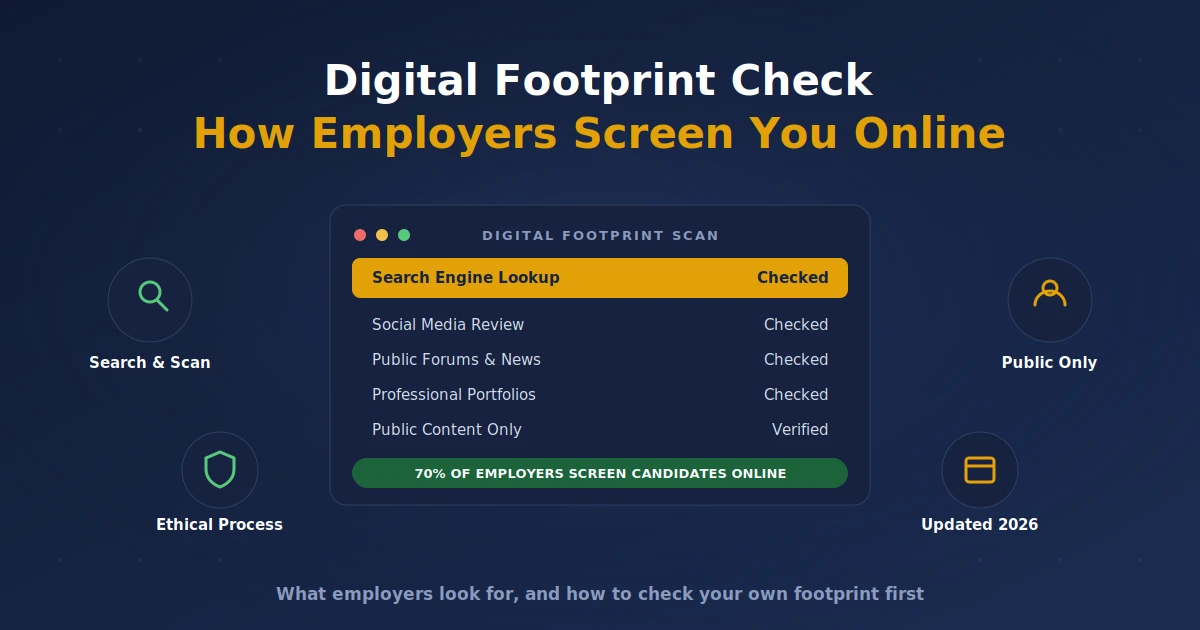
A digital footprint check is when an employer reviews a candidate’s publicly available online activity, such as social media, professional profiles, and public mentions, to inform a hiring decision. Surveys have found up to 70% of employers screen candidates on social media before hiring. Done properly, employers should only review public content, obtain consent where required, and apply the check consistently across all candidates.
Every comment, like, and post creates a digital footprint in the modern hyperconnected world, making digital footprints an effective tool for companies. When evaluating the fit of an applicant for a position, compatibility with a business’s principles, and even possible risk considerations, these footprints are a compilation of information produced by a person’s internet activity that can be quite helpful.
Innovative companies are accepting the potential of digital footprints to boost recruitment, strengthen their own safety, and preserve company reputation, while some organisations continue to concentrate on conventional background checks.
What Are Digital Footprints?
Digital footprints are the traces individuals leave behind when they use the internet. This includes:
- Social media activity (posts, likes, shares)
- Blog comments
- Forum participation
- Online portfolios and LinkedIn profiles
- News mentions
- Publicly accessible forums and communities
Each of these elements contributes to an individual’s online persona, offering insights into their behaviour, interests, professionalism, and potential risk factors.
How Do Employers Check Your Digital Footprint?
| Method | What It’s Used For |
|---|---|
| Search engine lookup | A simple Google search of your name to see what’s publicly indexed |
| Social media review | LinkedIn for professional history, and public Facebook, Instagram, X, or TikTok content for conduct and tone |
| Public forums & comments | Reddit threads, blog comments, or public discussion posts under your name |
| News & media mentions | Any public press coverage, interviews, or articles that mention you |
| Professional portfolios | Personal websites, GitHub, Behance, or other portfolio platforms relevant to your field |
| Screening software | Some employers use third-party tools to compile public results, rather than manual searching |
Can You Check Your Own Digital Footprint?
Yes, and it’s worth doing before you apply for a job, not after an employer already has. According to Australia’s eSafety Commissioner, checking and managing your own digital footprint is straightforward:
- Google yourself. Search your own name to see what a potential employer would find first.
- Request removal of unwanted content. Contact whoever posted it, or the platform directly, if you can’t remove it yourself.
- Review your privacy settings. Lock down what’s public versus visible only to friends or connections.
- Manage tagging. Untag yourself from posts you wouldn’t want an employer to see.
- Think before you engage. Ask whether a like, comment, or post is something you’d want associated with you years from now.
For a full walkthrough, see the eSafety Commissioner’s guide to managing your digital footprint. If you’d rather use a dedicated tool, free services like WhatsMyName can check which platforms your username or email appears on.
Comparison Table – Digital Footprint Check vs. Background Check
| Digital Footprint Check | Background Check | |
|---|---|---|
| Covers | Public online activity: social media, forums, portfolios, news mentions | Verifiable records: criminal history, employment history, qualifications |
| Source of data | Publicly available internet content | Official databases and records (e.g. ACIC, employers, institutions) |
| Result type | Subjective insight into character and conduct | Verified, documented facts |
| Typical cost | Often free or low-cost (manual or basic tools) | Paid, per-check pricing |
| Best used | Alongside a background check, not instead of one | As the primary compliance and verification step |
The Importance of Digital Footprints in Hiring
Identifying Red Flags Through Social Media
Learning about the applicant’s social media profile is one of the main advantages of analysing digital footprints. Social media accounts can expose trends of unpleasant or improper behaviour, divisive viewpoints, or unprofessional behaviour that could damage the reputation of your company.
Assessing Online Reputation and Professionalism
An applicant who frequently posts offensive material, for example, might not represent the welcoming and courteous atmosphere your business seeks to promote. By examining digital trails, companies may prevent possible harm to their reputation. In Victoria, it is essential to hire employees to the standard set for hiring, and for that, you can use Victoria police checks through Rapid Screening.
Tip: Platforms like LinkedIn, Twitter, and even Reddit can give employers a peek into how candidates conduct themselves in digital communities, often a reflection of their real-world professionalism.
“Right Fit, Right Person”: Aligning Values
Finding someone with the right skills is only part of the puzzle. The real challenge is identifying candidates who share your company’s values and culture. Reviewing a potential hire’s digital footprint allows employers to better understand personal interests, communication style, and ethical viewpoints.
This insight can help answer a crucial question: Is this person truly the right fit for our team?
Partnering with a screening provider like Rapid Screening’s Employee Background Checks can help verify digital behaviour and ensure values alignment, all while respecting privacy laws and ethical standards.
Verifying Qualifications Through Digital Presence
In an age where nearly every professional maintains some form of online profile, evaluating a candidate’s digital footprint can offer additional confirmation of their qualifications, career history, and achievements.
The Role of Professional Networks and Portfolios
LinkedIn profiles, personal websites, online resumes, and digital portfolios serve as transparent records of career progression and thought leadership. Comparing a resume to what’s published online helps verify consistency and honesty, two qualities every employer values. If a business is in New South Wales, then our NSW police check can be combined for better security.
Pro Tip: Look for discrepancies in job titles, achievements, or employment gaps when reviewing both the resume and digital footprint. These inconsistencies could indicate potential issues.
Preventing Insider Threats Through Digital Insights
While most employees act in good faith, there are exceptions. Insider threats, employees who misuse access for malicious purposes, represent a significant risk, especially in data-sensitive industries.
Monitoring digital footprints can help detect early signs of risk, such as:
- Sharing confidential company details online
- Involvement in online communities discussing unethical practices
- Interaction with competitors under suspicious circumstances
Early identification allows companies to take preventive action, protecting sensitive data and maintaining operational integrity. Rapid Screening’s Identity Verification Services can provide deeper insights into individuals’ online identities and potential red flags.
Maintaining Company Reputation
Why a Clean Digital Footprint Matters
Reputation is a company’s most valuable intangible asset. It influences customer trust, partner relationships, investor confidence, and employee morale.
Hiring someone with a questionable online history, especially in leadership roles, can bring unwanted media attention and customer backlash. Conducting thorough reviews of digital footprints ensures your business is staffed by people who protect, not endanger, your reputation.
Digital Footprints and Legal Compliance
Understanding Your Rights and Boundaries
In some industries, particularly healthcare, aged care, finance, and child services, screening an applicant’s background is required by law. While digital footprint analysis is not yet a mandated component, it complements legal compliance by providing additional evidence of character.
Rapid Screening’s Police Check Services ensure that your process is fully compliant and can be paired with broader digital checks for a more robust evaluation.
The Legal Risks of Skipping Digital Footprint Checks
Skipping digital footprint checks isn’t just a missed opportunity; it carries real risk of its own. Hiring someone whose public online conduct includes discriminatory language, harassment, or serious misconduct can expose your business to reputational damage and, in some cases, liability if that conduct continues in the workplace and you had visible warning signs beforehand. This cuts both ways: employers also carry legal risk if digital screening is done improperly, for example, by accessing private accounts, screening based on protected characteristics like religion or political views visible online, or failing to apply the same screening standard consistently across all candidates. The safest approach is a documented, consistent process applied to every candidate for a given role, not an ad hoc search triggered by suspicion about one applicant.
Do’s and Don’ts Quick Reference Box
✓ Do
- Only review publicly accessible content
- Tell candidates screening may include public online activity
- Apply the same process to every candidate for a role
- Document findings that influence a hiring decision
- Focus on conduct relevant to the role and workplace
✗ Don’t
- Access private accounts or ask for passwords
- Screen based on religion, political views, or other protected characteristics
- Only check some candidates and not others
- Make decisions based on unverified or third-hand claims
- Skip written consent before screening begins
Integrating Digital Footprints Into Your Screening Process
Building a Holistic Candidate Profile
To gain a complete picture of a candidate, businesses should integrate digital footprint analysis into a broader background check process that includes:
- National police checks
- Employment history verification
- Identity verification
- Reference checks
- Social media screening
This combination offers a well-rounded understanding of the person behind the application, not just their skills but also their behaviour, reputation, and potential risk level.
For a tailored approach to this process, explore Rapid Screening’s Full Suite of Services, or see our comparison of top background check companies in Australia if you’re weighing up providers.
Conclusion
In a world where personal and professional lives increasingly overlap online, understanding and evaluating digital footprints is more important than ever. It allows businesses to hire with confidence, align candidates with company culture, prevent insider threats, and protect their brand.
By incorporating digital footprint checks into your hiring process, you move beyond just resumes and references; you unlock a deeper layer of insight that traditional screening methods often overlook.
Partner with Rapid Screening to access ethical, efficient, and legally compliant digital screening solutions that support your business growth in the digital age.
Let your next great hire begin with the click of a link and the power of a footprint.
Frequently Asked Questions (FAQs)
Do employers check your digital footprint?
Many do. Surveys have found that up to 70% of employers use social media and public online activity as part of screening candidates before hiring.
How do employers check your digital footprint?
Typically through a search engine lookup of your name, reviewing public social media profiles (especially LinkedIn), checking public forums or news mentions, and sometimes using dedicated screening software rather than manual searches.
Can I check my own digital footprint?
Yes. Search your own name, review your privacy settings on each platform, and consider using a free tool like WhatsMyName to see which sites your username or email appears on. Australia’s eSafety Commissioner has a full guide on managing your digital footprint.
Is it legal for employers to check your digital footprint in Australia?
Yes, provided employers only review publicly available content, don’t attempt to access private accounts, and apply the practice consistently across all candidates without discriminating based on protected characteristics.
Is a digital footprint check the same as a background check?
No. A background check typically covers verifiable records like criminal history, employment history, and qualifications. A digital footprint check looks at a candidate’s publicly available online activity, such as social media posts and public profiles, to assess character, professionalism, and cultural fit. Most employers use both together for a complete picture, rather than relying on either alone.
Why are digital footprints important in hiring?
The information that an individual leaves online, including online social media activity, journal entries, public postings, and business profiles, is referred to as online footprints. Companies are able to make more educated and assured recruiting judgments thanks to these footprints, which give them important information about an individual’s character, principles, and behaviour outside of the CV.
What kinds of warning signs about an applicant might be found in their digital footprint?
Possible indicators like inflammatory language, discriminatory remarks, unfavourable conduct, public grievances regarding previous employers, or engagement in illegal conduct might be found in an applicant’s internet profile. Employers may safeguard corporate culture and reputation and detect risks early with the aid of these findings.
Can digital footprints confirm a candidate’s qualifications?
Absolutely. Platforms like LinkedIn and personal websites often highlight a person’s achievements, certifications, and career milestones. Comparing this digital presence with the resume can help verify accuracy, detect inconsistencies, and confirm that the candidate is presenting themselves truthfully.
How do digital footprints help in finding the right cultural fit?
Reviewing a candidate’s online interactions, tone of communication, and shared interests can reveal whether they align with your organisation’s values and workplace culture. A strong cultural fit leads to better team dynamics, increased employee satisfaction, and lower turnover.
What is the role of digital footprints in preventing insider threats?
Digital footprints can offer early warnings about potentially risky behaviour, such as leaks of sensitive information, online criticism of the company, or affiliations with competitors. Monitoring these patterns helps organisations identify and prevent internal threats before they escalate.
Can employees’ social media be checked after hiring?
Indeed, but with caution. Employers can monitor public digital activity during employment to ensure policy compliance and uphold company standards. However, ongoing surveillance should be transparent and clearly outlined in employment contracts or company policies.
Stay Informed
Get updates on police check requirements and processing times, straight to your inbox.
Get Your Police Check Now