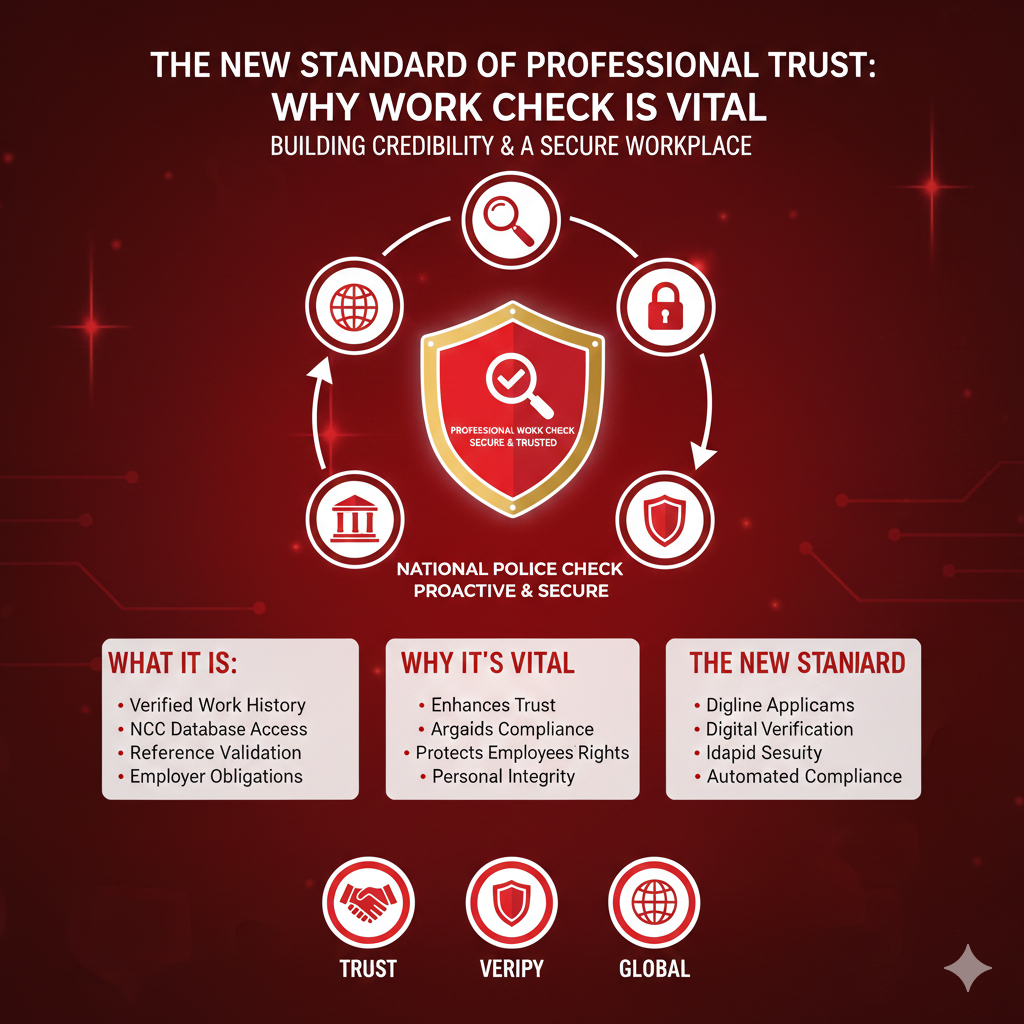
In the Australian employment landscape of 2026, the definition of onboarding has shifted. We no longer live in a world where a CV and a solid interview are enough to seal the deal. As hybrid work, global mobility, and high stakes sectors like disability support and cybersecurity dominate the economy. The traditional handshake deal has been replaced by a data driven approach to professional trust. For modern employers, the responsibility of maintaining a safe and productive environment is paramount, making the implementation of a robust work check strategy more critical than ever.
At Rapid Screening, we’ve watched the recruitment world evolve. We believe compliance shouldn’t slow your growth; it should be the foundation on which your team is built. Whether you are a small business owner hiring your first contractor or a national corporation onboarding a hundred staff members a month, understanding the nuances of background screening is essential. This guide explores the multi-layered nature of screening in 2026 and how technology is making the process faster, more secure, and more reliable than it has ever been.
The Anatomy of a Modern work check
People often use the term background check as a catch-all, but in reality, a thorough work check combines several different types of verification. Depending on the industry and the level of responsibility, an employer might require a combination of legal, financial, and professional verifications to gain a 360 degree view of a candidate.
1. Nationally Coordinated Criminal History Check (NCCHC)
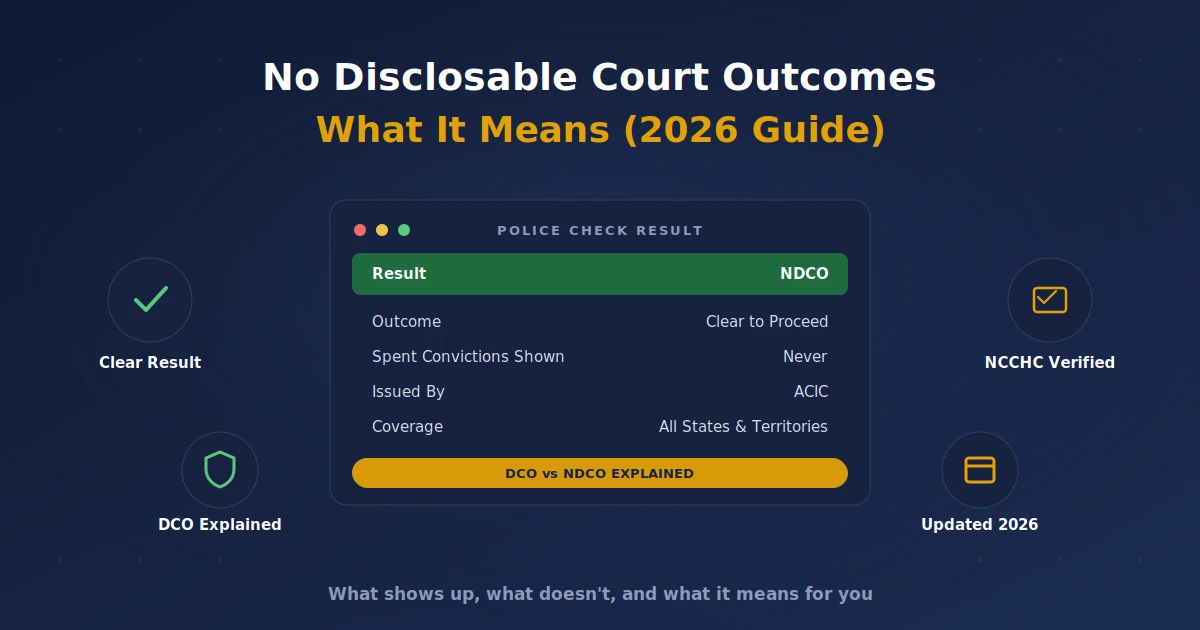
The cornerstone of almost every Australian hiring process is the police check. Managed through the Australian Criminal Intelligence Commission (ACIC), this search reveals Disclosable Court Outcomes. In 2026, organisations process these checks with incredible speed, but they remain point in time documents, accurate only as of the date of issue.
2. VEVO: Verifying the Right to Work
With Australia’s diverse and international workforce, confirming an applicant’s visa status is a legal necessity. A VEVO search is a crucial component of a comprehensive work check for any non-citizen applicant. It ensures the business remains compliant with the Department of Home Affairs and avoids the heavy penalties associated with illegal work arrangements.
3. NDIS and Working with Children Checks
For those in the care and education sectors, the standard has risen. Screening now involves ongoing monitoring rather than just a one-off certificate. These checks protect the most vulnerable members of our community, and organisations now integrate the results into a single HR dashboard as the 2026 industry standard for efficiency.
Why Speed and Accuracy Matter: The 70/30 Processing Rule
One of the biggest pain points in recruitment is the waiting game. In a competitive talent market, top-tier candidates won’t wait two weeks for a background clearance to come through. At Rapid Screening, we have leveraged the latest technology to streamline the process, ensuring that conducting a work check helps identify potential red flags before a contract is signed, without losing the candidate to a faster competitor.
The 2 Hour Reality
Today, approximately 70% of all national police checks are finalized almost immediately. Our system’s direct link to the ACIC means that if a candidate has a unique name and no criminal history, the result can be back in the employer’s inbox in as little as 120 minutes.
Managing Manual Referrals
The remaining 30% of applications are referred to police agencies for manual vetting. This doesn’t necessarily mean the candidate has a criminal record; it usually means there is a name match in the system that requires a human officer to verify. A high quality provider provides real-time tracking so that HR managers always know exactly where an application stands in that manual window.
Compliance in High-Trust Industries
In 2026, certain industries operate under a microscopic level of scrutiny. For these sectors, a standard work check in Australia typically includes deeper dives into financial history and professional registrations.
Finance and Fintech
With the surge in digital banking and AI driven financial services, Dishonesty and Financial Crime checks have become mandatory. Employers need to know that the individuals managing their digital assets have a verified history of integrity.
Aged Care and Disability Services
The NDIS Worker Screening rules have become more stringent to ensure the safety of participants. We help organizations manage these complex requirements by providing a centralized portal where all worker clearances, from police checks to NDIS status, can be viewed at a glance.
The 100 Point ID Verification: Simplified for 2026
The most common cause of delay in any background screening process is identity verification. Traditionally, this involved physical documents and JP witnessed signatures. However, in 2026, we’ve moved to a Mobile First biometric approach.
To finalize a work check in record time, candidates can now use their smartphones to:
- Scan Documents: Capture high resolution images of their Passport, Driver’s Licence, and Medicare card.
- Liveness Testing: Perform a quick selfie scan that matches their face against their ID documents using AI.
- Digital Consent: Sign the informed consent forms electronically, eliminating the need for printers or scanners.
This level of biometric security doesn’t just speed up the process; it significantly reduces the risk of identity fraud by ensuring the person being checked is exactly who they claim to be.
How Businesses Use the Screening Dashboard for Efficiency
For HR managers and recruitment teams, managing the compliance of a growing workforce can be an administrative nightmare. Using a centralized platform to manage every work check for your team allows for:
- Bulk Invitations: Send screening requests to 100 candidates with a single click.
- Automatic Reminders: The system notifies the employee when their check is nearing its anniversary.
- Encrypted Storage: The system stores all certificates in a secure, 256-bit encrypted environment, ensuring compliance with the Australian Privacy Principles.
- Centralized Billing: Streamline your accounting with monthly invoicing and clear reporting.
Note for Employers: Automation in 2026 isn’t about removing the human element; it’s about removing the human error. By automating data entry, you capture names and birthdates accurately, reducing the likelihood of a manual referral from the police.
Mitigating Risk: Beyond the Resume
A resume tells you what a candidate can do; a thorough screening tells you who they are. In 2026, a quality work check continues to deliver value long after the hiring process ends. It helps build a culture of safety and accountability.
By proactively screening your staff, you are:
- Protecting Your Brand: A single high profile incident involving an unscreened employee can cause irreparable damage to a company’s reputation.
- Reducing Turnover: Employees who feel safe in their workplace are more likely to stay, and a culture of integrity attracts top tier talent.
- Ensuring Physical Safety: Especially in sectors involving home visits or the handling of sensitive data, knowing the background of your staff is a non-negotiable safety requirement.
Conclusion: Certainty in an Uncertain World
In the modern world, background screening is not about exclusion; it is about inclusion with confidence. By implementing a robust screening policy, you aren’t just ticking a box; you are validating the quality and integrity of your most valuable asset, your people.
Rapid Screening is proud to be Australia’s leading partner in this journey. We use the fastest technology and the most accessible local support to handle your work check with the highest standards of accuracy and care. Don’t let compliance be a hurdle, make it your competitive advantage.
Frequently Asked Questions (FAQs)
Q) Is a police check the same as a Working with Children Check?
No. A police check is a point-in-time record of an individual’s criminal history. A Working with Children Check (WWCC) is a separate screening specifically for child-related work and involves ongoing monitoring.
Q) How often should we renew employee checks?
While there is no legal expiry on a certificate, most Australian employers follow an industry standard of renewing checks every 12 to 36 months to ensure continued compliance.
Q) Can candidates complete the check on their phones?
Yes. Our 2026 platform is fully mobile-responsive, allowing candidates to scan their ID and provide biometric verification directly from their smartphone camera.
Q) What happens if a candidate has a record?
A criminal record (Disclosable Court Outcome) does not automatically disqualify a candidate. Employers should assess the result based on the nature of the role and their internal risk management policies.
Stay Informed
Get updates on police check requirements and processing times, straight to your inbox.
Get Your Police Check Now