
Mastering the National Crime Check Australia Online
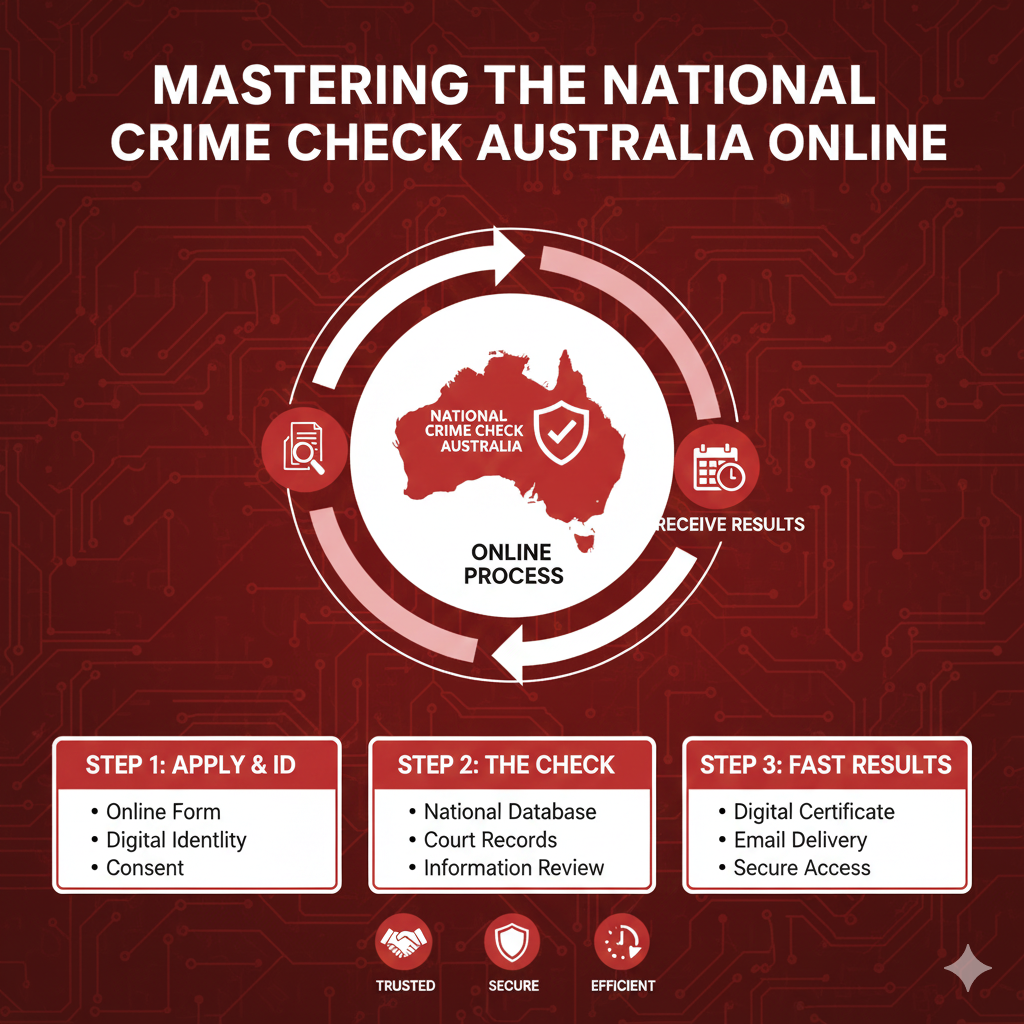
Why the Check is Essential In Australia, the pursuit of new employment, volunteer work, or specific professional licensing almost always requires a National Crime Check Australia, officially known as a Nationally Coordinated Criminal History Check (NCCHC) or National Police Check (NPC). This document is the cornerstone of trust and safety across many sectors. While the term National Crime Check Australia is widely used, it all points to the same official document, a record the Australian Criminal Intelligence Commission (ACIC) compiles to summarise an individual’s disclosable criminal history from all state and territory police jurisdictions. ACIC-accredited online providers like Rapid Screening have fully digitised the process of obtaining this critical certificate, offering an unprecedented level of speed and convenience. Defining the Document: The National Crime Check Australia It’s important to clarify the terminology often used interchangeably in Australia to refer to this mandatory document. The Various Names, The Single Source The names you might encounter include: Regardless of the term, the information is sourced from the same central system: the National Police Checking Service (NPCS), administered by the Australian Criminal Intelligence Commission (ACIC). This central control ensures that all authorities across Australia recognise the final document and that it complies with Australian law. Choosing an ACIC-accredited provider is the only way to guarantee the validity. What Information is Disclosed? A National Crime Check Australia report provides a snapshot of an individual’s disclosable criminal history up to the date of issue. This can include: Crucially, the check applies relevant state and federal legislation, such as the Spent Convictions Schemes, and releases only the information that the law permits on the final certificate. The Superiority of the Online Process The modern method of securing your National Crime Check Australia through an accredited online provider offers clear advantages over traditional paper-based systems. 1. Unmatched Speed and Efficiency For a vast majority of applicants, the online process dramatically reduces turnaround time. This speed allows the system to handle your compliance efficiently, enabling you or your new employee to focus on the role instead of waiting in administrative limbo. 2. Secure Digital Identity Verification The online application for a National Crime Check Australia replaces the need for in-person document viewing with advanced, encrypted digital verification systems. 3. Transparent Status Tracking Unlike paper based applications that disappear into a black box, a National Crime Check Australia submitted online allows applicants and employers to monitor progress via a secure online dashboard, providing full transparency and managing expectations throughout the process. Common Scenarios for Needing a National Crime Check Australia The versatility and necessity of this document mean it is required for a broad range of life and career events. Employment and Professional Licensing The primary driver for seeking a National Crime Check Australia is employment suitability. Most organisations, particularly those in regulated sectors, mandate it as part of their risk management strategy. This is particularly true for: Having an official check ready to go demonstrates professionalism and readiness to employers. Volunteer and Community Roles Many community and non-profit organisations, particularly those that receive government funding or work with sensitive groups, require volunteers to obtain a National Crime Check Australia. Often, a subsidised or reduced-fee volunteer check is available for this specific purpose, acknowledging the valuable contribution of volunteers to the community. Visa and Immigration Requirements While the Australian Federal Police is the specific body for Australian visa and immigration police checks, understanding the nature of the National Crime Check Australia is vital. The core information pulled for both checks originates from the same national police database, confirming the individual’s history for administrative and governmental purposes. Addressing Processing Times: The Referral Process While the online system is fast for most, it’s essential to understand why some National Crime Check Australia applications take longer. The Potential Match Referral The ACIC system refers approximately 30% of all checks to one or more police agencies for manual processing. This happens when the applicant’s name and details generate a ‘potential match’ with a record in the national database. Reasons for referral include: ff This process can take 10 to 15 business days or occasionally longer, depending on the complexity and the workload of the relevant police agency. Crucially, the online submission method does not avoid this manual referral, but it ensures the check enters the queue immediately. Conclusion The National Crime Check Australia is a cornerstone of compliance and safety. By choosing an ACIC-accredited online provider like Rapid Screening, you are opting for the most efficient, secure, and transparent pathway to obtaining this crucial document. The online application method provides the speed necessary for today’s fast-paced job market, delivering results in minutes for the majority of applications while maintaining the highest levels of security and legal compliance. Secure your National Crime Check Australia online today and move forward with confidence in your career or compliance requirements. Frequently Asked Questions (FAQs) Q) How is a National Crime Check Australia different from a Working with Children Check (WWCC)? A National Crime Check Australia (NCCHC) is a national document that lists disclosable court outcomes for all purposes. A Working with Children Check (WWCC) is a separate, state-based clearance that specifically assesses an individual’s suitability to work with children. You will often need both if you work in a school or childcare environment. Q) Will a minor, old offence appear on my National Crime Check Australia? If the offence meets the criteria of the relevant Spent Convictions Scheme, the system will legally filter it and will not show it on your check. The law requires accredited providers to apply these filtering rules to protect your privacy and support rehabilitation. Q) If my application is referred for manual checking, can I speed it up? Unfortunately, no. Once an application is referred to a police agency for manual vetting, neither the accredited provider nor the applicant can legally intervene to speed up the process. This manual check is mandatory to ensure accuracy and compliance. The best approach is to submit your application as early as possible. Q) Does
Why Getting the Right CV Check Phone Number Matters for You
Searching for a CV check phone number often means you’re at a critical stage of the employment process. You might be an individual trying to track a result, or an HR manager dealing with an urgent compliance issue. While CV Check is a known provider in the Australian screening market, the fundamental issue remains the same: when it comes to time sensitive, sensitive data, you need immediate access to expert support, not just a contact number that leads to an endless hold queue. At Rapid Screening, we believe that exceptional customer support is the non negotiable bedrock of a reliable screening service. Finding the right CV check phone number shouldn’t be a hurdle; it should be a direct line to a solution. We focus on providing transparent and accessible support, ensuring your application or candidate check proceeds without unnecessary delay. The True Value of Finding the Right CV Check Phone Number Why do applicants and employers consistently search for a CV check phone number or contact details during the screening process? Because the process, while largely digital, often hits roadblocks that require human intervention, expert advice, and immediate resolution. The Urgency of Screening Issues Background checks are often the last step before a final job offer is made. Any delay, whether due to an ID verification error, a name match that triggers a manual review, or simple confusion over paperwork, can cost a candidate their dream job or cost a business a critical hire. When time is money, and a job is on the line, email response times of 24 to 48 hours are simply not acceptable. The necessity of reaching a human expert via phone or live chat highlights the importance of choosing a partner committed to responsive, real time support, not just an accredited check process. The Value of Speaking to an Expert The complexity of Australian screening laws, particularly the varying Spent Convictions Schemes across states and territories, and the specific requirements for different licences, means applicants often have highly specific, high stakes questions. A general call centre cannot answer complex compliance questions. When you need to understand why a specific record is showing up as a Disclosable Court Outcome (DCO), or why your processing time is longer than the 1 day estimate, you need to speak with an ACIC trained specialist who understands the legislative nuances and the exact status of your submission. Navigating Common Background Check Queries The need for a quick CV check phone number usually arises when a digital application hits one of the following common snags. Identity Verification Hiccups The most common reason for a failed or delayed check is identity verification. The system is stringent, requiring documents to match perfectly with the 100 point check requirements. Applicants might run into issues if: A quick phone call to an accredited provider can resolve these issues in minutes by clarifying document requirements or manually escalating a clear cut technical error, bypassing days of unnecessary delay. Understanding Your Result (DCO vs. NDCO) When a check takes longer than 48 hours, applicants naturally become anxious. They need to call to understand: Has my check been flagged as a potential name match? or “If I do have a record, how does the Spent Convictions Scheme apply?” An expert support team can provide reassuring, transparent communication about the processing pipeline, manage expectations for longer checks, and explain the legal difference between a Disclosable Court Outcome (DCO) and a No Disclosable Court Outcome (NDCO) without giving legal advice. The Rapid Screening Difference: Direct Access and Expertise Instead of trying to track down a difficult to find CV check phone number, Rapid Screening prioritises direct, accessible support. Our commitment is built around the understanding that transparency and speed are just as important as the certificate itself. Our Commitment to Accessible Support We ensure our CV check phone number are clearly visible and staffed by knowledgeable Australian based team members. Our support channels include: This multi channel approach guarantees that whether you are an individual needing clarity on your certificate or an employer managing high volume screening, you get the answer you need quickly and accurately. We aim to remove the anxiety often associated with the background check process. Rapid Screening provides services in VIC, TAS and all over Australia. Expertise in ACIC and Regulatory Compliance All our support staff are thoroughly trained in the official guidelines of the Australian Criminal Intelligence Commission (ACIC). They are experts in the intricacies of the National Police Checking Service (NPCS), which is vital because the validity of your check depends entirely on correct, compliant processing. Our team ensures that every submission is accurate, minimizing the chance of an ACIC rejection. When you need the CV check phone number for Rapid Screening, you are connecting with compliance professionals, not merely customer service representatives. Choosing Your Screening Partner: More Than Just a CV Check Phone Number When selecting a background screening partner, the quality of service should extend far beyond the ease of finding a contact detail. It should encompass the entire service ecosystem. Accreditation and Compliance as Priority While many providers can offer a national police check, not all offer the same level of integrated support. Rapid Screening provides comprehensive, legally compliant screening services across a range of checks: police checks, VEVO checks, and qualification verifications. This holistic approach ensures that when you call our CV check phone number, we can assist with all facets of your compliance needs, not just one document. The Power of Digital vs. Manual Support The digital first approach to CV check phone number support focuses on efficiency. Automated systems handle the common requests via the online portal, freeing up our human experts to handle complex queries that genuinely require personal attention. This efficient allocation of resources is how we maintain quick response times and superior service quality. For any urgent compliance questions, our CV check phone number is your fastest route to resolution. Conclusion Searching for a CV check phone number highlights a common need in the
The Secure Way to Get Your National Police Certificate Online

Introduction The National Criminal History Check (NCHC), commonly referred to as a National Police Certificate (NPC), is a foundational requirement for employment, volunteering, and licensing across Australia. Historically, obtaining this essential document involved paper forms, trips to the post office, and lengthy waiting periods. Today, digital accreditation and secure online platforms have entirely streamlined the process. Getting your national police certificate online is now the fastest, most convenient, and most secure way to fulfil this requirement, enabling you to accelerate your job search or complete your compliance obligations with unprecedented speed. What is the National Police Certificate? Before diving into the benefits of the online process, it’s important to understand exactly what this document is and why it holds such authority. Understanding the Official Name and Purpose The official name for the document is the National Criminal History Check (NCHC). People often call it a National Police Certificate or simply a police check when they issue it. Regardless of the name, the purpose remains the same: it is an official document that summarises an individual’s disclosable court outcomes and pending charges recorded across all Australian police jurisdictions. The Australian Criminal Intelligence Commission (ACIC) processes this certificate centrally, and employers and regulatory bodies require it to make informed decisions about whether someone is suitable for a position of trust, especially roles involving vulnerable people, children, or financial oversight. Who Needs This Certificate? The demand for the National Police Certificate spans nearly every sector of the Australian economy. Common roles and purposes requiring the certificate include: If you are starting a new job or engaging in a regulated activity, having a current National Police Certificate is usually a non negotiable step. The Digital Revolution: Getting Your National Police Certificate Online The most significant shift in the background checking industry is the move from a manual process to a fully digital, ACIC accredited platform. The ACIC Accreditation Advantage Only organisations accredited by the Australian Criminal Intelligence Commission (ACIC) are legally authorised to access the National Police Checking Service (NPCS) and submit checks on behalf of applicants. By choosing an accredited online provider, you deal directly with a trusted intermediary, who ensures they handle your application with the highest standards of security and compliance mandated by the Australian Government. This accreditation guarantees that the certificate you receive is official and valid nationwide. The Online Application Process Getting your national police certificate online is a simple, three step journey that bypasses the friction of physical paperwork and in person visits. With this streamlined approach, the provider often lodges your application within minutes of you completing it, immediately starting the official police check process. Speed and Efficiency: The Core Benefit of Applying Online The primary reason for the overwhelming adoption of the digital application method is speed. Postal and manual handling delays could make paper-based checks take weeks to process, but the online system delivers rapid turnaround. Understanding ‘No Disclosable Court Outcomes’ (NDCO) For the vast majority of applicants who have no criminal history or whose history is deemed non-disclosable under spent-conviction laws, the system returns a No Disclosable Court Outcome (NDCO). Because the system instantly verifies digitally submitted applications, it can return these NDCO results within hours, sometimes in less than an hour, depending on system load. This incredible speed is the defining feature of the modern check. Avoiding Paperwork Delays Choosing to get your National Police Certificate online completely eliminates the administrative friction inherent in the old process: The efficiency gained by removing these physical roadblocks ensures that your application moves to the central ACIC processing queue with maximum speed. Security and Validity: Is a National Police Certificate Online Legally Sound? A common question is whether the convenience of an online application compromises the security or validity of the final certificate. The answer is a resounding no. The final certificate issued via an accredited provider is fully compliant and legally binding. Providing services in QLD, VIC and all over Australia. Digital Identity Verification: Secure and Streamlined The digital identity verification process used by accredited online providers is arguably more secure than the old manual system. It utilises encryption and secure database links to verify your documents and protects your sensitive data at every stage. This robust verification process satisfies the strict requirements for the National Police Certificate online. The Law and Spent Convictions All ACIC accredited online providers are legally obligated to apply the relevant Federal and State Spent Convictions Schemes. This process ensures that the national police certificate you receive online discloses only the information legally allowed in your jurisdiction and protects your right to a fresh start while helping employers maintain public safety standards. This strict adherence to Australian law guarantees the certificate’s validity for all employment and regulatory purposes. Making the Smart Choice for Your Career An accredited online provider gives career focused individuals and compliance driven businesses the smartest way to obtain a National Police Certificate online. Readiness for the Job Market In a tight job market, time lost is opportunity lost. By completing your National Police Certificate online, you demonstrate proactivity and professionalism. Having a current certificate in hand, ready to present to a potential employer, is a significant competitive edge, allowing you to accept an offer and begin work faster than applicants relying on slower, outdated methods. The convenience, speed, and proven reliability of the digital process make getting your National Police Certificate online the modern standard. Conclusion The evolution of the National Criminal History Check has fundamentally changed how Australians handle compliance documentation. By utilising an ACIC accredited service, you gain access to an efficient, secure, and legally robust system that returns your results in record time. Embrace the digital age by securing your official national police certificate online, the fast track to securing your next role and fulfilling your professional obligations with confidence and certainty. Frequently Asked Questions (FAQs) Q) How quickly can I get my National Police Certificate online? The vast majority of applicants who have no disclosable history receive their results within a
Everything You Need to Know About a Personal Background Check
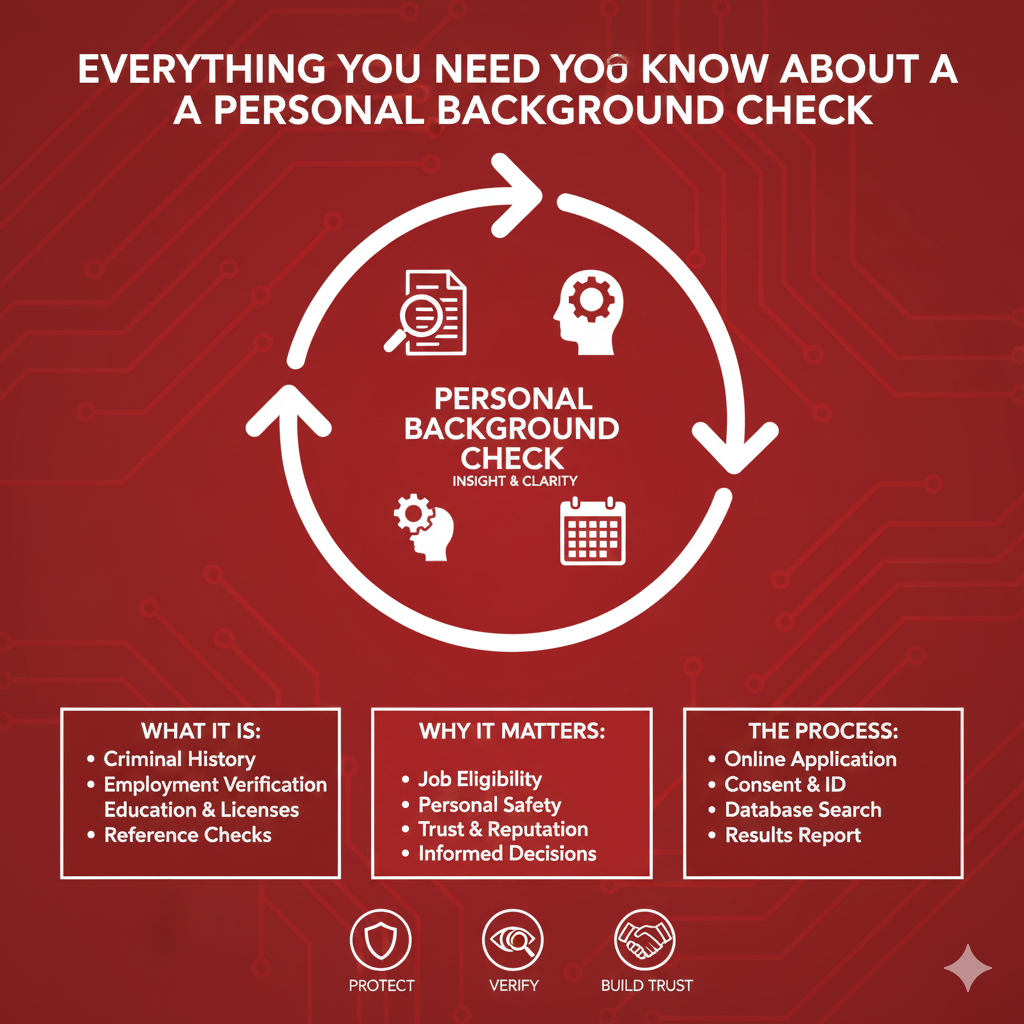
Taking Control of Your Narrative In today’s competitive environment, being proactive about your professional documentation is key. While we often think of background checks as something an employer requests, obtaining a personal background check one initiated by you is a powerful tool for self awareness, readiness, and career preparation. A personal background check allows you to see exactly what potential employers, landlords, or licensing bodies will see. It’s your chance to verify the accuracy of your records, understand your legal disclosures, and address any unexpected issues before they cause a delay or jeopardise an opportunity. As a leading accredited screening provider, Rapid Screening helps countless individuals take this crucial, empowering step toward career success. Understanding the Scope A personal background check is a voluntary application made by an individual to an accredited screening provider like Rapid Screening to obtain their own National Criminal History Check (NCHC). It is the identical document that an employer would receive, processed through the same official channels (the Australian Criminal Intelligence Commission, or ACIC), and subject to the same strict legal filtering rules, such as the Spent Convictions Schemes. Key Components of the Check When you initiate your own check, the results cover disclosable court outcomes and pending charges recorded across all Australian police jurisdictions. A comprehensive personal background check typically reveals: The check applies the relevant Spent Convictions legislation, so it filters older, less serious offences that meet the legal criteria and does not disclose them on the certificate. The Power of Proactivity The greatest benefit of conducting your own personal background check is the element of control. Instead of waiting for a potential employer to initiate the process and encountering an issue that you were unaware of, you can review your own record first. This allows you to: Three Reasons to Get Your Own Personal Background Check While employer initiated checks are standard, there are compelling reasons why more Australians are choosing to get a personal background check upfront. 1. Career Readiness and Reducing Delays In a competitive job market, speed is everything. Many employers require a police check as the final hurdle before a candidate can start. If you already have a current NCHC certificate, you can provide it immediately upon request, potentially shaving days or even weeks off the onboarding process. 2. Licensing and Regulatory Compliance A personal background check is often a necessary requirement for professional licensing or accreditation, separate from job applications. This includes: By initiating your own check, you ensure that you meet the regulatory requirement promptly, avoiding delays in starting your own business or obtaining the required credentials to practice. 3. Verification of Identity for the Gig Economy The rise of the gig economy means that individuals are increasingly responsible for their own compliance. Platforms and clients often require a recent check for onboarding. A current personal background check validates your identity and suitability across multiple contracts without needing to repeatedly pay for separate employer initiated checks, saving you time and money. The Process Obtaining your check through an accredited online provider like Rapid Screening is a simple, secure, and fully digital process designed for speed. Step 1: Online Application and Consent You begin by completing an online application form. This requires basic personal details and, critically, your signed consent allowing the accredited provider to submit your request to ACIC on your behalf. This digital process is much faster and more accurate than filling out a paper form. Step 2: Digital Identity Verification Instead of visiting a police station or post office, you use our secure online portal to verify your identity. This involves: This digital step is highly efficient and eliminates the need for any in person queues, making the personal background check application seamless. Step 3: Fast and Secure Results Once you submit your application, ACIC processes the check. For most applications with “No Disclosable Court Outcomes,” ACIC returns the results within hours or less than one business day. They then deliver your official certificate securely usually by email giving you an immediate, official copy of your personal background check. Interpreting Your Results: Disclosable vs. Spent One of the most valuable aspects of getting your own personal background check is learning how the Spent Convictions Scheme has been applied to your record. The Role of Spent Convictions The final certificate you receive only includes Disclosable Court Outcomes (DCOs). If an offence occurred, but it meets the criteria for being spent, that conviction will be legally filtered and will not appear on the certificate. This is a critical legal protection. If a record is not listed, you are legally entitled to act as if it never occurred for most employment purposes. Addressing Potential Disclosures If a DCO does appear on your personal background check, you have time to prepare. This could involve: Being able to hand the employer your police check and a prepared, honest explanation shows maturity and professionalism. Conclusion: Invest in Your Certainty In the modern Australian career landscape, being prepared means more than just having a polished resume. It means understanding your legal status and eliminating any potential roadblocks before they appear. Obtaining a personal background check is not just an administrative step; it is an investment in your peace of mind and your future employability. Whether you are preparing for a new job, renewing a licence, or simply seeking certainty about your personal history, initiating your own personal background check through a trusted and accredited provider ensures you have the official, accurate documentation in hand, ready to seize your next opportunity. Frequently Asked Questions (FAQs) Q) Why should I get a personal background check if my employer will just request one? The main advantage is control and speed. By having your own current check, you can verify its accuracy and address any potential issues proactively. Most importantly, you can provide the certificate instantly to an employer, avoiding the typical 1 to 2 day delay for an NDCO result and speeding up your onboarding time. Q) How long is a personal background
What Does Conviction Spent Mean for Your Police Check?

Introduction: The Second Chance in Australian Law Few terms are as significant or as often misinterpreted in the context of National Criminal History Checks (NCHC) and employment screening as the idea of a spent conviction. For many Australians who have made mistakes in the past, knowing what conviction spent means is essential to advancing in their careers, finding work, and returning to a sense of normalcy. Australian law determines when a conviction becomes spent, aiming to balance public safety with a person’s right to rehabilitation and freedom from ongoing discrimination over a minor criminal history. Federal, state, and territory regulations govern this process through a complex legal framework. In order to ensure compliance, equity, and sound judgment throughout the screening process, Rapid Screening, a reliable source of criminal records, seeks to make this important idea clear for both employers and candidates. Unpacking the Term: What Does Conviction Spent Mean? Fundamentally, a spent conviction is a prior conclusion of blame that is no longer required to be disclosed on a typical National Criminal History Check after a predetermined amount of time has gone by and certain requirements are satisfied. In most cases, the law essentially treats the person as though the incident never happened when it comes to employment, helping others, or licensing. The Core Definition In practical terms, when the system deems a conviction spent, it legally excludes that conviction from disclosure on a standard police check. Once a conviction becomes spent, an individual can, in most cases, legally deny having it, and an ACIC accredited agency’s police check certificate will not include that offence. The key elements that determine if a conviction is eligible to be spent typically include: It plays a crucial role in supporting successful rehabilitation by removing an often unnecessary barrier to employment, a factor widely recognised as powerful in preventing re offending. The Philosophy Behind Spent Convictions Legislation The laws establishing spent convictions programs reflect a basic idea: society should not punish people indefinitely for past transgressions, particularly minor ones, when they have consistently demonstrated lawful behaviour. Without such regulations, employers could permanently bar a fully rehabilitated and suitable person from certain jobs because of a decades-old minor offence, causing unnecessary exclusion from both society and the economy. The goal of the policy is to restrict unfair public release of personal data that is no further significant to an individual’s traits or qualifications for a role, rather than to erase history. The need to safeguard vulnerable groups and uphold public confidence in highly ethical professions necessitates a constant balancing act. The Legal Landscape Australia does not operate a single, unified scheme for spent convictions. The Federal Spent Convictions Scheme covers federal offences, and each state and territory enforces its own legislation for offences committed under its laws. Federal vs. State Schemes The Federal Spent Convictions Scheme sets the baseline for how federal offences are treated. It specifies a 10 year crime free period for adult convictions and a 5 year period for juvenile convictions, provided the sentence was not more than 30 months’ imprisonment. However, when an applicant undergoes a National Criminal History Check, the check searches for offences across all Australian police jurisdictions. Authorities must apply each state and territory’s legislation to any offence recorded in that jurisdiction. This means: Key Criteria While the specific details vary, the central criteria for determining what does conviction spent mean remain consistent across most jurisdictions: When you meet all these criteria, the relevant legislation automatically treats the conviction as spent, and you usually don’t need to submit a formal application or attend a court hearing to activate its spent status. The Impact on Police Checks and Employment Disclosability on a National Criminal History Check This means if an applicant has a conviction that meets the spent criteria, the final police check report will show a result of No Disclosable Court Outcomes (NDCO), or an equivalent designation, for that specific record. The system will not disclose the spent conviction to the employer, and the applicant can legally answer No if someone asks whether they have a criminal record. This powerful protection illustrates precisely what does conviction spent mean in a career context: it represents a clean slate for standard employment purposes. Exceptions to the Rule It is absolutely vital for both applicants and employers to understand that the spent convictions schemes are not universal and contain significant exceptions. Even if the general rules technically mark a conviction as spent, some specific, high-integrity, or high-risk roles may still require you to disclose it. Common exceptions include: The scope of these exceptions varies significantly by jurisdiction and the specific legislation governing the role. For example, the definition of what does conviction spent mean is narrower when applied to a teaching position than it is for a retail sales position. Navigating the Nuances: Common Misconceptions Spent vs. Annulled or Wiped Records Many people mistakenly believe that a spent conviction has been annulled or wiped from existence. This is incorrect. The record still exists on police databases. The system simply filters the conviction from the public-facing police check document. It still keeps the original record, and authorised bodies can access and disclose it under the legal exceptions mentioned above. The Role of the Employer and Applicant For applicants, understanding what does conviction spent mean empowers them to know their rights. When a conviction becomes spent, the law protects individuals by preventing its disclosure on a standard check and by prohibiting discrimination based on that conviction. For employers, it is essential to: Conclusion Anyone involved in the employment sector in Australia must understand what a spent conviction means. For individuals, it represents a path to successful rehabilitation and reintegration into the workforce. For employers, it requires diligent compliance with a complex legal framework designed to promote fairness while maintaining safety standards. Frequently Asked Questions (FAQs) Q) What is the typical waiting period for a conviction to become spent? While the rules vary between jurisdictions, the most common standard is a 10 year
Decoding the Differences: When You Need an AFP Clearance Police Check vs A Standard NPC

In the world of Australian background screening, clarity and compliance are everything. When an employer, a government agency, or an overseas body asks you for an Australian police check, they are generally referring to the National Police Check (NPC). However, the exact body issuing this certificate, be it an ACIC-accredited provider like Rapid Screening or the Australian Federal Police (AFP), can make a critical difference. The term AFP clearance police check refers specifically to the National Police Certificate issued directly by the Australian Federal Police. While the result contains the same core information as other Nationally Coordinated Criminal History Checks (NCCHCs), its issuer and accepted purpose are highly specific. Understanding this distinction is vital to avoid application errors and costly delays, especially if you are applying for immigration, a Commonwealth job, or work overseas. This guide breaks down the essential differences and outlines exactly when you must choose the AFP clearance police check path. The Australian Police Check Landscape: Two Paths to a National Check The goal of every Australian criminal history check is the same: to provide a summary of an individual’s Disclosable Court Outcomes (DCOs) across all Australian states and territories. This process is managed at a national level through the Australian Criminal Intelligence Commission (ACIC). What is the Standard Nationally Coordinated Criminal History Check (NCCHC)? The Nationally Coordinated Criminal History Check (NCCHC) is the most common police check used for general employment, volunteering, and licensing purposes within Australia. Defining the AFP Clearance Police Check (The AFP NPC) An AFP clearance police check is simply the National Police Certificate issued specifically by the Australian Federal Police. While the core database searched is the same national index, the AFP is the mandated provider for checks intended for certain high-stakes and federally regulated purposes. When is an AFP Clearance Police Check Mandatory? If you are an employer or an individual needing an official criminal history report, the purpose of the check dictates which provider you must use. If your need falls into any of the following categories, you must apply directly through the AFP to obtain the specific AFP clearance police check. 1. Immigration and Visa Purposes (The Most Common Requirement) The Department of Home Affairs (Immigration) requires an AFP clearance police check for anyone applying for Australian citizenship, permanent residency, or certain visas (partner, skilled, or temporary). This is the single largest driver for people requiring the AFP certificate. 2. Commonwealth Government Employment and Licensing Any role related to the Commonwealth of Australia government, its agencies, or entities operating under Commonwealth legislation often mandates the AFP check. This includes: 3. Overseas Applications For Australian citizens or residents seeking employment, volunteer work, or adoption overseas, the receiving international body frequently requires an AFP check because the AFP is the federal policing body recognised globally. 4. Australian Territories Applicants who are residents of, or require the check for purposes within, the Australian Capital Territory (ACT) or the Jervis Bay Territory must use the AFP. AFP Check vs. ACIC Check: A Comparative Table While both documents are technically National Police Checks, their specific application and acceptance criteria differ significantly. This table illustrates the key differences to help you decide which AFP clearance police check path you need to follow. Feature ACIC-Accredited Check (e.g., Rapid Screening) Australian Federal Police (AFP) Check Common Name National Police Check (NPC) or NCCHC AFP Clearance Police Check Issuing Authority ACIC-Accredited Provider Australian Federal Police (AFP) Primary Use General employment, volunteer work, state/territory licenses Mandatory for Visa/Immigration, Commonwealth employment, ACT residents, Overseas purposes. Turnaround Time Up to 70% instant Generally within 48 hours for instant checks Speed Advantage Designed for maximum speed and bulk employer use. Processing is often slightly slower due to the high volume of manual checks for immigration. Cost Varies by provider, often highly competitive for employer clients. Fixed fee set by the AFP. The crucial takeaway is that for general employment in the private sector or for state/territory licensing in New South Wales, Victoria, Queensland, etc., the check provided by an ACIC accredited service like Rapid Screening is usually all that is required and is significantly faster. Only specific, federally driven purposes require the AFP clearance police check. The Importance of Accuracy When Applying for Your AFP Clearance Police Check Whether you apply for the standard NCCHC or the specific AFP clearance police check, accuracy in your application is the single most important factor determining turnaround time. Identification and Vetting All police checks, regardless of the provider, require strict identity verification to a 100-point check standard. This ensures the check is run against the correct person. Inaccurate or incomplete ID submission will immediately halt the process and result in a manual review request. Consent is Mandatory You must provide explicit consent for the check to be conducted. No entity, private or federal can legally proceed with an AFP check or any other NCCHC without the applicant’s formal, signed permission. This protects the applicant’s privacy and rights under Australian law. Choosing the Right Screening Partner For employers managing a high volume of recruits who require the standard Nationally Coordinated Criminal History Check for general, non-Commonwealth employment, speed and efficiency are key. Rapid Screening’s ACIC accreditation means we use the same national database as the AFP but deliver the legally equivalent, required certificate rapidly through our dedicated online portal. We understand that applicants needing an AFP clearance police check for immigration purposes cannot use our service for that specific goal, but we are here to support every other common employment screening need across Australia. For those specific Commonwealth requirements, applicants must apply directly to the AFP. Conclusion The term AFP clearance police check should serve as a signal: it indicates the necessity of using the Australian Federal Police to obtain your National Police Certificate, typically reserved for immigration, federal roles, or overseas applications. For the vast majority of Australian employment and volunteer needs, a standard, efficient National Police Check from an ACIC-accredited provider like Rapid Screening is all you need. We provide the comprehensive criminal
The Essential Guide to How and Why You Should Check Crime Record in Australia

In today’s environment, trust, safety, and compliance are paramount for Australian businesses and community organisations. Whether you are an employer making a crucial hiring decision, a licensing body verifying an applicant, or an individual seeking employment or volunteer work, the need for accurate background screening has never been greater. A fundamental step in this process is to secure a comprehensive criminal history check. Understanding the complexity of legal requirements and police databases can be daunting. This is where a trusted, accredited provider becomes invaluable. If your goal is to efficiently and reliably check crime record for yourself or your candidates, you need a service that adheres to the strict guidelines set out by the Australian government. A reliable check ensures you have the necessary information to maintain a safe, compliant, and trustworthy environment. Understanding the Australian Criminal Record Check A criminal record check, often referred to as a National Police Check (NPC), is a nationwide process that verifies if an individual has any disclosable court outcomes or pending charges in Australia. It is a mandatory requirement for millions of roles across the country annually, forming the bedrock of many employment, licensing, and accreditation decisions. What is a National Police Check (NPC)? The NPC is a name and date of birth police check, conducted by searching the centralised databases of all Australian police agencies. The process is coordinated through the Australian Criminal Intelligence Commission (ACIC). When a check is submitted, ACIC coordinates with police forces across all states and territories (including the Australian Federal Police) to search for potential matches against an applicant’s details. It is crucial to understand that a National Police Check is not a real-time check. It reflects the individual’s police history up to the date of issue. The system compiles the search results into an official certificate that details any Disclosable Court Outcomes (DCOs) in line with the relevant spent conviction legislation. The Importance of a Reliable Check Crime Record Service You can apply for an NPC directly through some state police agencies, but an ACIC-accredited body such as Rapid Screening almost always provides the fastest and most efficient route. These accredited agencies use direct electronic access to the ACIC system, ensuring they process applications quickly and accurately. Choosing a reliable service to check crime record offers several key advantages: The Official Process to Check Crime Record The NPC application process follows strict standards to maintain integrity and security, but an accredited provider significantly simplifies the journey. Following the correct steps is vital to ensure the check is valid and accepted by the requesting organisation. Applying Through Accredited Bodies (Like Rapid Screening) To check a crime record quickly and compliantly, the system streamlines the process into three main stages: application, identity verification, and police processing. Information Required for the Check Crime Record A complete and accurate submission is essential for a fast result. Applicants are typically required to supply: If you omit or enter incorrect information, you may trigger a manual review and experience significant delays. Processing Time and Verification One of the most common questions is, “How long does it take?” The timeframe can vary, but using an accredited online service offers the highest chance of a rapid result. Step Detail Timeframe (Approx) 1. Application Submission Applicant completes online form and pays the fee. 5-10 minutes 2. Identity Verification 100-point digital ID check completed and verified. Immediate to 1 hour 3. Police Database Search ACIC submission and automated/manual database comparison. 70% of checks are instant (cleared) 4. Manual Review (If Required) Checks that find a potential match or require clarity are manually reviewed by police. 1-15 business days (or longer in rare complex cases) 5. Certificate Issuance The official digital certificate is issued to the applicant. Upon clearance Most checks are processed almost instantly, but the 30% that require manual police review can take up to several weeks, which highlights why you must submit accurate application data the first time. What Information is Revealed on a Criminal Record Check? The goal of the NPC is not to present an applicant’s entire history, but rather to reveal only the relevant, disclosable information according to state and federal legislation. Disclosable Court Outcomes (DCOs) vs. Non-Disclosable Information The certificate will list Disclosable Court Outcomes (DCOs), which typically include: Critically, the certificate will not typically include: Spent Convictions Schemes The Spent Convictions Schemes operate at both the Commonwealth (Federal) and State/Territory levels. These schemes exist to give individuals with older, minor criminal records a second chance by limiting the disclosure of certain offences after a specified “crime-free” period (usually 10 years for an adult and 5 years for a juvenile). If a conviction becomes “spent,” the police agencies generally do not release it on the NPC. They only release it when the check is for a specific, sensitive role (such as working with children, vulnerable people, or in law enforcement) where exemptions apply. The police agencies automatically apply the rules of the Spent Convictions Scheme before they issue the certificate. Who Needs to Check Crime Record? The requirement to obtain a police check touches nearly every industry and community sector in Australia. Organisations committed to due diligence use it as a key risk management tool. Employment Screening Many industries require their employees, contractors, and volunteers to successfully check crime record as a condition of engagement. This is particularly prevalent in sectors that involve a high degree of public trust or access to sensitive information or vulnerable populations, including: Volunteer and Community Roles Checks are also vital for community safety. Organisations involved in sports, youth programs, and community services routinely require checks to ensure the safety of participants, particularly children and vulnerable adults. While a dedicated Working with Children Check (WWCC) is mandatory in these areas, an NPC often serves as a primary layer of screening. Licensing and Regulatory Requirements Many professional licenses and regulatory accreditations depend on a clear criminal history. This includes: Common Misconceptions About Checking Crime Records Navigating the landscape of criminal history checks can lead to
Your Essential Guide: Mastering the Check Police Process in Australia
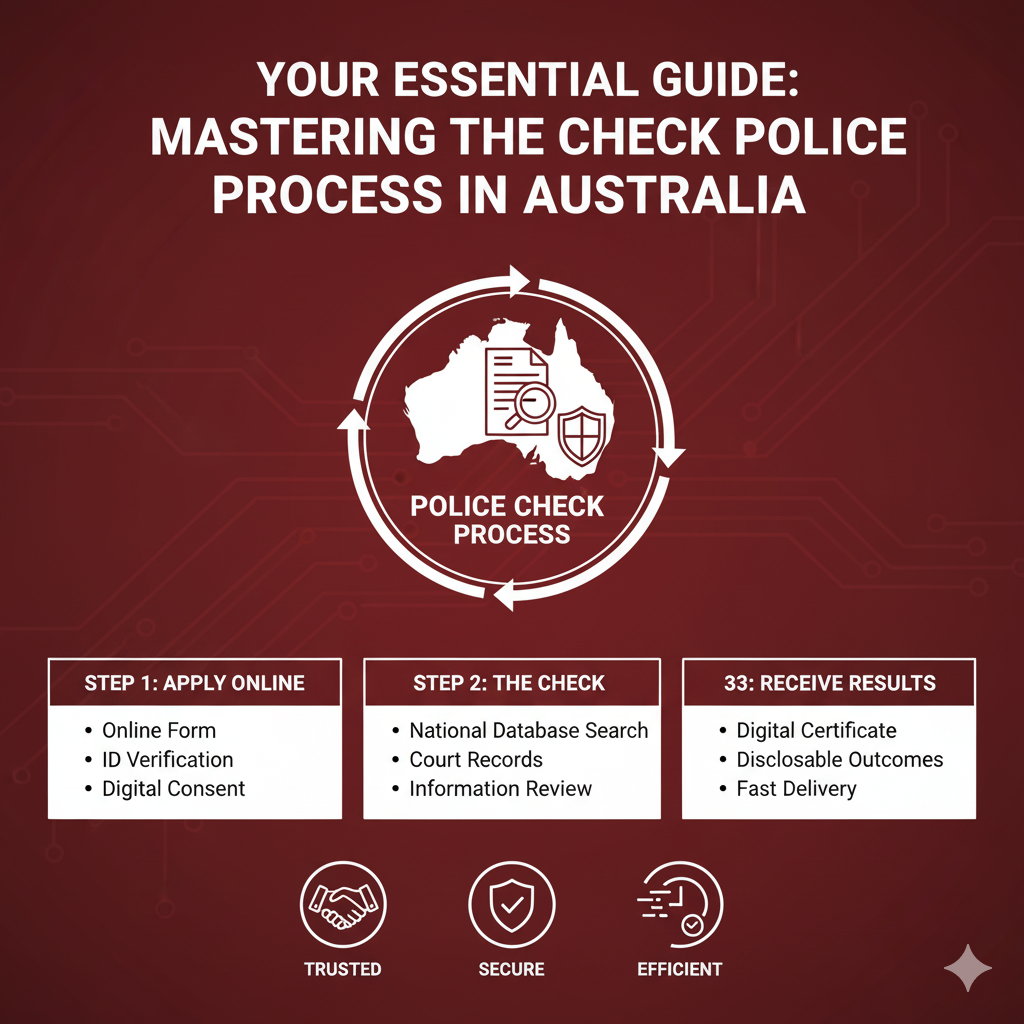
In the Australian job market, employers, volunteer organisations, and licensing bodies almost universally require one document: the National Police Check (NPC), often simply referred to as a police check. This document is your official clearance, confirming your suitability for a position of trust. While the process of obtaining this clearance can seem complicated, choosing an ACIC-accredited provider like Rapid Screening transforms the experience. We offer the fastest route to compliance, delivering 70% of all check police results within just 2 to 4 hours of application. This comprehensive guide will demystify the check police process, clarify its purpose, explain the different results, and show you exactly how to get your certificate quickly and securely. Check Police Basics: What Is the National Police Check? The official name for the check police is the Nationally Coordinated Criminal History Check (NCCHC). It is a national-level search that draws information from the databases of all Australian police agencies across every State and Territory. The Purpose of the Check Police The primary purpose of the check police is to verify a person’s identity and criminal history at a specific point in time. This information is vital for organizations to fulfill their duty of care, ensure public safety, and maintain the integrity of their workforce. Sector Why the Check Police is Essential Aged Care/Childcare Mandatory to protect vulnerable persons from individuals with relevant records of violence or abuse. Finance/Banking Essential to prevent financial crime and fraud by screening individuals with records of dishonesty. Government/Public Sector Required for all roles involving public trust, sensitive information, or security clearances. Volunteering Ensures the safety and suitability of individuals engaging with community groups and events. ACIC Accreditation and Validity The entire system is managed and overseen by the Australian Criminal Intelligence Commission (ACIC). When you apply through Rapid Screening, an ACIC-accredited body, you are guaranteed: Speed and Processing: How Long Does a Police Check Take? The question of how long does a police check take is central to the hiring process. The answer hinges entirely on the processing method. Rapid Screening: 70% of Checks in 2 to 4 Hours We utilize a direct electronic link to the ACIC system, ensuring the fastest possible submission and digital delivery. Common Reasons for Manual Vetting Delays A manual referral does not indicate a criminal record; it simply requires human verification. This occurs due to: Understanding the Results: DCOs and Spent Convictions When you receive your check police certificate, it will state one of two outcomes. Police agencies legally permit a DCO to be released as the criminal information on your certificate. Disclosable Court Outcomes (DCOs) The police make the decision on what to disclose, carefully applying State and Commonwealth legislation. The Spent Convictions Scheme The Spent Convictions Scheme protects Australians by preventing most police certificates from disclosing older, minor offences. Conviction Status Disclosure Rule Spent Not disclosed for general employment checks, promoting rehabilitation. Exempt Always disclosed for specific high-risk roles (e.g., Working with Children Check), overriding the Spent Convictions law. If a conviction meets the criteria (e.g., a 10-year crime-free period for minor adult offences), the law treats it as non-existent for most employment applications. Conclusion: Get Your Check Police Quickly and Securely The check police process is a fundamental step in ensuring trust and safety in the Australian workplace. By choosing an ACIC-accredited provider like Rapid Screening, you secure a fully compliant Nationally Coordinated Criminal History Check while benefiting from the fastest available turnaround time. Don’t let waiting slow down your career. Start your secure, instant application today and join the 70% who receive their check police result in 2 to 4 hours. Frequently Asked Questions (FAQs) Q1) Is the check police the same as the Working with Children Check (WWCC)? No. A (NCCHC) is a general criminal history check. A Working with Children Check (WWCC) is a separate, mandatory clearance issued by State/Territory government bodies specifically for child-related work. Relevant roles require a WWCC in addition to or instead of a standard police check. Q2) How long is my check police certificate valid for? The police check is a point in time document, valid only on its issue date. It has no official expiry date. However, most employers and organizations in Australia require a certificate that is no older than 3 to 12 months as part of their risk assessment policies. Q3) If my application is delayed (the 30%), can I speed it up? Once the applicant refers an application for manual review, Australian police agencies control the process, and no provider can expedite the legal vetting process. You must wait for the police to complete their necessary investigation. Q4) Does the check police include my overseas criminal history? No. It only covers criminal history records held by Australian police agencies. If you have lived or worked overseas, your employer may require a separate International Criminal History Check (ICHC).
ACIC Australia: The National Regulator Behind Your Police Check

If you’ve ever applied for a job, volunteered, or needed a licence in Australia. You’ve encountered the need for a police check. Behind every one of these checks, ensuring integrity, speed, and compliance, stands a powerful federal agency: the Australian Criminal Intelligence Commission (ACIC). The ACIC is the core body that works with Australian police agencies to manage the National Police Checking Service (NPCS). Without the ACIC, there would be no centralised system for obtaining the Nationally Coordinated Criminal History Check (NCCHC). At Rapid Screening, our status as an ACIC-accredited body is what allows us to offer the fastest possible service. With 70% of all results returned within 2 to 4 hours. Understanding the ACIC Australia framework is key to understanding the validity and security of your police check. The Role of ACIC Australia in National Law Enforcement The ACIC is far more than just a police check facilitator; it is Australia’s national criminal intelligence agency, focused on combating serious and organised crime. ACIC’s Core Mandate and Functions The overarching purpose of the ACIC is to protect Australia from serious criminal threats by collecting, assessing, and disseminating intelligence and policing information. ACIC’s Central Role in the National Police Checking Service (NPCS) For the public, the most direct interaction with the ACIC is through the NPCS. The ACIC owns and operates the National Police Checking Service Support System (NSS), the national IT platform that powers all police checks. Feature ACIC’s Responsibility Benefit for the Applicant System Operator Owns and maintains the NSS database and name matching algorithm. Ensures a Nationally Coordinated Criminal History Check that searches all jurisdictions. Accreditation Authority Vets and audits third party providers (like Rapid Screening). Guarantees compliance, security, and accuracy of the check process. Regulatory Oversight Enforces strict privacy and information release policies on all providers. Protects your personal and criminal history information under strict federal standards. The ACIC does not accept applications directly from the public for general employment checks; instead, it uses a network of trusted ACIC accredited bodies and police agencies to submit checks on its behalf. ACIC-Accredited Bodies: Your Fastest Path to Compliance The ACIC officially accredits organisations and grants them direct access to the NPCS system. This is a crucial distinction and the key to Rapid Screening’s speed. Providing services like Volunteer checks as well. Why Accreditation Matters for Your Police Check Accreditation is a rigorous process that ensures providers meet stringent standards for data security, privacy compliance, identity verification, and contractual obligations with the ACIC Australia. The Processing Flow: From Application to Result The speed and reliability of this process are direct reflections of our accredited status with ACIC Australia. Conclusion The Australian Criminal Intelligence Commission (ACIC) is the silent, yet essential, backbone of the national police check system. The ACIC ensures every check is uniform, secure, and compliant with national law. By choosing an ACIC accredited provider like Rapid Screening, you are not just getting a fast service; you are ensuring your Nationally Coordinated Criminal History Check. It meets the highest standards of integrity and security mandated by the Australian government’s leading criminal intelligence agency. Frequently Asked Questions (FAQs) Q1) Can I apply for a police check directly through ACIC Australia? No. The ACIC does not accept individual applications for general employment or volunteer police checks. You must apply either through an ACIC-accredited body (like Rapid Screening) or through an Australian police agency. Q2) Is there any difference between an ACIC Check and a Police Check? No, not for practical purposes. The term “Police Check” is the common name, but the official name for the certificate issued through the system is the Nationally Coordinated Criminal History Check (NCCHC). This check is delivered via the system managed by the ACIC. They are the same document, accepted nationally. Q3) What happens if I use a non-ACIC accredited provider? If a provider claims to issue a national police check without ACIC accreditation, they are likely using an indirect, slower, and potentially non compliant process. Always verify a provider’s status on the ACIC Australia website to ensure the validity and security of your certificate. Q4) Does the ACIC store all my police records? The ACIC manages the national IT system that facilitates the check. The actual criminal history information is held by the individual Australian State and Territory police agencies. The ACIC system accesses these police records when a check is lodged.
Understanding Your Past: What is a Spent Conviction in Australia?
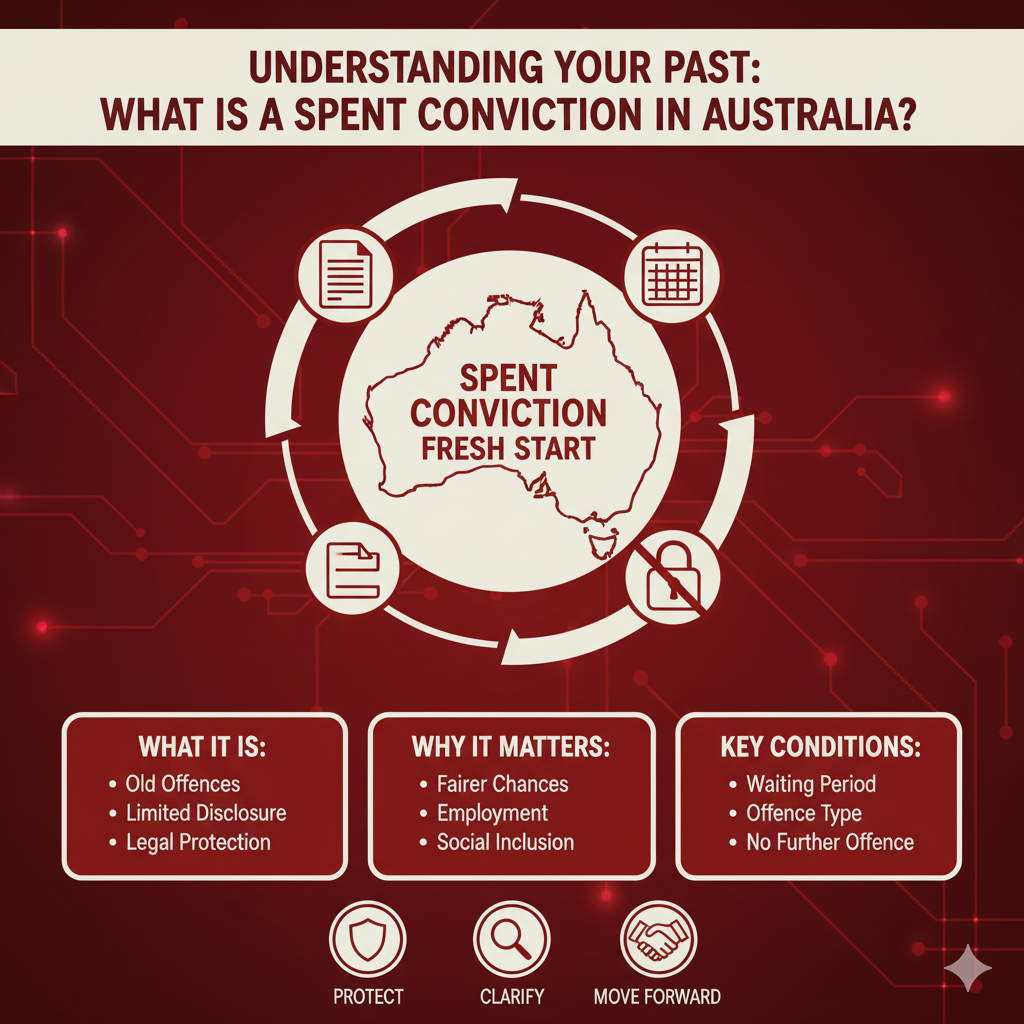
A criminal record frequently creates needless obstacles even after an obligation to society has been settled, making it feel like a life sentence. The Australian legal system introduced the Spent Convictions Scheme in recognition of this. This crucial foundation is intended to support rehabilitation and reintegration, guaranteeing that an individual is not consistently punished for past, small errors. Understanding what constitutes a spent conviction in Australia is crucial whether you’re seeking for a job, volunteering, or just want to know your rights surrounding your criminal history. At Rapid Screening, we issue the official Nationally Coordinated Criminal History Check (NCCHC), and our results automatically reflect the application of Spent Convictions laws. This guide breaks down this complex area, explaining how a conviction becomes ‘spent’ and when it can still be disclosed. The Spent Convictions Scheme Defined What is a spent conviction in Australia? It is a criminal conviction that, after a specified period of good behaviour, is removed from a person’s disclosable criminal record for most purposes. The Core Principle: Rehabilitation and Non Disclosure The primary goal of the scheme, established under the Crimes Act 1914 (Cth) and mirrored in State and Territory legislation, is to grant a right of non disclosure. The system works automatically: when a police check is processed, the police agencies apply the relevant Spent Convictions criteria to all records before issuing the final certificate. How a Conviction Becomes Spent For a conviction to be recognized as spent under the Commonwealth scheme (which broadly covers federal and some national offences), it must meet a tight set of conditions, primarily revolving around the gravity of the offence and a period of crime free behaviour. Key Criteria for a Conviction to be Spent The conditions vary slightly across Australia’s jurisdictions, but the following table summarises the general national requirements for a conviction to become spent: Criterion Adult Offender (Aged 18+) Juvenile Offender (Aged under 18) Prison Sentence Cannot have been sentenced to imprisonment for more than 30 months. Cannot have been sentenced to imprisonment for more than 30 months (or equivalent detention). Crime Free Waiting Period 10 years must have passed since the conviction. 5 years must have passed since the conviction. Behaviour The person must have committed no further offences during the waiting period. The person must have committed no further offences during the waiting period. If these conditions are met, the conviction is automatically treated as spent and will typically not appear on your Nationally Coordinated Criminal History Check (NCCHC). Offences That Can Never Be Spent Certain serious convictions are permanently excluded from the Spent Convictions Scheme due to the gravity of the crime. These offences will always be disclosed on a police check, regardless of the time elapsed: The exclusion of these offences acknowledges the principle that, for roles involving vulnerable persons or high public trust, full disclosure is required. When a Spent Conviction Can Still Be Disclosed Even if a conviction meets the criteria to be spent, there are statutory exceptions where the information can still be released on a police check. This is critical for sectors where public safety overrides the individual’s right to non disclosure. Statutory Exemptions for Disclosure These exemptions are typically linked to specific employment or licensing purposes where an employer has a legal obligation to access a fuller criminal history. Examples of purposes of what is a spent conviction in Australia, may still be disclosed include: If you apply for a police check for one of these exempt purposes, you will receive a certificate with a more comprehensive history, as the Spent Convictions Scheme does not apply to that particular check. The Role of the Police Check Provider When you apply for a check through Rapid Screening, we are merely the conduit. The actual application of what is a spent conviction in Australia is carried out by the Australian Police Agencies (who manage the NCCHC database) as they process your check. This ensures the process is compliant, fair, and legally sound. Not limiting the checks to TAS or QLD, we provide services in all Australia. Conclusion A key component of Australian legislation that strikes a balance between the requirement for public safety and the objective of treatment is the Spent Convictions Scheme. The program makes sure that a previous error does not represent an impassable barrier to work or social involvement by restricting the revelation of relatively small, older offenses. When you obtain your Nationally Coordinated Criminal History Check through Rapid Screening, you can be confident that the final certificate accurately reflects the legal position regarding your spent convictions. Our efficient service ensures you receive your compliant result quickly (70% in 2 to 4 hours), allowing you to move forward with your career or application with legal clarity. Frequently Asked Questions (FAQs) Q1) Do I have to tell an employer about a spent conviction? In general, no. You are legally entitled to non-disclosure if the sentence you received is expired. Unless the employer falls into an excluded category (such as working with children) and is legally entitled to obtain complete data, it is legal for an employee to deny or not admit the fact of a spent conviction. Q2) Is the Spent Convictions Scheme the same in every State and Territory? No, there are differences. Every Australian State and Territory (NSW, Victoria, WA, etc.) has its own unique laws (such as the Spent Convictions Act 2021 in Victoria) with somewhat distinct waiting periods and requirements, even if the Commonwealth Scheme covers federal offenses. Nonetheless, the fundamental tenet of non-disclosure for minor, older offenses is still the same nationwide. Q3) If my conviction is spent, why would it appear on my police check? It would only appear if your police check was requested for an exempt purpose (e.g., aged care, working with children, firearms licensing). In these high risk areas, the law dictates that the full criminal history, including spent convictions, must be disclosed to ensure public safety. Q4) If I am granted a pardon, is that the same as