
Navigating Compliance: Guide to Australian Police Report
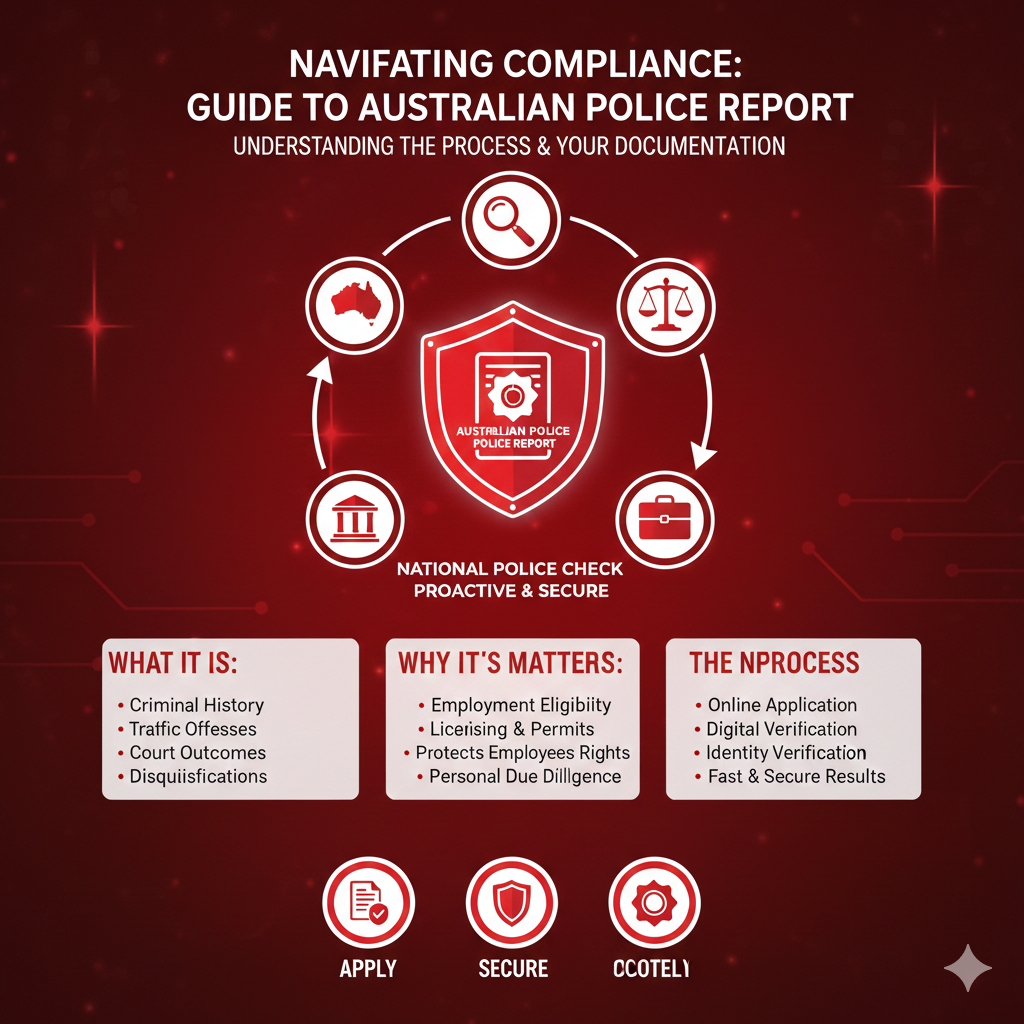
Welcome to the professional landscape of 2026, a world where the speed of trust is measured in megabytes and biometric pings. Whether you are a seasoned HR director, a freelance contractor in the gig economy, or a recent graduate entering the healthcare sector, you likely understand that background screening is no longer a nice to have, it is the bedrock of safety and accountability. In Australia today, one of the most common requirements for starting a new venture is obtaining an Australian police report. While the term report might evoke images of a detective’s notebook, in the professional sphere, it refers to the comprehensive Nationally Coordinated Criminal History Check (NCCHC). It is the official document that bridges the gap between a candidate’s claims and a company’s security requirements. At Rapid Screening, we’ve spent years perfecting the art of the instant check, moving past the paper-cluttered desks of the past into a streamlined, high tech future. What Exactly is an Australian police report for 2026? Terminology in the legal and compliance sectors can sometimes be a labyrinth. Some people call it a Police Clearance, others a National Police Check, and many search for it as an Australian police report. Regardless of the name, the function remains the same: it is a search of the National Police Checking Service (NPCS) to identify any disclosable court outcomes (DCOs) against an individual. Clarifying the Terms It is important to distinguish between a report of a crime and a professional criminal history check. When an employer asks for an Australian police report, they are requesting a verified summary of your history across all Australian states and territories. This ensures that a person moving from Perth to Sydney carries their professional record with them, creating a seamless national safety net. The Evolution of the Document In 2026, these reports have moved far beyond the static PDF. Modern reports are often issued as secure digital certificates with QR codes for instant verification. This prevents the Photoshopping of results and ensures that when a hiring manager looks at your Australian police report, they are seeing the unvarnished, up to the minute truth. Who Needs to Provide an Australian police Report? In the current economic climate, high trust roles have expanded significantly. While it was once just the police and teachers who required screening, today, almost every sector has a compliance mandate. Healthcare and the NDIS The Royal Commissions of the early 2020s led to a permanent shift in how we protect the vulnerable. If you work in aged care, disability support (NDIS), or childcare, an Australian police report is a legal prerequisite. In 2026, many of these roles require continuous monitoring, where an initial check is just the beginning of an ongoing compliance relationship. Finance, Fintech, and Cybersecurity With the rise of sophisticated financial crimes and data breaches, the tech sector has tightened its belt. If you are handling sensitive customer data or managing digital assets, your employer will almost certainly require an Australian police report to ensure there are no history markers related to fraud or dishonesty. The Gig Economy and Freelancing Even the decentralized world of freelancing has caught on. Ride-share drivers, delivery partners, and even high end consultants are finding that having a current, proactive check makes them more marketable. Presenting a clear Australian police report at the start of a contract negotiation removes friction and speeds up the time to hire. The 70/30 Rule: Understanding Processing Times One of the most frequent questions we receive at Rapid Screening is: How long will it take? In 2026, the answer is usually \minutes, but there is a nuance known as the 70/30 rule. The 70%: The Instant Success About 70% of all applications submitted through our platform are returned within 1 to 2 hours. These are cases where the system finds a No Disclosable Court Outcome immediately. For these lucky applicants, the Australian police report is generated by the ACIC servers and delivered to their inbox before their next coffee break. The 30%: The Manual Referral The remaining 30% of checks are referred to one or more police agencies for manual vetting. This typically happens if: When a manual referral occurs, the timeframe shifts from hours to business days. It is important to remember that a referral does not mean you have a record; it just means a human officer needs to verify that you aren’t the other person with your name. The Technology Behind the Check: Biometrics and AI How did we go from 10-day wait times to 2 hour results? The answer lies in the integration of biometric technology. In 2026, Rapid Screening uses Liveness testing, a sophisticated AI process that ensures identity integrity. Biometric Identity Matching When you apply for your check, you no longer need to find a Justice of the Peace to sign your documents. Instead, you use your smartphone to take a high resolution selfie. Our AI then compares your facial features against your uploaded ID. This 1 to 1 match ensures that the person requesting the Australian police report is the person the documents belong to. The 100 Point ID Requirement While the tech has changed, the legal requirement hasn’t. You still need to provide 100 points of ID. Our digital portal makes uploading these documents as simple as taking a photo, with real-time feedback if the image is too blurry or a document is expired. Security and Privacy in an Interconnected World In 2026, data security is the ultimate priority. At Rapid Screening, we handle some of the most sensitive personal data in the country. We treat your Australian police report with the same level of security as a bank treats your savings. 256 Bit Encryption Every piece of data, from your birth certificate scan to the final police result, is encrypted using the highest industry standards. We are strictly governed by the Australian Privacy Principles and the Australian Criminal Intelligence Commission (ACIC) guidelines. Australian Based Support While our technology is world class, our heart is local.
Why the post office police check is Becoming a Relic of 2026
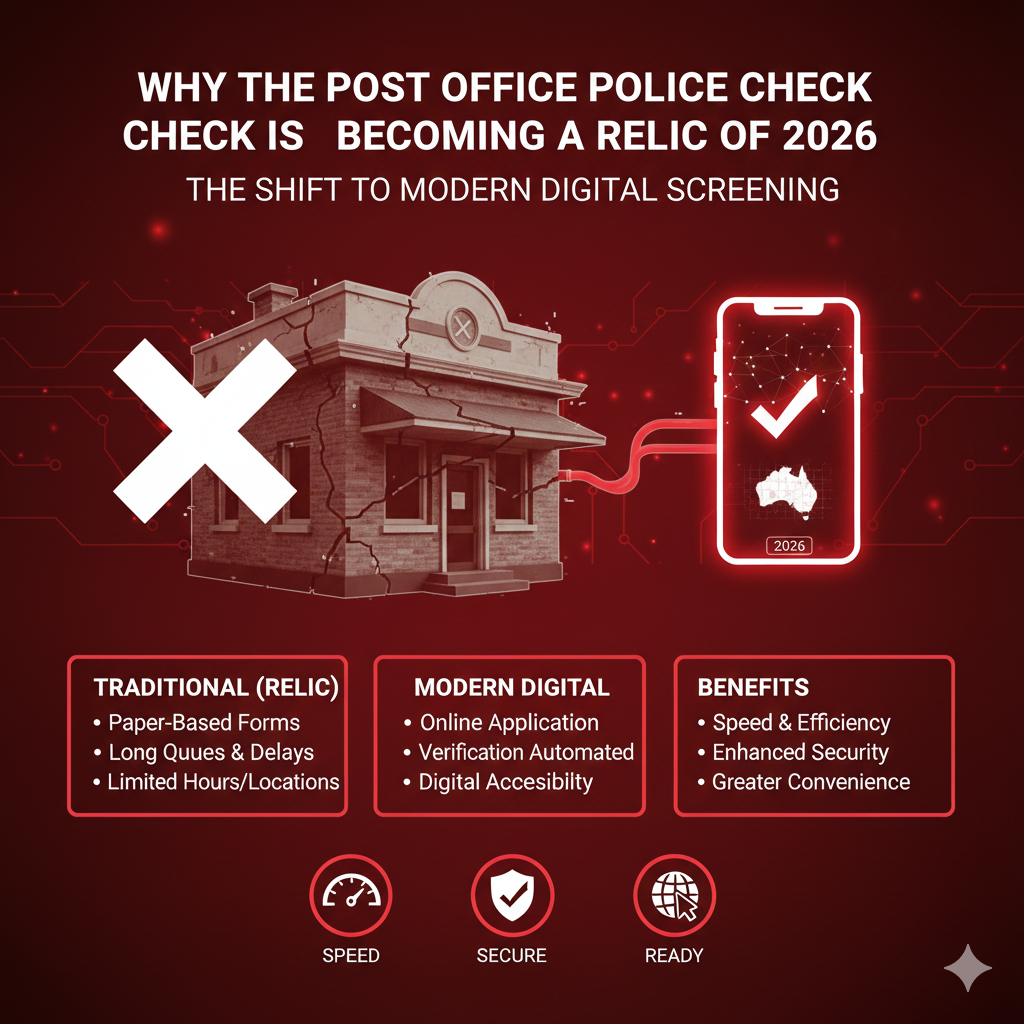
In the old days of the early 2020s, landing a new job meant a predictable, if slightly tedious, pilgrimage. You would print out a form, hunt down a working pen, gather your physical documents, and head to your local retail hub for a post office police check. It was a rite of passage for every teacher, nurse, and delivery driver in Australia. Fast forward to 2026, and the landscape has shifted beneath our feet. While the local post office remains the heart of many communities for parcels and passports, the way we handle our criminal history clearances has evolved. The digital revolution hasn’t just touched background screening; it has completely redesigned it. At Rapid Screening, we’re seeing a massive migration of professionals moving away from the traditional post office police check in favor of 100% online, biometric driven solutions. But is the traditional route still valid? And why is the digital alternative suddenly the gold standard for Australian employers? Let’s dive into the state of police checks in 2026. The Traditional Route: What is a post office police check? Historically, the post office police check served as the primary intermediary between the Australian public and the National Police Checking Service (NPCS). It offered a face to face verification service that felt official and secure. Why the post office police check Was the Standard For decades, the physical presence requirement was seen as the only way to truly verify a person’s identity. You would present your 100 points of ID to a staff member who would manually cross-check your face against your passport or driver’s licence. It was a reliable system for a world that wasn’t yet fully comfortable with digital identity. The Challenges of the Manual Process In 2026, time is our most valuable currency. The manual nature of a post office police check involves several friction points: Comparing Speed: Online vs. The post office police check The biggest differentiator in 2026 is velocity. When a hiring manager says, I need your clearance by Monday, the method you choose matters. The Rapid Screening Advantage At Rapid Screening, we operate on the 70/30 Rule. About 70% of our checks are returned in as little as 1 to 2 hours. Because our system is directly integrated with the Australian Criminal Intelligence Commission (ACIC), there are no middle-men holding up the data. Your application goes from your phone to the police servers in milliseconds. The Post Office Timeline While the post office police check has improved its digital interfaces, it often still involves a transit period for data and ID verification. Most retail based checks estimate a 5 to 10 business day window for completion, especially if a hard copy certificate is requested. In a competitive job market, a week long delay can be the difference between starting your new role on Monday or losing the shift to a work ready candidate. The 100 Point ID Check: Digital vs. Manual Whether you choose a digital provider or a post office police check, you must satisfy the 100-point identity requirement. However, the way you prove who you are has changed. Feature Post Office Police Check Rapid Screening Online Verification Manual (Staff Review) Biometric (AI Match) Documents Physical Originals Required Digital Scans/Photos Location In-store Only Anywhere (Home/Office) Time Spent 20–40 Minutes (inc. travel) 5–10 Minutes The Rise of Biometrics In 2026, Rapid Screening uses advanced Liveness testing. Instead of a person looking at your ID, our AI analyzes the security features of your document and matches it to a real time selfie. This is actually more secure than a manual check at a counter, as it eliminates human error and detects sophisticated fraudulent documents that the naked eye might miss. Cost and Convenience: Why the post office police check is Losing Ground Let’s be candid: budget matters. In 2026, a standard post office police check often carries a slightly higher price tag due to the overheads of maintaining physical retail locations and staffing. At Rapid Screening, we’ve stripped away the bricks and mortar costs. By focusing exclusively on a high tech digital platform, we can offer some of the most competitive rates in Australia. For a student or a volunteer, the convenience of not having to pay for parking or petrol to get to a post office, makes a digital check the logical choice. Why Business Owners are Ditching the post office police check If you are an HR manager in 2026, managing a paper based workforce is a nightmare. Relying on employees to go out and get a post office police check independently creates a compliance black hole. The Transparency Gap When an employee goes to the post office, the employer has no visibility. Did they actually go? Is the check pending? Was there a match? With Rapid Screening’s business dashboard, HR teams can: This level of control is simply not possible with a decentralized, store based model. Security and Data Privacy in 2026 A common concern we hear is, Is my data safer with a post office police check? It’s a fair question. Physical documents feel safe because you can see them. However, in the digital age, a piece of paper is a vulnerability, it can be lost, photocopied, or filed incorrectly. Rapid Screening uses 256 bit encryption, the same level used by Australian banks. Once your ID is verified and the check is complete, your sensitive data is handled according to strict ACIC guidelines and Australian Privacy Principles. Our servers are located right here in Australia, ensuring your information never leaves our borders. Conclusion: The Future is Rapid While the post office police check will always have a place for those who prefer a traditional, face to face experience, the professional world of 2026 has moved toward speed and digital integrity. Your career shouldn’t have to wait for the mail or a store to open. By choosing Rapid Screening, you’re choosing a partner that understands the urgency of modern employment. We’ve turned a week long administrative chore into a 10 minute
Understanding the Pending Game: A Guide to Your police check status in 2026
You’ve uploaded your ID, smiled for the biometric camera, and hit submit. Now, the waiting game begins. In the fast-paced Australian job market of 2026, where “onboarding” often happens in a matter of days, waiting for a background clearance can feel like an eternity. Whether you are applying for a role in healthcare, finance, or a local volunteer position, knowing your police check status is the key to managing your professional timeline. At Rapid Screening, we believe that transparency is the best cure for application anxiety. While the national police checking system is more efficient than ever, it isn’t always instant. This guide will walk you through the various stages of the checking process, explain why some applications take longer than others, and help you interpret exactly what your current police check status means for your employment. The 70/30 Standard: Setting Real Expectations Before we dive into the specific codes, it is important to understand how the Australian Criminal Intelligence Commission (ACIC) processes millions of checks every year. As of 2026, the industry operates on what we call the 70/30 rule. The Instant Majority Approximately 70% of all national police checks are finalized almost immediately. These are the applications where the automated name-matching algorithm finds no potential matches in the national database. If you fall into this category, your check will likely move from Submitted to Finalised within a matter of minutes to two hours. The Manual Minority The remaining 30% of applications are flagged for Manual Processing. This does not mean you have a criminal record. It simply means that the computer found a potential match, perhaps someone with a similar name or date of birth, and a human police officer must now manually verify the data. When this happens, your police check status will shift to Referred, and the timeframe can extend from a few hours to up to 15 business days. Deciphering Your police check status: What Do the Codes Mean? When you log into the Rapid Screening portal to track your application, you will encounter specific terms. Understanding these will help you provide accurate updates to your prospective employer. 1. Application Received / Pending Identity Verification This is the very first stage. It means your data has reached our servers, but we are still verifying your 100 points of ID. In 2026, our biometric matching technology usually handles this in seconds, but if your ID photo was blurry or your name didn’t match your Medicare card exactly, our local support team may need to step in. 2. In Progress / Submitted to ACIC At this stage, your application has passed our internal compliance checks and has been securely transmitted to the National Police Checking Service (NPCS). The ball is now in the court of the federal and state police agencies. 3. Referred / Manual Processing As mentioned, this is the most common cause for delay. A Referred police check status means your application is being physically reviewed by one or more police jurisdictions across Australia. Because multiple states may be involved, this stage is the most unpredictable. 4. Finalised (NDCO or DCO) Success! Your check is complete. Why is My Check Still Referred? (The Manual Vetting Deep Dive) It is the question every applicant asks: Why is my friend’s check finished while mine is still pending? If your police check status hasn’t moved for several days, it is usually due to one of the following complexities in the system. Common Names and Data Overlap If your name is Sarah Smith or David Jones, the name-matching algorithm will likely find hundreds of potential matches. The police must verify each one to ensure they don’t accidentally attribute someone else’s criminal history to you. This is a vital safeguard for your own privacy and reputation. Multi-State Residency If you have lived in three different Australian states over the last five years, your application may need to be vetted by the police force in each of those jurisdictions. Each state has its own workload and resource levels, which can impact how quickly they move your check from Referred to Finalised. Old or Incomplete Records Sometimes, the system encounters old records that haven’t been fully digitized. If a potential match involves a record from several decades ago, a police officer may need to manually retrieve and verify that information before the police check status can be updated. How to Check Your police check status on Rapid Screening We’ve designed our 2026 platform to be as transparent as possible. You don’t need to call a government hotline or wait for a return email to see where you stand. Using Your Reference Number When you submitted your application, you were assigned a unique reference number. By entering this number into our secure Track My Check portal, you can see real time updates directly from the ACIC interface. SMS and Email Alerts You don’t need to refresh the page every ten minutes. Rapid Screening sends automated alerts the moment your police check status changes. Whether your ID is approved or your final certificate is ready for download, you’ll be the first to know. Pro Tip: If your check is Referred, check your email daily. Occasionally, the police may issue a Request for Further Information (RFI) to clarify a middle name or a previous address. Responding to these quickly is the best way to move your application along. Communicating with Employers While Pending In 2026, most HR managers understand the 70/30 rule. They know that a delay doesn’t equate to a fail. However, being proactive can help you maintain a professional image. If your check has been in a “Referred” police check status for more than 48 hours, we recommend sending a brief note to your recruiter: “Hi [Name], just a quick update on my background screening. My check is currently in ‘Manual Processing’ with the ACIC. As this can take up to 15 business days due to the current police vetting workload, I wanted to keep you in the loop. I will notify
2026 Guide to Apply for National Police Certificate Records Online
In the dynamic Australian job market of 2026, personal and professional compliance has become a cornerstone of the hiring process. Whether you are transitioning into a new career in the NDIS sector, taking on a volunteer role at a local school, or stepping into a high security corporate position, you will likely be asked to provide a background clearance. The most common requirement is to apply for national police certificate documentation, often referred to as a Nationally Coordinated Criminal History Check (NCCHC). At Rapid Screening, we have spent years refining the digital path to compliance. Gone are the days of printing forms, visiting police stations, and waiting weeks for a letter in the mail. In 2026, the standard is speed, security, and simplicity. This guide will walk you through everything you need to know to apply for national police certificate results with confidence and ease. What is a National Police Certificate? A National Police Certificate is a summary of an individual’s disclosable criminal history in Australia. It involves a search of the National Names Index (NNI) maintained by the Australian Criminal Intelligence Commission (ACIC). The check covers all Australian states and territories, ensuring that an employer in Perth has the same information as one in Brisbane. NCCHC vs. NPC: Understanding the Terminology While many people still use the phrase apply for national police certificate, the official terminology for the check provided by accredited bodies like Rapid Screening is a Nationally Coordinated Criminal History Check. For 99% of employment and licensing purposes in Australia, these documents are functionally identical and equally valid. They provide a point in time snapshot of: Who Needs to Apply for National Police Certificate Documentation? In 2026, background screening is no longer just for high risk jobs. It is a standard part of risk management for almost every industry. 1. Healthcare and Aged Care Following updated federal regulations in 2025, the healthcare sector maintains a zero tolerance policy for unverified staff. Nurses, doctors, and aged care assistants must apply for national police certificate renewals every 12 to 36 months to remain compliant with AHPRA and the Aged Care Quality and Safety Commission. 2. NDIS and Disability Support The National Disability Insurance Scheme requires rigorous vetting. Often, workers need both a specific NDIS Worker Screening Check and a standard police check to demonstrate their suitability for working with vulnerable Australians. 3. Corporate and Financial Services With the rise of sophisticated financial technology in 2026, banks and fintech companies require all employees, even those in remote, back office roles, to apply for national police certificate clearances. This helps mitigate the risk of internal fraud and data breaches. 4. Gig Economy and Rideshare Platforms like Uber and various delivery services require regular background updates. For these workers, a fast, digital turnaround is essential to ensure they don’t lose access to their earning platform. Step-by-Step: How to Apply for National Police Certificate Online The process at Rapid Screening is designed to be completed in under 10 minutes from your smartphone or computer. Step 1: Information Entry You will begin by entering your personal details. It is vital that you provide every name you have ever been known by, including maiden names, previous married names, or aliases. When you apply for national police certificate checks, the police use a name matching algorithm; omitting a former name is the leading cause of delays or invalid certificates. Step 2: Selecting the Purpose You must specify why you are requesting the check. The Purpose determines what information is released by the police. For example, a check for Working with Children may reveal different information than a check for General Employment. Step 3: The 100 Point ID Check This is where many applicants feel overwhelmed, but our 2026 biometric system makes it easy. You need to provide a combination of documents that add up to 100 points. Document Category Points Examples Commencement 70 Australian Passport, Birth Certificate, ImmiCard. Primary 40 Australian Driver’s Licence, Marriage Certificate. Secondary 25 Medicare Card, Credit Card, Bank Statement, Student ID. Step 4: Biometric Verification Using our Liveness technology, you will be asked to take a quick selfie. Our system matches this photo against your uploaded ID documents to ensure you are the person you claim to be. This level of security is why Rapid Screening is trusted by major Australian institutions. Step 5: Submission and Payment Once you review your details and pay the secure fee, your application is sent instantly to the National Police Checking Service. The 70/30 Rule: Managing Your Expectations When you apply for national police certificate results, it is important to understand how the results are processed. Note: A referral does not mean you have a criminal record. It simply means the system needs a human eye to confirm that the person in the database is not you. This process can take between 1 and 15 business days. Common Pitfalls to Avoid To ensure you don’t face unnecessary delays when you apply for national police certificate documentation, keep these tips in mind: Why Choose Rapid Screening in 2026? There are many ways to apply for national police certificate checks, but not all are created equal. Rapid Screening is an ACIC-accredited body, meaning we are directly linked to the national police database. Conclusion: Take the First Step Today Maintaining your compliance shouldn’t be a source of stress. Whether you are starting a new job tomorrow or simply keeping your records up to date, the ability to apply for national police certificate results online has made the process faster and more accessible than ever before. By following the steps outlined above and using a trusted, accredited provider like Rapid Screening, you can get back to what really matters, your career and your community. Frequently Asked Questions (FAQs) Q) What shows up on my certificate? Your certificate will list Disclosable Court Outcomes. This includes convictions and charges that the police are legally allowed to release based on the Spent Conviction laws of the relevant state. Q) Do I get
Maintaining Your Compliance: The Essential Guide to Police Check Renewal
In the fast evolving Australian professional landscape of 2026, staying ahead of compliance requirements is more than just an administrative task, it’s a mark of professional integrity. Whether you are a dedicated healthcare worker, a financial advisor, or a volunteer in the community sector, you are likely aware that your background clearance has a shelf life. One of the most frequent questions we encounter at Rapid Screening is about the specifics of a police check renewal. Many applicants assume it is a simple matter of clicking a renew button on an old certificate. However, because a Nationally Coordinated Criminal History Check (NCCHC) is a point in time document, the process is a bit more nuanced. In this guide, we will break down why, when, and how you should manage your background screening updates to ensure you never face a stop work order. Why You Need a Police Check Renewal in 2026 The primary reason why a police check renewal is necessary stems from the nature of the document itself. A police clearance certificate does not have an official expiry date printed on it. Instead, it is a snapshot of your criminal history as it stood on the day and hour the certificate was issued. The Point-in-Time Reality If you received a clearance in 2024 and were involved in a legal matter in 2025, that old certificate remains unchanged. It would no longer be an accurate reflection of your status. To protect vulnerable populations, financial assets, and the general public, employers and regulatory bodies set their own validity periods. For most Australian industries, this cycle is typically every 12 months, two years, or three years. Industry-Specific Requirements In 2026, regulatory scrutiny is higher than ever. The Difference Between a Renewal and a First-Time Application While we use the term police check renewal, the actual process involves applying for a brand new Nationally Coordinated Criminal History Check. The police agencies must perform a fresh search of the National Names Index to ensure no new disclosable court outcomes have been recorded since your last check. Is the Process Faster the Second Time? A common myth is that a renewal is faster because your data is already in the system. While Rapid Screening saves your basic profile details to make the application faster for you, the Australian Criminal Intelligence Commission (ACIC) treats every submission as a new inquiry. You still need to provide consent and verify your identity to ensure that your personal information hasn’t been compromised since your last application. How to Complete Your Police Check Renewal Fast At Rapid Screening, we have optimized our platform to ensure that your police check renewal is as frictionless as possible. We know that in 2026, you don’t have time for paperwork or trips to the local police station. 1. Start Your Digital Application Log in to your Rapid Screening account. If you’ve used us before, much of your information will be pre-filled. You will just need to confirm your current address and any name changes. 2. Provide Informed Consent A critical legal requirement for any check, especially a police check renewal, is your digital signature. This gives us the authority to submit your details to the National Police Checking Service. 3. Verify Your Identity Even for a renewal, you must re-verify your identity. This is a security measure to prevent identity theft. Our biometric link allows you to do this in seconds using your smartphone camera. 4. Receive Your Result Once submitted, our 24/7 system goes to work. The 100-Point Identity Verification Checklist To ensure your police check renewal isn’t delayed, you must have your documents ready. The 2026 standards require a total of 100 points, categorized as follows: Document Type Points Examples Commencement 70 Australian Passport, Birth Certificate, Citizenship Certificate. Primary 40 Australian Driver’s Licence, Marriage Certificate, Proof of Age Card. Secondary 25 Medicare Card, Credit Card, Utility Bill, Student ID. Business Solutions: Managing Police Check Renewal for Teams For HR managers and compliance officers, tracking the police check renewal dates for hundreds of employees is a logistical challenge. Rapid Screening provides a specialized business dashboard designed to automate this stress. Automated Reminders Our system can be set to notify you, and the employee, when a clearance is approaching its 12 month or 3 year anniversary. This proactive approach ensures that no staff member ever falls out of compliance, which is vital for maintaining insurance and meeting government audit requirements. Bulk Uploads and Invoicing If you have a large cohort of staff due for their police check renewal at the same time, you can use our bulk upload feature. This allows you to send out 100+ invitations in seconds, with all results feeding back into a single, secure dashboard. Privacy and Security in the Digital Age In 2026, data security is paramount. When you perform a police check renewal, you are sharing sensitive personal data. Rapid Screening uses bank level encryption (256-bit) to ensure that your ID documents and criminal history results are never exposed to unauthorized parties. We comply with the Australian Privacy Principles and the strict security guidelines set by the ACIC. Once your check is finalized, your certificate is stored in a secure cloud environment where only you can access it. Avoiding Common Mistakes During the Renewal Process Even though you have done it before, mistakes can still happen. To ensure your police check renewal is processed without a hitch, avoid these common pitfalls: Conclusion: Take the Hassle Out of Your Renewal Maintaining your professional clearances shouldn’t be a burden. While a police check renewal is technically a new application, the digital tools available today make it a quick and easy task. By staying on top of your compliance, you demonstrate to your employer that you are a reliable, work ready professional. Rapid Screening is proud to be Australia’s most trusted partner for fast, secure police checks. Whether you’re an individual or a business, our 2026 platform is ready to help you navigate your next renewal with confidence. Frequently Asked
The Essential Guide to the Welfare Police Check in Australia

In the community services sector, trust is more than just a value; it is a regulatory requirement. As we move through 2026, the demand for social workers, youth mentors, and disability support staff continues to grow. For anyone entering these noble professions, obtaining a welfare police check is a critical step in the onboarding process. This specific type of screening ensures that those entrusted with the care of our society’s most vulnerable members are fit for the task. At Rapid Screening, we specialize in providing fast, accurate, and secure background checks. We understand that in the welfare sector, a delay in paperwork can mean a delay in providing life-changing support. This guide will walk you through everything you need to know about the screening process for welfare professionals in Australia. What Exactly is a Welfare Police Check? There is often some confusion regarding the terminology. In a general sense, a welfare check can refer to a wellness visit conducted by police to ensure an individual is safe. However, in the context of employment and compliance, a welfare police check refers to a Nationally Coordinated Criminal History Check (NCCHC) specifically tailored for the welfare and community services sector. A Specialized Screening Tool Unlike a standard check for a retail or office job, a check for the welfare sector is processed with a specific Purpose Type. This informs the police agencies that the applicant will be working with children, the elderly, or people with disabilities. This distinction is vital because it determines which spent convictions may or may not be disclosed on the final certificate. Why a Welfare Police Check is Mandatory for Community Workers The welfare sector is built on the safety of the vulnerable. Whether you are working in child protection, domestic violence advocacy, or refugee support, a welfare police check serves as a frontline defense. Protecting Vulnerable Groups The primary goal is risk mitigation. Organizations have a legal duty of care to ensure their staff do not have a history that suggests a risk to those they serve. Under Australian law, certain serious offences, such as those involving violence or sexual misconduct, will preclude an individual from working in a high risk welfare role. Meeting Regulatory Compliance In 2026, the NDIS and aged care regulators will have stricter standards than ever. Many roles now require an NDIS Worker Screening Check alongside a standard police check. Providing a current welfare police check ensures your organization remains compliant with federal funding requirements and state-based safety standards. How to Apply for Your Welfare Police Check Online At Rapid Screening, we have moved the entire process into the digital age. You no longer need to wait in line at a police station or find a Justice of the Peace to sign physical documents. Step 1: The Digital Application You can start your application on any device. You will be asked to provide your personal details, including your full name, date of birth, and five years of residential history. It is essential to choose the correct Purpose during this stage to ensure your welfare police check meets your employer’s specific requirements. Step 2: 100-Point Identity Verification To maintain the highest levels of security, you must provide 100 points of ID. Our 2026 platform uses biometric technology to verify your documents in seconds. You will typically need: Step 3: Fast-Track Processing Once your ID is verified and payment is made, your application is sent instantly to the National Police Checking Service (NPCS). Understanding the Results: What Shows Up? When your welfare police check is finalized, it will list your Disclosable Court Outcomes (DCOs). This includes: The Role of Spent Convictions In the welfare sector, Spent Conviction legislation is handled differently. While a minor offence from twenty years ago might be hidden for a standard job, it may still appear on a welfare police check if the role involves working with children or highly vulnerable adults. This allows employers to make a fully informed decision based on the safety of their clients. Turnaround Times: How Quickly Can You Get a Welfare Police Check? In 2026, the Australian Criminal Intelligence Commission (ACIC) processed millions of checks annually. Most results are returned surprisingly fast. Because of this 30% possibility, we always recommend applying for your check at least two weeks before your expected start date. Managing Bulk Welfare Police Check Requirements for Organizations For community service organizations and NGOs, managing hundreds of staff clearances can be an administrative nightmare. Rapid Screening offers a dedicated business portal designed to simplify this process. By using a centralized dashboard, HR managers can: Using an accredited provider to manage your welfare police check volume reduces human error and ensures that your compliance is always up to date. Conclusion: Commitment to Community Safety The welfare sector is the heart of Australian society. By maintaining a rigorous screening process, we ensure that the heart remains healthy and safe. Whether you are an individual starting your career or an organization managing a large team, a welfare police check is your most important tool for building trust. At Rapid Screening, we are proud to support the people who support Australia. Our 100% online process, combined with our local support team, makes compliance simple so you can focus on your essential work. Frequently Asked Questions (FAQs) Q) Does a welfare police check expire? Technically, a police check is a point-in-time document and does not have an expiry date. However, most organizations in the welfare sector require a fresh check every 1 to 3 years to ensure continued safety and compliance. Q) Is this the same as a Working with Children Check (WWCC)? No. A National Police Check (or welfare check) is a list of criminal history. A WWCC is a more intensive ongoing assessment specifically for those in child-related work. Many welfare roles require both documents. Q) Can I use a volunteer check for a paid welfare role? No. Volunteer checks are provided at a reduced rate and are legally only valid for unpaid work. If
Waiting for Results? How to Track Your Police Check with Ease
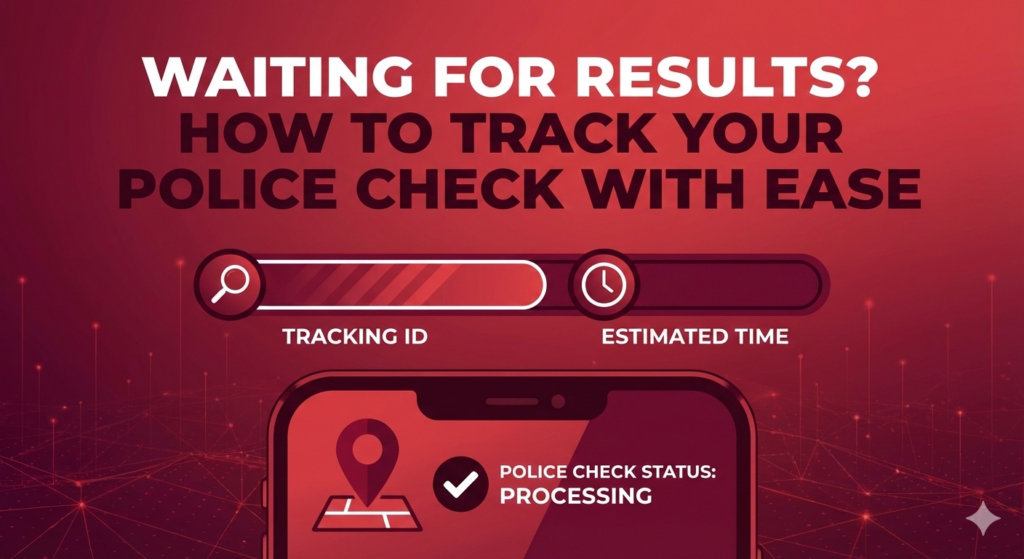
In the fast paced Australian job market of 2026, time is your most valuable asset. Whether you are applying for a new role in aged care, finalizing a visa application, or stepping into a volunteer position, the final hurdle is often the background screening. At Rapid Screening, we understand that pending is a frustrating word when a career defining opportunity is on the line. That is why we have built a system that allows you to track your police check in real time, providing transparency in an often opaque process. Most people expect a police check to be a simple “yes or no” database query. In reality, it is a complex coordination between accredited bodies like Rapid Screening and the Australian Criminal Intelligence Commission (ACIC). While our technology is designed for speed, understanding how to track your police check effectively can save you hours of worry and help you keep your prospective employer informed. The Rapid Screening Timeline: What to Expect Before you dive into the portal to track your police check, it helps to know the industry benchmarks. The 70/30 Rule The national police checking service operates on what we call the 70/30 rule. Real Time Updates Unlike traditional paper-based methods that could take weeks, our digital platform is linked directly to the national database. When you log in to track your police check, you are seeing the most current information available from the police jurisdictions across Australia. Step-by-Step: How to Track Your Police Check We have streamlined the tracking process to ensure you don’t need a degree in IT to find out where your application stands. 1. Check Your Confirmation Email The moment you submit your application and complete your ID verification via our secure portal, you will receive a confirmation email. This email contains your Reference Number. Keep this handy, as it is the key to all updates. 2. Log In to the Rapid Screening Portal Visit the Rapid Screening website and navigate to the login area. By using the credentials created during your application, you can access your personal dashboard. This dashboard is the most direct way to track your police check status 24/7. 3. Monitor Your SMS and Email We don’t just wait for you to come to us. Our system is designed to push notifications to you. You will receive an alert when: Decoding the Status: What the Tracking Labels Mean When you track your police check, you might encounter various status labels. Understanding these can help manage your expectations and those of your employer. Status Meaning Action Required Pending ID Your application is started, but your 100 points of ID are not yet verified. Complete your selfie-ID check. Submitted We have sent your data to the ACIC. No action; wait for the system to process. Referred Your check is in the 30% being manually reviewed by police. Be patient; this can take 1–15 business days. Finalised Your result is ready! Log in to download your certificate. The Manual Referral Wait If you track your police check and see it has been Referred, try not to panic. This is a standard part of the process. It often happens to people with common surnames or those who have lived in multiple states. Because each state’s police force must sign off on the manual review, it can take anywhere from a few days to two weeks. Why Speed and Security Matter in 2026 In the current era of high-frequency data breaches and identity theft, the security of your police check is just as important as the speed. Rapid Screening uses 256 bit encryption to protect your personal details while they are in transit to the ACIC. When you use our portal to track your police check, you are accessing a secure environment. We do not send your full criminal history via unencrypted email; instead, we send you a secure link to download the official certificate from our protected servers. This ensures that your sensitive information only ends up in the right hands. Tips for a Smoother Tracking Experience To ensure you don’t hit any snags while you track your police check, follow these best practices: Pro Tip: Employers often appreciate transparency. If your check is taking longer than 48 hours, you can show them your Referred status in the portal to prove that the delay is with the ACIC, not due to any inaction on your part. Conclusion: Transparency You Can Trust At Rapid Screening, we believe that you shouldn’t be left in the dark regarding your own personal information. Our commitment to providing a clear way to track your police check is part of our mission to be Australia’s most trusted and transparent screening provider. Whether the result is instant or requires a bit more time from the authorities, our portal ensures you are the first to know. By combining industry leading technology with a human centric support team, we take the stress out of compliance. Frequently Asked Questions (FAQs) Q) How long should I wait before I track your police check status? You can track it immediately! As soon as you hit submit, your status will update to Submitted. However, since 70% of results come back within 2 hours, we recommend checking back after lunch if you applied in the morning. Q) Can I speed up a Manual Referral status? Unfortunately, no. Once a check is referred to the police agencies, no accredited body in Australia can speed it up. It is a legal process handled by the government. Q) What if I lost my reference number? Don’t worry. You can still log in to the portal using your email address and password. If you’ve forgotten those too, our 24/7 support team can help verify your identity and give you your status. Q) Is the tracking available on mobile? Yes. Our portal is fully responsive, meaning you can track your police check from your smartphone or tablet while you’re on the go. Q) Why does my tracking say Information Required? This usually means
Tax Time and Compliance: Can You Claim a Police Check on Tax?
Tax season in Australia often brings a mix of confusion and opportunity. As we navigate the professional requirements of 2026, many workers find themselves juggling various compliance costs, from professional registrations to background clearances. One of the most common questions hitting our support inbox at this time of year is: can you claim a police check on tax? Background screening is a non-negotiable part of modern Australian life, especially in high-trust sectors like aged care, disability support, and education. While these checks are essential for safety, they do come with a cost. Understanding the Australian Taxation Office (ATO) guidelines on these expenses can help you maximize your refund and ensure you aren’t paying more for your professional compliance than you have to. In this comprehensive guide, we will break down the Golden Rules of tax deductibility for police checks and help you determine if you are eligible for a deduction this financial year. The ATO Rule of Thumb: Pre-Employment vs. Ongoing Compliance The most important factor in determining if can you claim a police check on tax is the timing of the expense. The ATO operates on a principle often referred to as the point too soon doctrine. The Point Too Soon Doctrine (Not Deductible) If you are currently looking for work and you pay for a National Police Check to add to your resume or as a prerequisite for a job application, the ATO generally views this as a private expense. Why? Because you incurred the cost to put yourself in a position to earn income, rather than incurring it while you were already earning that income. The tax office views pre-employment checks as occurring too early to be directly associated with your assessable income. Ongoing Employment Requirements (Deductible) The scenario changes significantly once you are already employed. If your current employer or industry regulator requires you to maintain a current clearance, meaning you have to pay for a renewal or a fresh check every one to three years, this cost is usually deductible. In this case, the expense is directly related to your ability to continue earning your current income. Key Takeaway: If you’re getting a check to get a job, you likely can’t claim it. If you’re getting a check to keep your job, you likely can. Industry Breakdown: Who Can You Claim a Police Check on Tax For? Certain industries have mandatory renewal cycles, making it much easier for workers in these fields to justify a tax deduction. Let’s look at how this applies to some of Australia’s most vital sectors. Healthcare and Aged Care AHPRA or individual facilities often require nurses, doctors, and aged care workers to provide updated police clearances regularly. Because you must complete these to maintain your professional registration or employment status, the tax office typically considers them a work-related expense. When considering can you claim a police check on tax in healthcare, the answer is almost always a Yes for renewals. NDIS and Disability Support The NDIS Worker Screening Check is a specific requirement for many in this sector. If you must refresh this clearance to continue working with NDIS participants, you can generally deduct the out of pocket cost, similar to a National Police Check. Education and Childcare Teachers and childcare workers often need both a Working with Children Check (WWCC) and a standard police check. While a WWCC usually lasts for several years, a school board or childcare centre can require an active employee to obtain a standard police check, and you can often claim this cost on your tax return. Transport and Rideshare For those in the gig economy or transport sector, such as Uber drivers or couriers, regular background checks are often a platform requirement. If you are already active on the platform and are required to provide a new check to maintain your active status, this is a legitimate business expense. What You Cannot Claim: Common Pitfalls While we all want to maximize our deductions, it’s important to stay within the ATO’s boundaries to avoid audits or penalties. Even if you are in a high-compliance industry, there are scenarios where you cannot claim the cost. How to Claim Your Police Check at Tax Time If you’ve determined that you meet the criteria for a deduction, the next step is knowing where to put it on your tax return. Label D5: Other Work Related Expenses Most individuals will claim the cost of their police check under Other Work Related Expenses. This section is designed for miscellaneous costs like union fees, professional subscriptions, and, of course, background clearances. The $300 Rule The ATO allows you to claim up to $300 in total work-related expenses without needing formal receipts. However, since a police check usually comes with a clear digital receipt, it is always safer to keep the documentation regardless of your total claim amount. Record Keeping: Why Your Rapid Screening Receipt is Vital The foundation of any successful tax claim is substantiation. If you are audited, the ATO will want to see proof that the expense was incurred. When you use Rapid Screening for your compliance needs, we provide a clear, GST compliant tax invoice via email as soon as your payment is processed. When wondering can you claim a police check on tax, having a digital paper trail is your best defense. We recommend: Conclusion: Simplifying Your Compliance Journey Understanding the nuances of the tax system helps ensure that the cost of doing business in Australia doesn’t weigh you down. The answer to can you claim a police check on tax essentially boils down to your current employment status. If you are a professional staying on top of your ongoing compliance, you are likely entitled to a bit of relief come July. At Rapid Screening, we are committed to making the compliance process as fast and transparent as possible. By providing instant receipts and 2-hour turnaround times for 70% of our checks, we help you get back to work and back to what matters, sooner. Frequently
Staying Compliant: A Guide on How to Renew Police Check in Australia
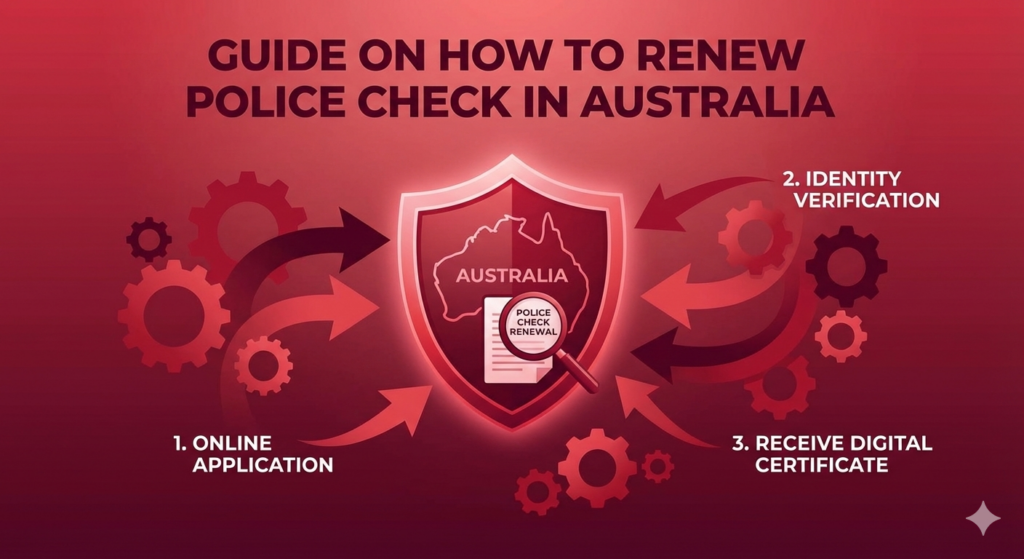
In the fast paced Australian job market of 2026, maintaining up-to-date compliance is essential for your professional reputation. Whether you work in healthcare, finance, or the growing disability support sector, your background check is a living document that requires regular attention. Many professionals often ask, how to renew police check certificates? thinking it is a simple matter of extending an existing document. The Concept of a Point in Time Document Before diving into the mechanics of how to renew police check records, it is important to understand why the term renewal is a bit of a misnomer. A police check is a snapshot. It reflects your criminal history exactly as it stands at the hour of issue. However, the reality of police clearances in Australia is slightly different. Because a Nationally Coordinated Criminal History Check (NCCHC) is a point in time document, it cannot be renewed in the traditional sense like a passport or a driver’s licence. Instead, a renewal involves applying for a fresh check to ensure your record is accurate as of today. At Rapid Screening, we’ve streamlined this process so that your renewal is as fast and frictionless as possible. If you receive a police certificate on Monday and face a charge on Tuesday, the certificate issued on Monday no longer accurately reflects your status. This is why the certificate does not include an expiry date; instead, the requesting organisation’s policy determines its validity. Most Australian employers consider a check expired if it is older than 6 or 12 months. Industry Standards: When is it Time for a Renewal? The frequency with which you need to learn how to renew police check documentation depends entirely on your industry and the level of risk associated with your role. High Risk and Regulated Industries For sectors involving vulnerable populations, such as aged care or the NDIS, the standards are high. Corporate and Government Sectors In the corporate world, renewal cycles are usually driven by internal risk management policies. Step by Step: How to Renew Police Check Records Online Since renewing actually means applying for a new check, the process involves submitting a fresh application through an ACIC accredited provider like Rapid Screening. Here is the modern, digital way to handle your update. Step 1: Prepare Your Current Identity Documents Even if your identity hasn’t changed since your last check, you must meet the 100 point identity check again. You will need: Step 2: Access the Rapid Screening Portal If you are wondering how to renew police check details without the paperwork, our portal is the answer. You can complete the entire application on your smartphone in under 10 minutes. Step 3: Provide Your Address History You will need to provide five years of residential history. If you have moved since your last check, ensure these details are accurate, as the system matches your data against police records in every state you have lived in. Step 4: Digital Verification and Payment Use our secure, encrypted Linkage technology to verify your ID documents. Once the payment is processed, your renewal application is sent instantly to the National Police Checking Service (NPCS). New for 2026: Significant Changes in Requirements As of early 2026, there have been updates to how certain state agencies handle background screening. For example, in Victoria, certain licensing requirements for security and firearms have shifted, moving away from standard National Police Certificates in favor of more specialized vetting and fingerprinting. Understanding how to renew police check credentials in this evolving landscape means staying informed about these state-specific nuances. At Rapid Screening, we keep our systems updated to reflect the latest legislative changes, ensuring that your check meets the specific purpose required by your regulator or employer. Why Speed is Essential for Your Career In many cases, an expired police check can lead to a stop work order. If your HR department realizes your check is out of date, they may legally have to prevent you from working until a new one is provided. This can lead to a loss of income and professional embarrassment. When people ask us how to renew police check records the fastest way possible, we point them to our 70/30 processing standard. By renewing your check at least two weeks before your current one reaches the 12-month mark, you protect yourself against the possibility of a manual referral delay. Common Mistakes During the Renewal Process Even though you have done it before, it is easy to make a mistake when learning how to renew police check documentation. Here are the most common pitfalls to avoid: Conclusion: Take Control of Your Compliance Maintaining a current background check is a sign of a true professional. While you cannot technically extend your certificate, knowing how to renew police check records through a fast, digital provider ensures that you are never caught off guard by an HR audit. Rapid Screening is here to make your ongoing compliance as simple as a few clicks. With our 24/7 online portal and Australian-based support team, your next “renewal” will be the easiest part of your work week. Frequently Asked Questions (FAQs) Q) Can I just use my old certificate if I haven’t moved or changed names? No. Because a police check is a point in time record, it only covers events up to the date of issue. Even if your personal details are the same, an employer needs a new search to ensure no new offences have occurred since your last check. Q) Do I get a discount for a renewal? In the Australian police checking system, every application incurs a new government fee from the ACIC. Therefore, the cost for a renewal is the same as a first-time application. Q) Why does my renewal take longer than my first check did? Every time you apply, your details are sent to the National Names Index. If your name now matches a record that has been recently added to the system, even if it’s not yours, your check might be referred for
Visa Success Secret: Dive into the AFP Police Check Code 33

Introduction: Why the Right Code Matters for Your Future Navigating the Australian immigration landscape in 2026 is a journey filled with excitement, but it is also one paved with rigorous administrative requirements. For many visa applicants, the Character Requirement is the most daunting hurdle. Whether you are transitioning from a student visa to a 485 Graduate visa or finalizing your path to Permanent Residency, you will inevitably encounter the requirement for an Australian Federal Police (AFP) certificate. However, a simple police check isn’t enough. The Department of Home Affairs (DHA) is highly specific about the information it requires. This is why the afp police check code 33 is a term every prospective migrant needs to understand. Selecting the wrong code can lead to application delays, additional costs, and in the worst cases, visa refusals due to non-compliance. At Rapid Screening, we believe that clarity is the first step toward a successful application. This guide will walk you through exactly why this specific check is essential and how to ensure your submission is perfect the first time. What is the AFP Police Check Code 33? In the world of Australian background screening, Purpose Codes act as a filter. They tell the police agencies what type of information needs to be released and to whom. When applying for an afp police check code 33, you are specifically requesting a check for the purpose of Immigration/Citizenship – for supply to the Department of Home Affairs. The Scope of Code 33 Unlike standard employment checks, Code 33 is comprehensive. It is designed to meet the strict Character Test set out in Section 501 of the Migration Act 1958. When you order an afp police check code 33, the resulting certificate will include: The primary reason Home Affairs requires this specific code is that it ensures no relevant information is withheld under standard employment privacy filters. It provides the Full Disclosure necessary for the government to assess your suitability to remain in the Australian community. Why the AFP Police Check Code 33 is Non-Negotiable for Visas Many applicants ask, Can’t I just use a standard National Police Check from my employer? The short answer is: No. The Department of Home Affairs specifically mandates an AFP-issued National Police Certificate. While Rapid Screening is an accredited body for Nationally Coordinated Criminal History Checks (NCCHC), which are perfect for 99% of Australian jobs, the afp police check code 33 is a specialized stream required for federal immigration. Common Visas Requiring Code 33 If you are applying for any of the following, you will likely need to provide an afp police check code 33: By selecting this code, you are authorizing the AFP to release a certificate that is legally recognized by DHA case officers. Using Code 30 or Code 35 will often result in a Request for Further Information (RFI), stalling your visa for weeks. Step by Step Guide: Applying for Your AFP Police Check Code 33 In 2026, the application process is almost entirely digital, designed to be completed in under 15 minutes. However, precision is your best friend when submitting your afp police check code 33 application. 1. Preparation of Identity Documents You must meet the 100 point identity check. For visa applicants, this usually involves: 2. The Application Form When you reach the Purpose Type section, you must navigate the dropdown menus carefully. You should select Commonwealth Employment/Purpose and then specifically choose Code 33 – Immigration/Citizenship. 3. All Names Disclosure This is a critical area where many applicants fail. You must disclose every name you have ever been known by. This includes: If the name on your visa application does not match the name on your afp police check code 33 certificate, Home Affairs may reject the document. Turnaround Times and Digital Delivery in 2026 The efficiency of the AFP has improved significantly. Most digital certificates for an afp police check code 33 are now delivered via email within 48 to 72 hours. What Causes Delays? If your application isn’t instant, don’t panic. Delays usually occur for two reasons: At Rapid Screening, we always advise applicants to secure their afp police check code 33 at least one month before their visa lodgement date to account for these potential manual reviews. Privacy and the Spent Convictions Rule Even with a comprehensive check like Code 33, Australia’s privacy laws still offer some protection. The Spent Convictions Scheme generally means that minor offences committed more than 10 years ago or 5 years ago may not be disclosed, provided you have not re-offended. However, it is important to note that for certain high-level security clearances or specific migration categories, these spent convictions can sometimes still be seen by the Minister for Immigration. Transparency is always the best policy. If you are unsure, consulting with a migration agent before submitting your afp police check code 33 can provide peace of mind. Conclusion: Achieving Your Australian Dream Obtaining your afp police check code 33 is more than just a box to tick; it is an affirmation of your character and your commitment to the Australian community. While the process is digital and fast, the consequences of a mistake are high. By ensuring you select the correct purpose code, disclose all names, and meet the 100 point ID requirement, you remove the friction from your visa application. At Rapid Screening, we are dedicated to helping you navigate the complexities of Australian compliance. While we provide the fastest National Police Checks for employment, we are also here to ensure you have the right information for your migration journey. Frequently Asked Questions (FAQs) Q) How long is an afp police check code 33 valid for? For immigration purposes, the Department of Home Affairs generally considers a police certificate valid for 12 months from the date of issue. If your visa processing takes longer than a year, you may be asked to provide a fresh check. Q) What if I am currently outside of Australia? You can still apply for an afp police check