
Right to Work in Australia in 2026: Eligibility & Required Documents
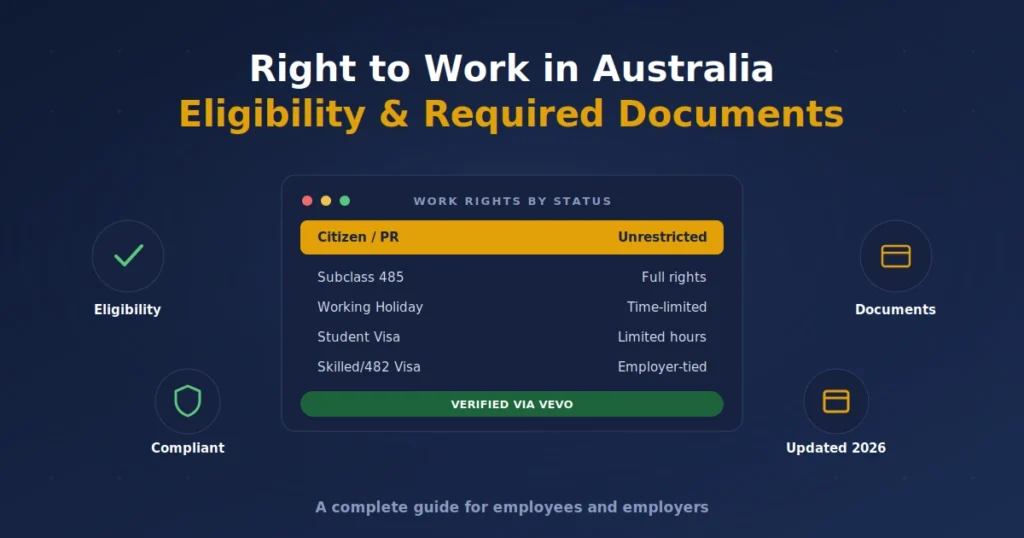
Last updated:August 12, 2026 A right to work document is official proof that you’re legally allowed to work in Australia, tied to your citizenship, residency, or visa conditions. Citizens and permanent residents have unrestricted work rights automatically; visa holders need to check their specific visa conditions, which may limit work hours or employer type. Introduction: The Importance of the Right to Work in Australia When you’re planning to work in Australia, the first thing you need to know is your eligibility. Australia’s workforce is diverse and inclusive, but strict laws and regulations govern employment eligibility. One of the most crucial aspects of securing employment is having the right to work in the country. A right to work document is vital for employers to verify that you are legally allowed to work in Australia. Whether you’re an Australian citizen, a permanent resident, or a foreign national, this document proves your eligibility to be employed in the country. At Rapid Screening, we make the process of obtaining police checks and verifying your right to work as straightforward and efficient as possible, ensuring you are compliant with Australian laws. In this guide, we will explain what a right to work document is, why it’s necessary, and how you can obtain the required documentation for working legally in Australia. What is a Right to Work Document? A right to work document is official proof that an individual has the legal right to work in Australia. This document is generally tied to the person’s immigration status, such as their citizenship or visa conditions. The right to work can apply to: If you’re unsure about your eligibility to work, it’s important to check the specific conditions attached to your visa or residency status, as your right to work depends on these conditions. Rapidscreening helps individuals and employers verify these conditions quickly with reliable and efficient police checks, ensuring legal compliance for employment. Note: Not every visa holder has a physical ‘document’ as such; for many, the right to work is confirmed electronically via a VEVO check rather than a printed certificate. Why is a Right to Work Document Necessary? A right to work document is necessary for both employers and employees. Here’s why: 1. Legal Compliance for Employers Employers in Australia are legally obligated to ensure that anyone they hire has the right to work. Failing to check a potential employee’s eligibility can result in substantial fines and penalties. The right to work document ensures that businesses comply with Australian immigration and employment regulations. 2. Employment Eligibility for Employees For job seekers, the right to work document acts as proof of eligibility to be employed. This document will be requested by employers as part of the hiring process to confirm that the individual is eligible to work in the country. Without this document, securing employment could be difficult, and you may miss out on opportunities. 3. Protection Against Exploitation The right to work document protects both employers and employees. For employees, it ensures that they are working in positions that match their legal eligibility, thus preventing exploitation and the risk of illegal employment situations. For employers, it ensures they meet their legal obligations, avoiding any potential legal or financial consequences. Note: a right to work document is separate from an AFP Coordinated Criminal History Check, which some visa, Commonwealth, or immigration-related roles require in addition to standard right to work verification. How to Prove Your Right to Work in Australia Proving your right to work depends on your status: Employers most commonly accept a combination of an identity document and a VEVO check result as sufficient proof. Work Rights by Visa Type in Australia Status / Visa Work Rights Details Australian Citizen Unrestricted No conditions or expiry Permanent Resident Unrestricted No conditions or expiry Subclass 485 (Temporary Graduate) Full working rights No restriction on hours or employer for the visa’s duration Working Holiday Visa (417/462) Time-limited Tied to travel period; conditions on working for one employer too long Student Visa Limited hours Capped hours per week during semester; unlimited during scheduled breaks Skilled/Temporary Work Visa (e.g. Subclass 482) Employer-tied Tied to the sponsoring employer and nominated role Types of Right to Work Documents in Australia Several documents serve as proof of your right to work in Australia. These include: Who It’s For Accepted Document Notes Australian citizens Passport, birth certificate + photo ID, or citizenship certificate + photo ID Any one of these is sufficient on its own Permanent residents Permanent Resident visa evidence, or overseas passport with a VEVO check Unrestricted work rights New Zealand citizens NZ passport, or Certificate of Status for NZ Citizens in Australia + photo ID Automatic work rights under the Special Category Visa Temporary visa holders (with passport) Foreign passport + VEVO check Conditions vary by visa subclass Visa holders without a passport ImmiCard + VEVO check 4 ImmiCard types exist (AMS, EIS, PRE, RDI) Student visa holders Student visa + VEVO check Limited work hours during semester Several documents serve as proof of your right to work in Australia. These include: (see our Fees & IDs guide for the full accepted ID document list if you’re also applying for a police check.) How to Apply for a Right to Work Document in Australia If you are not an Australian citizen or permanent resident, the first step is to apply for a visa that grants you the right to work in Australia. Here’s how: 1. Check Your Eligibility for a Visa Before applying for a right to work document or thinking about how to get working rights in Australia, you need to determine which visa category is most appropriate for your circumstances. Some common visas that grant work rights include 2. Submit Your Visa Application Once you’ve determined which visa is right for you, you can apply online or, if you’re outside of Australia, at the nearest Australian embassy or consulate. The application will require supporting documents, such as proof of identity, educational qualifications, and work experience. 3. Wait for