
Standing Out in the 2025 Job Market

In Australia’s increasingly competitive job market, the difference between landing an interview and being overlooked often comes down to one thing: trust. Employers are no longer just looking for skills and experience; they are looking for verified integrity. This is where the concept of a cv police check has become a game changer for savvy job seekers. Traditionally, background checks were something an employer initiated after an interview. However, in 2025, the trend has shifted toward proactivity. By obtaining your own cv police check before you even hit submit on that application, you signal to hiring managers that you are job-ready, transparent, and professionally prepared. What is a CV Police Check? While cv police check is a term often used by applicants, it technically refers to a Nationally Coordinated Criminal History Check (NCCHC). This is an official document issued via the Australian Criminal Intelligence Commission (ACIC) that provides a summary of an individual’s disclosable criminal history across all Australian states and territories. Why the Name Matters You might hear it called a national police clearance, a criminal history record, or a cv police check. Regardless of the name, the source is the same: a secure search of the National Police Checking Service (NPCS). When you apply through an accredited provider like Rapid Screening, you are accessing the same authoritative data used by government agencies and major corporations. What Does the Check Include? A standard check will reveal: Importantly, it also applies Spent Convictions Schemes, which means older, minor offences may be filtered out, ensuring your current record reflects your present day standing. The Strategic Advantage of Proactive Screening Why should you spend the time and a small fee to get a cv police check before it’s even asked for? The benefits extend beyond just checking a box. 1. Accelerating the Onboarding Process Hiring managers love efficiency. If a company has two identical candidates but one already holds a valid, recent cv police check, they can skip the 10 day waiting period usually associated with background screening. This makes you a low friction hire. 2. Building Instant Credibility In industries like finance, healthcare, and education, integrity is everything. Attaching a verified certificate to your resume proves that you have nothing to hide. It transforms your claims of being a trustworthy professional into verified facts. 3. Avoiding Last-Minute Surprises By running a check on yourself first, you see exactly what an employer will see. If there is an old traffic matter or a minor incident from your youth that you’ve forgotten about, you can prepare an explanation or verify if it falls under spent convictions legislation before it becomes a point of contention in an interview. How to Get Your CV Police Check Online At Rapid Screening, we have stripped away the bureaucracy of the traditional police check. You no longer need to visit a police station or wait for weeks for a letter in the mail. The process is now 100% digital. Step 1: The Online Application You start by entering your personal details into our secure portal. This includes your full legal name, any previous names such as maiden names or aliases, and your residential history for the past five years. Step 2: Digital Identity Verification To maintain the highest level of security, we must verify that you are who you say you are. This is done through a 100 point identity check. Instead of finding a Justice of the Peace to certify your documents, you simply take a photo of your ID and a selfie through our encrypted system. Step 3: Fast Processing Once your cv police check application is submitted, it is sent directly to the ACIC. Because our systems are integrated with the national database, 70% of our checks are returned within just 2 to 4 hours. Step 4: Secure Delivery As soon as the results are finalised, you receive a digital certificate via email. You can then easily upload this to your LinkedIn profile, attach it to your digital CV, or print it out for a physical interview. Decoding the 100-Point Identity Check One of the most common questions we receive is about the documents required for a cv police check. To comply with Australian federal standards, you must provide a specific combination of identity documents. The Categories of ID Accuracy is vital here. If the name on your Medicare card doesn’t match the name on your driver’s licence due to a marriage or a spelling error, it can delay the processing of your cv police check. Always ensure your documents reflect your current legal name. Understanding Manual Referral and Delays While most people receive their results in hours, about 25% to 30% of checks are flagged for manual review. This is a standard part of the national system and does not necessarily mean you have a criminal record. Why a Check Gets Flagged If your check is referred, it can take up to 10 to 15 business days. This is the primary reason why we suggest starting your application early so your cv police check is ready when the right job opportunity appears. Industry-Specific Requirements Different sectors have different rules of engagement regarding police checks. NDIS and Aged Care Working with vulnerable people is a significant responsibility. In these sectors, a standard check is often the bare minimum. Employers may also require an NDIS Worker Screening Check or a specific aged care clearance. However, having a standard police check on your CV is still an excellent starting point. Finance and Corporate Law In white collar roles, the focus is on dishonesty offences. A police check verifies to a high end firm that you have a history of financial integrity, which is essential for roles involving trust, money handling, or sensitive data. Conclusion In a world where digital identity is everything, the cv police check has become the ultimate credential for the modern professional. It is an investment in your own career that pays off in the form of faster hires and higher levels of
Things You Must Know About a Personal Background Check
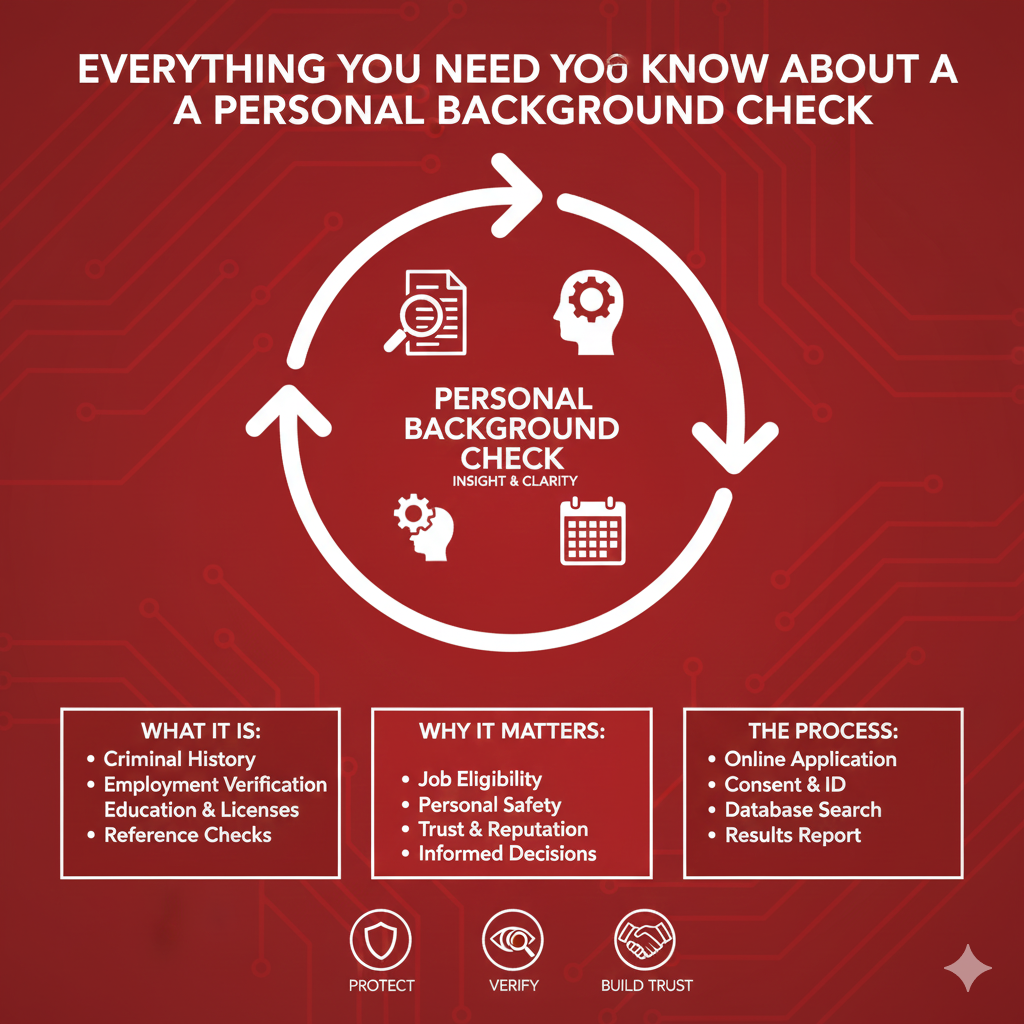
In today’s competitive environment, being proactive about your professional documentation is key. While we often think of background checks as something an employer requests, obtaining a personal background check one initiated by you is a powerful tool for self awareness, readiness, and career preparation. A personal background check allows you to see exactly what potential employers, landlords, or licensing bodies will see. It’s your chance to verify the accuracy of your records, understand your legal disclosures, and address any unexpected issues before they cause a delay or jeopardise an opportunity. As a leading accredited screening provider, Rapid Screening helps countless individuals take this crucial, empowering step toward career success. Understanding the Scope A personal background check is a voluntary application made by an individual to an accredited screening provider like Rapid Screening to obtain their own National Criminal History Check (NCHC). It is the identical document that an employer would receive, processed through the same official channels (the Australian Criminal Intelligence Commission, or ACIC), and subject to the same strict legal filtering rules, such as the Spent Convictions Schemes. Key Components of the Check When you initiate your own check, the results cover disclosable court outcomes and pending charges recorded across all Australian police jurisdictions. A comprehensive personal background check typically reveals: The check applies the relevant Spent Convictions legislation, so it filters older, less serious offences that meet the legal criteria and does not disclose them on the certificate. The Power of Proactivity The greatest benefit of conducting your own personal background check is the element of control. Instead of waiting for a potential employer to initiate the process and encountering an issue that you were unaware of, you can review your own record first. This allows you to: Three Reasons to Get Your Own Personal Background Check While employer initiated checks are standard, there are compelling reasons why more Australians are choosing to get a personal background check upfront. 1. Career Readiness and Reducing Delays In a competitive job market, speed is everything. Many employers require a police check as the final hurdle before a candidate can start. If you already have a current NCHC certificate, you can provide it immediately upon request, potentially shaving days or even weeks off the onboarding process. 2. Licensing and Regulatory Compliance A personal background check is often a necessary requirement for professional licensing or accreditation, separate from job applications. This includes: By initiating your own check, you ensure that you meet the regulatory requirement promptly, avoiding delays in starting your own business or obtaining the required credentials to practice. 3. Verification of Identity for the Gig Economy The rise of the gig economy means that individuals are increasingly responsible for their own compliance. Platforms and clients often require a recent check for onboarding. A current personal background check validates your identity and suitability across multiple contracts without needing to repeatedly pay for separate employer initiated checks, saving you time and money. The Process Obtaining your check through an accredited online provider like Rapid Screening is a simple, secure, and fully digital process designed for speed. Step 1: Online Application and Consent You begin by completing an online application form. This requires basic personal details and, critically, your signed consent allowing the accredited provider to submit your request to ACIC on your behalf. This digital process is much faster and more accurate than filling out a paper form. Step 2: Digital Identity Verification Instead of visiting a police station or post office, you use our secure online portal to verify your identity. This involves: This digital step is highly efficient and eliminates the need for any in person queues, making the personal background check application seamless. Step 3: Fast and Secure Results Once you submit your application, ACIC processes the check. For most applications with “No Disclosable Court Outcomes,” ACIC returns the results within hours or less than one business day. They then deliver your official certificate securely usually by email giving you an immediate, official copy of your personal background check. Interpreting Your Results: Disclosable vs. Spent One of the most valuable aspects of getting your own personal background check is learning how the Spent Convictions Scheme has been applied to your record. The Role of Spent Convictions The final certificate you receive only includes Disclosable Court Outcomes (DCOs). If an offence occurred, but it meets the criteria for being spent, that conviction will be legally filtered and will not appear on the certificate. This is a critical legal protection. If a record is not listed, you are legally entitled to act as if it never occurred for most employment purposes. Addressing Potential Disclosures If a DCO does appear on your personal background check, you have time to prepare. This could involve: Being able to hand the employer your police check and a prepared, honest explanation shows maturity and professionalism. Conclusion: Invest in Your Certainty In the modern Australian career landscape, being prepared means more than just having a polished resume. It means understanding your legal status and eliminating any potential roadblocks before they appear. Obtaining a personal background check is not just an administrative step; it is an investment in your peace of mind and your future employability. Whether you are preparing for a new job, renewing a licence, or simply seeking certainty about your personal history, initiating your own personal background check through a trusted and accredited provider ensures you have the official, accurate documentation in hand, ready to seize your next opportunity. Frequently Asked Questions (FAQs) Q) Why should I get a personal background check if my employer will just request one? The main advantage is control and speed. By having your own current check, you can verify its accuracy and address any potential issues proactively. Most importantly, you can provide the certificate instantly to an employer, avoiding the typical 1 to 2 day delay for an NDCO result and speeding up your onboarding time. Q) Is a check I order myself legally the same as one
Understanding What is a Spent Conviction in Australia?
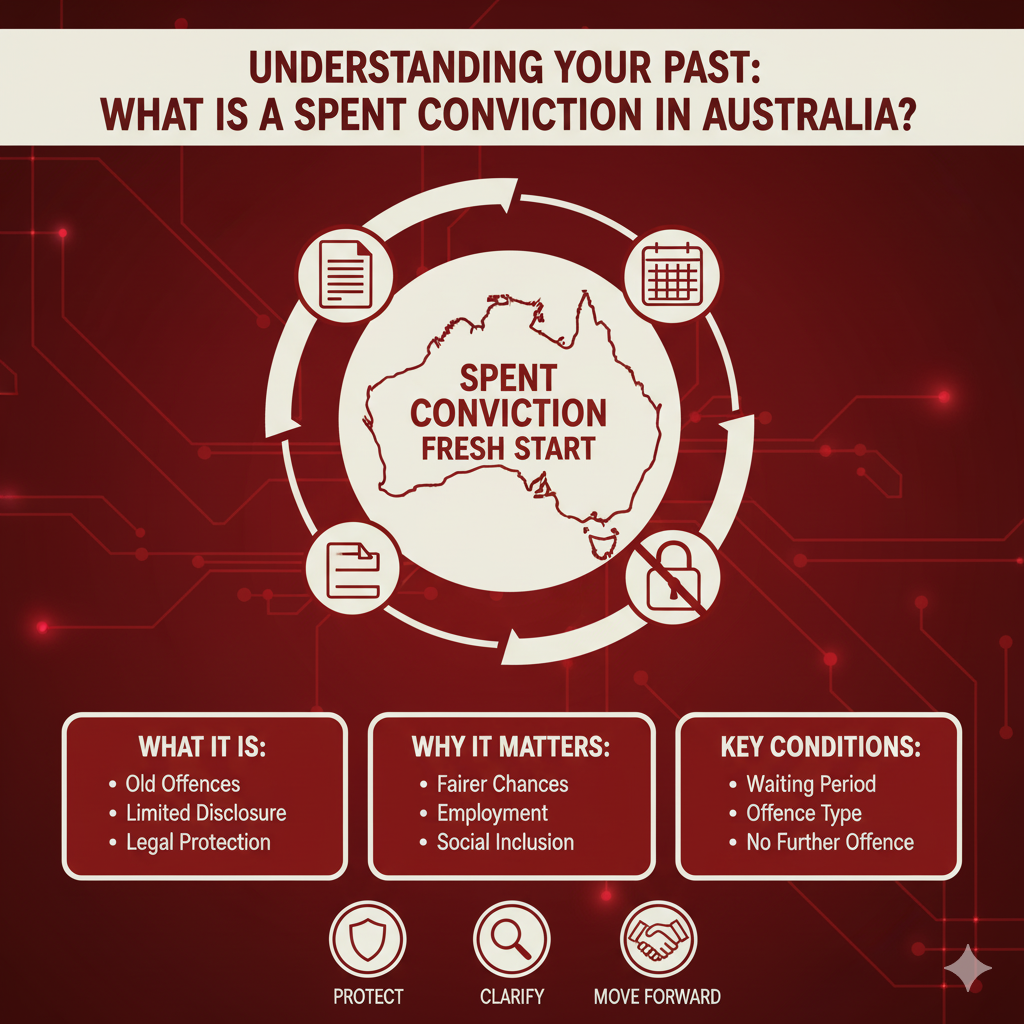
A criminal record frequently creates needless obstacles even after an obligation to society has been settled, making it feel like a life sentence. The Australian legal system introduced the Spent Convictions Scheme in recognition of this. This crucial foundation is intended to support rehabilitation and reintegration, guaranteeing that an individual is not consistently punished for past, small errors. Understanding what constitutes a spent conviction in Australia is crucial whether you’re seeking for a job, volunteering, or just want to know your rights surrounding your criminal history. At Rapid Screening, we issue the official Nationally Coordinated Criminal History Check (NCCHC), and our results automatically reflect the application of Spent Convictions laws. This guide breaks down this complex area, explaining how a conviction becomes ‘spent’ and when it can still be disclosed. The Spent Convictions Scheme Defined What is a spent conviction in Australia? It is a criminal conviction that, after a specified period of good behaviour, is removed from a person’s disclosable criminal record for most purposes. The Core Principle: Rehabilitation and Non Disclosure The primary goal of the scheme, established under the Crimes Act 1914 (Cth) and mirrored in State and Territory legislation, is to grant a right of non disclosure. The system works automatically: when a police check is processed, the police agencies apply the relevant Spent Convictions criteria to all records before issuing the final certificate. How a Conviction Becomes Spent For a conviction to be recognized as spent under the Commonwealth scheme (which broadly covers federal and some national offences), it must meet a tight set of conditions, primarily revolving around the gravity of the offence and a period of crime free behaviour. Key Criteria for a Conviction to be Spent The conditions vary slightly across Australia’s jurisdictions, but the following table summarises the general national requirements for a conviction to become spent: Criterion Adult Offender (Aged 18+) Juvenile Offender (Aged under 18) Prison Sentence Cannot have been sentenced to imprisonment for more than 30 months. Cannot have been sentenced to imprisonment for more than 30 months (or equivalent detention). Crime Free Waiting Period 10 years must have passed since the conviction. 5 years must have passed since the conviction. Behaviour The person must have committed no further offences during the waiting period. The person must have committed no further offences during the waiting period. If these conditions are met, the conviction is automatically treated as spent and will typically not appear on your Nationally Coordinated Criminal History Check (NCCHC). Offences That Can Never Be Spent Certain serious convictions are permanently excluded from the Spent Convictions Scheme due to the gravity of the crime. These offences will always be disclosed on a police check, regardless of the time elapsed: The exclusion of these offences acknowledges the principle that, for roles involving vulnerable persons or high public trust, full disclosure is required. When a Spent Conviction Can Still Be Disclosed Even if a conviction meets the criteria to be spent, there are statutory exceptions where the information can still be released on a police check. This is critical for sectors where public safety overrides the individual’s right to non disclosure. Statutory Exemptions for Disclosure These exemptions are typically linked to specific employment or licensing purposes where an employer has a legal obligation to access a fuller criminal history. Examples of purposes of what is a spent conviction in Australia, may still be disclosed include: If you apply for a police check for one of these exempt purposes, you will receive a certificate with a more comprehensive history, as the Spent Convictions Scheme does not apply to that particular check. The Role of the Police Check Provider When you apply for a check through Rapid Screening, we are merely the conduit. The actual application of what is a spent conviction in Australia is carried out by the Australian Police Agencies (who manage the NCCHC database) as they process your check. This ensures the process is compliant, fair, and legally sound. Not limiting the checks to TAS or QLD, we provide services in all Australia. Conclusion A key component of Australian legislation that strikes a balance between the requirement for public safety and the objective of treatment is the Spent Convictions Scheme. The program makes sure that a previous error does not represent an impassable barrier to work or social involvement by restricting the revelation of relatively small, older offenses. When you obtain your Nationally Coordinated Criminal History Check through Rapid Screening, you can be confident that the final certificate accurately reflects the legal position regarding your spent convictions. Our efficient service ensures you receive your compliant result quickly (70% in 2 to 4 hours), allowing you to move forward with your career or application with legal clarity. Frequently Asked Questions (FAQs) Q1) Do I have to tell an employer about a spent conviction? In general, no. You are legally entitled to non-disclosure if the sentence you received is expired. Unless the employer falls into an excluded category (such as working with children) and is legally entitled to obtain complete data, it is legal for an employee to deny or not admit the fact of a spent conviction. Q2) Is the Spent Convictions Scheme the same in every State and Territory? No, there are differences. Every Australian State and Territory (NSW, Victoria, WA, etc.) has its own unique laws (such as the Spent Convictions Act 2021 in Victoria) with somewhat distinct waiting periods and requirements, even if the Commonwealth Scheme covers federal offenses. Nonetheless, the fundamental tenet of non-disclosure for minor, older offenses is still the same nationwide. Q3) If my conviction is spent, why would it appear on my police check? It would only appear if your police check was requested for an exempt purpose (e.g., aged care, working with children, firearms licensing). In these high risk areas, the law dictates that the full criminal history, including spent convictions, must be disclosed to ensure public safety. Q4) If I am granted a pardon, is that the same as
Demystifying the NCC Right to Work Check in Australia

In the fast paced Australian labour market, compliance is non negotiable. For employers, ensuring every new hire is legally entitled to work in Australia is not just best practice, it’s a strict legal requirement enforced by the Department of Home Affairs. Failure to do a NCC Right to Work Check can result in severe penalties, including substantial fines and even imprisonment. This is where the NCC Right to Work Check becomes your essential risk management tool. While NCC (National Crime Check) is a term often used by service providers, the check itself is a critical verification process, often bundled with the police check, that confirms an individual’s current visa status and work conditions. At Rapid Screening, we make sure that this compliance phase is a natural part of our background screening process. This way, you can complete your legal requirements quickly and safely. The Legal Imperative: Why the NCC Right to Work Check is Mandatory Every employer in Australia is legally required to take reasonable steps to verify an employee’s legal right to work. This obligation applies to all staff, regardless of nationality, and lasts for the duration of their employment. Understanding the Two Pillars of Pre Employment Compliance Effective pre employment screening combines two distinct checks to fully vet a candidate: Check Type What it Verifies Purpose Legal Basis NCC Right to Work Check (VEVO) Current visa status, visa class, and specific work conditions (e.g., hours per week, specific employer). Compliance with immigration law. Migration Act 1958 NCCHC (Police Check) Criminal history and Disclosable Court Outcomes (DCOs). Suitability for the role and risk mitigation. ACIC Act 2017 It addresses the legality of the employment, while the police check (NCCHC) addresses the integrity of the employee. Both are essential components of comprehensive due diligence. Penalties for Non Compliance The Department of Home Affairs is stringent about work rights compliance. Employing a person who is not permitted to work, or who breaches their visa conditions, can lead to: The minimal cost and time required for a work check are a small price to pay to avoid these substantial legal and financial risks. Deconstructing the NCC Right to Work Check Process The foundation of the NCC check relies on accessing the government’s official visa database. The Visa Entitlement Verification Online (VEVO) System The VEVO system is the authoritative source for confirming a foreign national’s work rights. When you use the NCC Right to Work Check service through Rapid Screening, we instantly query the VEVO database. The result of the check provides clear evidence of compliance, which you must keep on file for the duration of the employment period and beyond. What the Check Reveals (and Doesn’t) Right to Work Status Required Verification Key Result Detail Australian Citizen Passport/Citizenship Certificate (via DVS). Unlimited Right to Work. New Zealand Citizen New Zealand Passport (via VEVO). Unlimited Right to Work (under Subclass 444 Visa). Foreign Visa Holder Passport/ImmiCard (via VEVO). Limited or Unlimited Work Rights; visa conditions and expiry date. The Value of Bundling: NCC Right to Work Check with NCCHC While the two checks serve different purposes, combining them into a single, seamless pre employment process offers the highest level of assurance and efficiency. Streamlining Pre Employment Screening with Rapid Screening At Rapid Screening, we allow clients to bundle the NCC check with the Nationally Coordinated Criminal History Check (NCCHC) in one easy application. Ongoing Monitoring and Renewal Regular monitoring of the NCC Right to Work Check is an ongoing legal duty for the employer. Conclusion The NCC Right to Work Check is a crucial legal safeguard for any Australian business. It goes beyond simply sighting a passport; it provides instant, verifiable confirmation of a candidate’s current entitlement to work in Australia, directly from the official VEVO database. Rapid Screening gives a complete, compliant, and quick way to screen job applicants by combining the NCC Right to Work Check with our fast NCCHC service. Secure your business, protect yourself from legal penalties, and hire with absolute confidence. Hire with complete confidence, safeguard your company, and avoid legal repercussions. Frequently Asked Questions (FAQs) Q) What is the official name of the NCC Right to Work Check? The legal mechanism used for the NCC Right to Work Check on visa holders is the Visa Entitlement Verification Online (VEVO) system, managed by the Department of Home Affairs. It verifies the visa status and work conditions of non citizens. Q) How often do I need to conduct an NCC Right to Work Check? You must conduct a check before an employee starts work. For Australian citizens or permanent residents, this initial check is generally sufficient. For temporary visa holders, you must conduct a new check before their current visa expires to ensure they have been granted a new visa with valid work conditions. Q) Does the NCC Right to Work Check replace the police check (NCCHC)? No. They are separate, mandatory checks. The NCC Right to Work Check confirms legal eligibility to work in Australia. The police check (NCCHC) confirms suitability for the role based on criminal history. Both are required for comprehensive due diligence. Q) Can a company be fined for hiring an Australian citizen without checking their work rights? While Australian citizens have an unlimited right to work, the Migration Act 1958 requires the employer to take reasonable steps to verify all workers. For citizens, this typically means sighting and verifying an Australian Passport, Citizenship Certificate, or Birth Certificate using the DVS, which our NCC Right to Work Check facilitates. Failure to do this may suggest a lack of “reasonable steps” if an issue ever arose.
Premium Background Screening Services in Australia

At Rapid Screening, we empower Australian businesses and individuals with fast, secure, and fully compliant background checks. Our services go far beyond the standard police check, providing a comprehensive risk management solution designed to protect your assets, your people, and your brand. Why Comprehensive Background Screening is Essential in Australia The reliance on a CV and an interview alone is no longer adequate due diligence. Thorough background screening services Australia are the bedrock of informed hiring, particularly in sectors dealing with vulnerable people, sensitive data, or financial transactions. The Imperative for Risk Mitigation Negligent hiring claims, workplace misconduct, and fraud all stem from inadequate screening practices. Partnering with a trusted provider of background screening services Australia is a proactive step in mitigating these risks. Protecting Your Brand and Reputation Hiring an individual with a history of serious misconduct, undisclosed directorships, or falsified qualifications can severely damage public trust in your organisation. Comprehensive screening ensures that every new hire aligns with your company’s values and ethical standards, thereby safeguarding your public reputation. Ensuring Regulatory Compliance Australia has stringent legal and regulatory requirements governing employment, especially in finance, aged care, childcare, and government sectors. Specialised background screening services Australia ensure your hiring process remains compliant with state and federal laws, including the Privacy Act and the various Spent Convictions Schemes. Failure to comply can result in substantial fines and legal exposure. Key Components of Premium Background Screening Services Australia A robust screening program involves a suite of checks tailored to the specific risk profile of the role. For Australian employers, this suite often extends well beyond the Nationally Coordinated Criminal History Check (NCCHC). Deep Dive: Beyond the National Police Check While the NCCHC is foundational, many roles require a more detailed level of scrutiny that verifies professional claims, financial stability, and eligibility to work. Nationally Coordinated Criminal History Check (NCCHC) As an ACIC-accredited body, Rapid Screening provides the official NCCHC, the most common form of a police check in Australia. This reveals Disclosable Court Outcomes (DCOs) based on strict national rules, providing essential information for assessing character. We specialise in rapidly processing these checks, with results for the majority of applications returned within hours. Right to Work & Identity Verification Confirming a candidate’s identity and legal right to work is mandatory for all employers. Our services include robust ID verification against government databases and VEVO (Visa Entitlement Verification Online) checks to ensure compliance with the Department of Home Affairs regulations. This prevents fines and legal complications associated with hiring individuals not legally entitled to work in Australia. Employment and Qualification Verification Integrity starts with truthfulness on a CV. Our verification services systematically confirm: Financial and Credit Checks For roles involving fiduciary responsibility, access to significant funds, or high-level executive duties, a financial background check is crucial. This can include searches of the National Personal Insolvency Index (bankruptcy checks), court records for civil litigation relating to financial matters, and adverse financial history reports. The Rapid Screening Advantage: Compliance, Speed, and Expertise Choosing the right partner for your background screening services Australia is critical. Rapid Screening distinguishes itself by blending cutting-edge technology with rigorous compliance standards and deep local expertise. Why Choose an ACIC-Accredited Provider? Accreditation by the Australian Criminal Intelligence Commission (ACIC) is the highest standard of authority and security for processing police checks in Australia as well as in SA and QLD. It confirms that the provider meets strict security, privacy, and regulatory requirements, ensuring that your data is handled with the utmost care and that the police check certificate is official and trusted. Streamlined, Secure Digital Experience We understand that time is money in recruitment. Our online platform provides a seamless, paperless experience for candidates and recruiters alike. From digital consent forms to rapid result delivery, our streamlined process accelerates your time-to-hire without compromising on the depth or security of the check. Accuracy and Fair Assessment We pride ourselves on providing clear, accurate results that adhere to all Australian privacy laws, including the application of Spent Convictions legislation. This ensures that hiring decisions are based on relevant information, supporting a fair and consistent assessment process for all applicants. Conclusion In a world where transparency and integrity are non-negotiable, investing in comprehensive background screening services Australia is simply smart business. It is the most effective way to verify a candidate’s trustworthiness, protect your workforce from internal and external threats, and uphold your legal obligations. Rapid Screening offers the speed, security, and expertise your organisation needs to hire with absolute confidence. Secure your business’s future by making informed decisions backed by our reliable, ACIC-accredited background checks. Frequently Asked Questions (FAQs) 1. Are background screening services mandatory in Australia? While not mandatory for all roles, comprehensive background screening is a legal or industry requirement for many sectors, particularly those involving children, vulnerable people, finance, and security. Even where not legally required, it is considered due diligence by employers to mitigate risks and protect the workplace. 2. How long does a typical background screening take? The turnaround time varies depending on the types of checks required. An NCCHC (National Police Check) is often processed within a few hours (around 70% of checks). However, checks requiring manual verification, such as international police checks, employment verification, or academic verification, can take several business days to a few weeks. 3. Can a candidate refuse a background check? Yes, a candidate is always free to refuse consent for a background check. However, in most professional contexts, the refusal will mean the employer cannot proceed with their application, as the inability to verify the candidate’s background poses an unacceptable risk to the organisation. 4. What is the difference between an NCCHC and a Working with Children Check (WWCC)? An NCCHC is a point-in-time check used for general employment and various purposes. A Working with Children Check (WWCC) is a separate, dedicated screening process conducted by state authorities specifically for child-related work. It is an ongoing clearance (usually for 5 years) that includes continuous monitoring of criminal history. If a
Best Practices For Conducting Reference Checks In Australia

Introduction: An Understanding About Reference Check The hiring of the right talent is among the most significant factors in forming a successful organisation. In Australia, where workplace culture and compliance standards are highly valued, reference checks form an integral part of the hiring process. Effective reference checks by the employer can thus provide valuable information about the candidate’s professional background, skills, and suitability for the role. This article explores guidelines on reference check the process of reference checking in Australia, and actionable steps that will allow for compliance while ensuring effectiveness in hiring. You may be employing in New South Wales, Victoria, or Tasmania, so these best practices will help inform your decisions and improve outcomes in recruitment. The Importance Of Reference Checks In Australia: It is a critical process of validating the qualification, reliability assessment, and good fit by doing a comprehensive reference check of a new employee in Australia before hiring him. This process assists the employer to take an informed decision while adhering to local rules and regulations. This guide covers the essentials, from reference check guidelines to practical tips for ensuring the Australian reference checking process is both effective and legally sound. What Is A Reference Check: A reference check is contacting an applicant’s former employers, colleagues, or other professional contacts to verify their work history, skills, and overall performance. The great power of reference checks is that they can give a more accurate insight into the candidate beyond resumes or interviews. Why Are reference Checks Crucial In Australia: Minimize The Risk Of Hiring: Employers can discover inconsistencies in a candidate’s claims. Cultural Fit Assessment: Know how the candidate relates to teams, which is very important in places like New South Wales, Victoria, or Tasmania. Laws Compliance: The laws on anti-discrimination and privacy must be respected by employers in Australia in the process. Guidelines For Reference Check In Australia: Obtaining Consent: Ensure you get a signed consent form from the candidate to contact their references Job-Relevant Questions: Emphasize questions oriented towards job-related activities and competencies. Maintain Confidentiality: Avoid sharing sensitive information obtained during the reference check. Document Findings: Record all responses to maintain transparency and consistency in hiring decisions. The Australian Reference Checking Process: The Australian reference checking process typically involves these key steps: Collecting Consent: Before starting, secure permission from the candidate to contact their referees. This is not only ethical but also a legal requirement under Australian privacy laws. Planning Questions: Develop a formalized questionnaire that addresses performance, reliability, and job appropriateness. Ensure no too personal or discriminatory questions. Referee Contact: Involve telephone calls or video conferences to communicate with referees in detail. Email communication is also effective to save time. Checking Information: Compare them with the specific requirements of the job. It will be aligned with the candidate’s assertion. Best Practices for Reference Checks in Australia: Design Questions Based On Job Description: Formulate particular questions related to the position. Here are a few examples: How did the candidate behave under pressure? Can you illustrate leadership abilities? Select Suitable Referees: Ask the candidates to provide professional contacts, for example, managers or supervisors, and not personal acquaintances Open-Ended Questions: These provoke elaborative answers: “Can you elaborate on the strengths and weaknesses of the candidate?” Compare Answers from Several References: Compare answers to verify consistency and accuracy. Record Keeping: Document all key points from each reference check for accountability and future audits. Mistakes Not To Make When Conducting Reference Check: Do Not Omit Reference Checks: Never hire based solely on interviews or resumes. Ask the Wrong Questions: Focus on the candidate’s professional qualifications and do not ask about age, race, or personal life. Fail to Verify Authenticity of Referee: Verify that the referee actually works with the candidate and is not a friend of the candidate trying to act like a professional contact. Australian Legal Considerations Over Reference Checks: Privacy Laws: Australia’s Privacy Act 1988 states that employers have to manage personal information in an appropriate manner. Ensure candidate data is secure and used only for hiring purposes. Anti-Discrimination Laws: Avoid every discriminatory practice over reference checks, making it fair to everyone. Fair Work Principles: Comply with the Fair Work Act to ensure ethical and equitable hiring practices, particularly in states like New South Wales, Victoria, and Tasmania where enforcement is strict. How To Conduct Reference Checks In Different Australian States: While the overarching process remains consistent, certain states have unique considerations. New South Wales: Employers must adhere to stringent anti-discrimination and privacy laws when conducting reference checks. Victoria: Focus on cultural fit and adaptability because of the mixed workforce in the country. Tasmania: Smaller organisations tend to need more customized checks since most employers know one another. Australian employers can make their hiring processes better and successful in the long run by using the power of reference checks Behavioral Evaluations At Interviews: Interviewers are now adding behavioral questions to check the interpersonal skills and cultural fit of the candidates. Questions like “How did the candidate handle conflicts at work?” give a better insight into their professional behavior. Emphasis on Diversity and Inclusion: As is the case in Australian workplaces, reference checks are now emphasizing diversity and inclusion. Referees are often asked if the candidate contributed to creating an inclusive and collaborative environment. Dealing With Negative Feedback In Reference Checks: If a referee provides negative or mixed feedback about a candidate: Contextualize The Feedback: Ask follow-up questions to determine whether issues were isolated incidences or part of a trend. For example, “Could you explain the context of that situation?” Crosscheck With Other Referees: Reach out to additional referees and cross-check the information. Re-communicate With The Candidate: Discuss with the candidate any concerns raised as appropriate to get their perspective on the matter. Technological Tools For Reference Checking: Automated Platforms: Tools like Referoo and Xref make it easy and smooth to check on references. Applicant Tracking Systems (ATS): Many ATS platforms incorporate reference check capabilities, making data collection and management smooth. Tips For
Police Clearance Certificate: Important Guide for Employment & Travel
Introduction: A Police Clearance Certificate A police clearance certificate is an official document that is issued by the police or any other government-authorized body to show if a particular individual is free of a criminal record. It is widely prescribed for numerous personal, professional, and legal purposes. It is required for job purposes, visa applications, or traveling abroad. In most cases, this becomes a mandate to help ensure one’s trustworthiness and transparency. So let’s dive in! and learn what is needed to know before applying PCC. Why Does One Need A Police Clearance Certificate: Police Clearance Certificate Proves your Good Conduct to your Employers, Governments, or other Institutions Employment Cases: It is Most Useful in employment cases, for example when an employer needs a PCC to recruit with a clean record. It mostly occurs when work involves children, sensitive information, or financial matters. Travel and Immigration: A PCC is required for an Australia visa, and sometimes they also demand a permanent residency. The authorities ensure that the candidate has all moral and legal norms for being accepted at the destination place. Adoption and Court Litigations: Even in adoptions and other lawsuits, a police clearance certificate must be presented for it to be recognized as a formality. How Is Police Clearance Certificate Issued In Australia: An Australia Police Clearance Certificate bears a photocopy that itself is sealed in the envelope, and there is an address of the person issued with it. Police Clearance Certificate in Australia, it is issued to the individual at the time of employment, travel, or immigration purposes. The state and territory are a general overview of the requirements varying. Police Clearance Certificate NSW: PCCs of NSW is also often issued for immigration purposes, in Australia broadly used in healthcare, education, and security-related careers in Australia. Police Clearance Certificate QLD: People living in Queensland would need it for the most part only for the same reasons any of their eastern fellow residents need it, probably at an application or job that requires dealing with vulnerable individuals. Police Clearance Certificate Western Australia: In WA, especially around Perth, there may be few jobs, in government as well as in private sectors, for which the employee needs one of such Police Clearance Certificates. Police Clearance Certificate Victoria: The Victorian people use their PCC typically in job opportunity and traveling or any case to meet its visa requirements Uses of Police Clearance Certificate Job Opportunity Mainly, a police clearance certificate is employed in the job sector. Many employers look for such a document at the time of hiring, primarily due to such posts that make one deal with children or old persons. Safety and Security: Employers are likely to seek security and peace in the belief of a safe environment for employees as well as the clients they provide. By possessing a police clearance certificate, employers will have a means to ensure the risks surrounding the induction of a certain person into the workplace. Legal Compulsion: Employee background checks are legally enforced upon several employees in some industries. This is particularly the case in the healthcare, education, and finance industries. Trust and Reputation: A company that bases its actions on safety and integrity as the guiding forces behind it would, indeed, reach its goal of customer relationships and an unblemished record. The police clearance certificates prove that these characteristics are of no less worth to the very same agencies. Traveling Requirements A police clearance certificate is always required for traveling purposes, most importantly at the time of issuing visas. Most countries request an applicant to present a police clearance certificate in addition to all other requirements set for obtaining a visa. How A Police Clearance Certificate Helps When Travelling Visa Approvals: Such is why countries even request a police clearance certificate. This probably is for as much reassurance as they can achieve to ensure they get no person who has any sort of a past criminal history within their shores to commit acts detrimental to public safety. Work Abroad or Study Abroad : A police clearance certificate can come in handy if you are planning to work or study elsewhere. Usually, it is applied when one is targeting strict immigration areas. Assurance of Safety: A police clearance certificate can help give you safety assurance as you travel since you know that you have satisfied the legal requirements for entry into another country. How To Apply For Police Clearance Certificate: The application procedures to get PCC vary with the certificate they prefer. And so, step by step are the procedures one has to make when applying for a Police certificate. Clearance Certificate in Australia Step 1: Identify your Requirements Check if you need a national police clearance Certificate. The type of PCC is usually determined by the employer or visa issuing authority. Step 2: Collect the Necessary Documents You will need – Identity, which might be a passport, driver’s license, or birth certificate. – Details about your address for the last five years. – -Completed application form either online or in person. Step 3: Apply Apply for a National Police Clearance Certificate using an accredited agency or via the state police website. A few examples are: – Police Clearance Certificate NSW: Apply with the =NSW Police Force or with accredited providers. – Police Clearance Certificate Perth: Western Australia residents can apply at the WA Police website or from the authorized agencies. – Application in Person: Visit your local police station or service center to submit your application. Step 4: Pay the Fee The price of PCC , it is within $24 to $72. Extra cost may apply for expedited processing. Step 5: Wait for Processing The time taken by processing depends upon the issuing authority and type of certificate requested. Normally, it will take 3-4 hours. How To Get Police Clearance Certificate For Australian Immigration It is a sure thing that the moment you are about to immigrate to Australia, you are sure to be demanded to submit that police clearance certificate.
Digital Footprint Check: How Employers Screen Your Online Presence (2026)
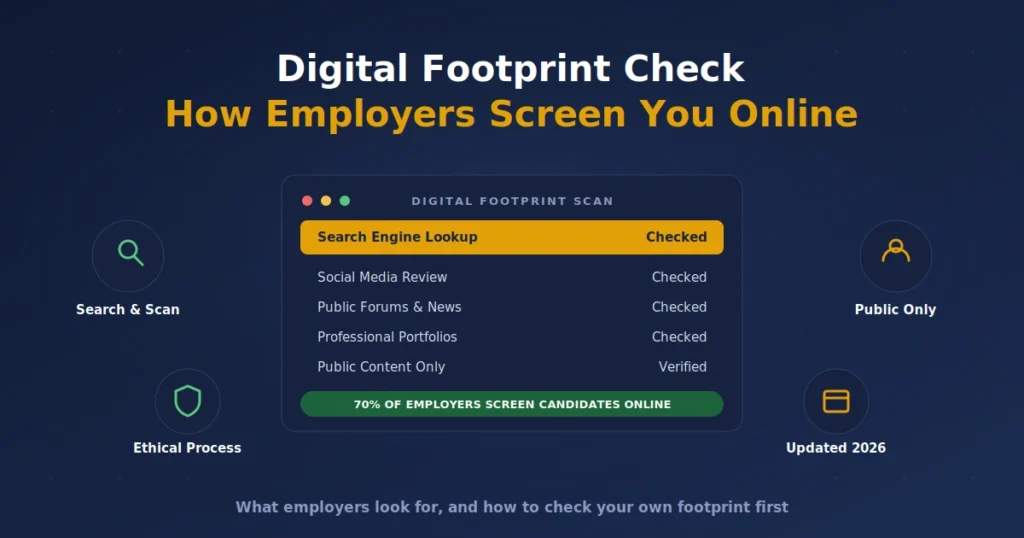
Last updated:August 13, 2026 A digital footprint check is when an employer reviews a candidate’s publicly available online activity, such as social media, professional profiles, and public mentions, to inform a hiring decision. Surveys have found up to 70% of employers screen candidates on social media before hiring. Done properly, employers should only review public content, obtain consent where required, and apply the check consistently across all candidates. Every comment, like, and post creates a digital footprint in the modern hyperconnected world, making digital footprints an effective tool for companies. When evaluating the fit of an applicant for a position, compatibility with a business’s principles, and even possible risk considerations, these footprints are a compilation of information produced by a person’s internet activity that can be quite helpful. Innovative companies are accepting the potential of digital footprints to boost recruitment, strengthen their own safety, and preserve company reputation, while some organisations continue to concentrate on conventional background checks. What Are Digital Footprints? Digital footprints are the traces individuals leave behind when they use the internet. This includes: Each of these elements contributes to an individual’s online persona, offering insights into their behaviour, interests, professionalism, and potential risk factors. How Do Employers Check Your Digital Footprint? Method What It’s Used For Search engine lookup A simple Google search of your name to see what’s publicly indexed Social media review LinkedIn for professional history, and public Facebook, Instagram, X, or TikTok content for conduct and tone Public forums & comments Reddit threads, blog comments, or public discussion posts under your name News & media mentions Any public press coverage, interviews, or articles that mention you Professional portfolios Personal websites, GitHub, Behance, or other portfolio platforms relevant to your field Screening software Some employers use third-party tools to compile public results, rather than manual searching 70% of employers report using social media to screen job candidates before hiring, according to a widely-cited CareerBuilder survey. While that figure comes from a US study rather than Australian-specific data, it reflects a consistent global trend across multiple years of similar research. Can You Check Your Own Digital Footprint? Yes, and it’s worth doing before you apply for a job, not after an employer already has. According to Australia’s eSafety Commissioner, checking and managing your own digital footprint is straightforward: For a full walkthrough, see the eSafety Commissioner’s guide to managing your digital footprint. If you’d rather use a dedicated tool, free services like WhatsMyName can check which platforms your username or email appears on. Comparison Table – Digital Footprint Check vs. Background Check Digital Footprint Check Background Check Covers Public online activity: social media, forums, portfolios, news mentions Verifiable records: criminal history, employment history, qualifications Source of data Publicly available internet content Official databases and records (e.g. ACIC, employers, institutions) Result type Subjective insight into character and conduct Verified, documented facts Typical cost Often free or low-cost (manual or basic tools) Paid, per-check pricing Best used Alongside a background check, not instead of one As the primary compliance and verification step The Importance of Digital Footprints in Hiring Identifying Red Flags Through Social Media Learning about the applicant’s social media profile is one of the main advantages of analysing digital footprints. Social media accounts can expose trends of unpleasant or improper behaviour, divisive viewpoints, or unprofessional behaviour that could damage the reputation of your company. Assessing Online Reputation and Professionalism An applicant who frequently posts offensive material, for example, might not represent the welcoming and courteous atmosphere your business seeks to promote. By examining digital trails, companies may prevent possible harm to their reputation. In Victoria, it is essential to hire employees to the standard set for hiring, and for that, you can use Victoria police checks through Rapid Screening. Tip: Platforms like LinkedIn, Twitter, and even Reddit can give employers a peek into how candidates conduct themselves in digital communities, often a reflection of their real-world professionalism. “Right Fit, Right Person”: Aligning Values Finding someone with the right skills is only part of the puzzle. The real challenge is identifying candidates who share your company’s values and culture. Reviewing a potential hire’s digital footprint allows employers to better understand personal interests, communication style, and ethical viewpoints. This insight can help answer a crucial question: Is this person truly the right fit for our team? Partnering with a screening provider like Rapid Screening’s Employee Background Checks can help verify digital behaviour and ensure values alignment, all while respecting privacy laws and ethical standards. Verifying Qualifications Through Digital Presence In an age where nearly every professional maintains some form of online profile, evaluating a candidate’s digital footprint can offer additional confirmation of their qualifications, career history, and achievements. The Role of Professional Networks and Portfolios LinkedIn profiles, personal websites, online resumes, and digital portfolios serve as transparent records of career progression and thought leadership. Comparing a resume to what’s published online helps verify consistency and honesty, two qualities every employer values. If a business is in New South Wales, then our NSW police check can be combined for better security. Pro Tip: Look for discrepancies in job titles, achievements, or employment gaps when reviewing both the resume and digital footprint. These inconsistencies could indicate potential issues. Preventing Insider Threats Through Digital Insights While most employees act in good faith, there are exceptions. Insider threats, employees who misuse access for malicious purposes, represent a significant risk, especially in data-sensitive industries. Monitoring digital footprints can help detect early signs of risk, such as: Early identification allows companies to take preventive action, protecting sensitive data and maintaining operational integrity. Rapid Screening’s Identity Verification Services can provide deeper insights into individuals’ online identities and potential red flags. Maintaining Company Reputation Why a Clean Digital Footprint Matters Reputation is a company’s most valuable intangible asset. It influences customer trust, partner relationships, investor confidence, and employee morale. Hiring someone with a questionable online history, especially in leadership roles, can bring unwanted media attention and customer backlash. Conducting thorough reviews of digital
Why Background Checks Are Vital for Business: Best Guide
Introduction: Background Verification Check: Background checks become essential in a competitive and fast-paced business environment. One mistake can lead to reputational damage, legal disputes, or even financial loss. It is through these background checks that businesses help assess potential employees by confirming the facts of their qualifications, experience, and conduct against organisational requirements. This blog explores the intricacies of what a background verification check is, how it is conducted, and how important it is in terms of maintaining trust and compliance. #What Is A Background Verification Check: Background verification check is the process used by companies to confirm details of the applicant presented in the process of recruitment. It includes: – Employment history verification. – Verification of educational qualifications. – Criminal record checks. – Credit history and other personal information evaluation. This step establishes the credibility, reliability, and suitability of the candidate. Importance of Detailed Background Checks: Detailed checks are not just a tick in the box. Companies adhere to the regulations, comply with legislation, and protect their workplace. Comprehensive background verification ensures accuracy and reduces the risks of hiring non-verified individuals. Background Verification Checks: 1. Verification of Academic Records: This verification check will ensure that the educational qualifications appearing on a candidate’s resume are authentic. Candidates may exaggerate or lie about their qualifications, which can prove to be fatal if not caught. 2. Employment Verification Check: The most crucial check would be the candidate’s work history. Employment verification background checks ensure the job title, tenure, reasons for leaving, and in some cases, performance. 3. Criminal Records Check: This check is essential for roles that require sensitive information, finance, or customer interaction. It identifies any previous criminal activity that may jeopardize the individual’s suitability for the position. 4. Address Verification: Ensuring that the address provided by the candidate is correct can assist businesses in locating employees if necessary, particularly for legal reasons. Benefits Of Background Verification Checks: Background checks enhance workplace security as they reveal people who might have been violent or engaged in criminal behavior. Better Staff Retention: Recruiting quality staff can also reduce turnover, enhancing employee satisfaction. Increased Productivity: Once the employees are qualified and dependable, productivity improves, and efficiency also increases, thus helping the entire organization. Cost Savings: Even though a background check can sometimes have a slight upfront cost, they save money in the long run because fewer turnovers and the associated legal hassles will result. A Healthy Work Environment: Employing the staff that knows your company’s culture and values creates a healthy workplace culture. Background Verification Check Process: The Background verification check procedure normally involves; Step One: Consent from Candidate: The candidate is required to have written consent. It ensures that the process is ethical and legal. Step 2: Data Collection: Companies collect information such as previous employers, educational institutions, and personal identifiers. Step 3: Data Verification: Specialized agencies or in-house HR teams verify the information given against official records, such as university databases or government criminal registries. Step 4: Reporting and analysis: Such data is collated into a highly comprehensive report that points out any anomalies or warning signals so that employers can address this aspect of decision-making. Why Background Verification Checks Are The Need Of The Hour: 1. Safe Workplace Creation: Employees are key determinants of workplace culture and, therefore, background checks help to filter out certain individuals having an improper behavior track. Thus, such background checks ensure a safe and professional workplace. 2. Relevance of proper background screening: Thorough background checks will minimize the occurrence of hiring individuals with false credentials or who have hidden their criminal records. This ensures business integrity and cements the trust of stakeholders. 3. Role of Background Checks in Complying with Industry Compliance Requirements: Some industries, like health and finance, require strict adherence to compliance regulations which play a role of background checks in meeting industries. Thorough employee screening results in compliance, which will help ward off the legal implications arising from non-compliance. 4. Controlling Financial Risks: This leads to costly hiring mistakes, for instance, fraudsters or people who don’t perform to expectation. These risks are highly minimized with thorough verification background checks. 5. Enhanced Branding: A hiring mistake can quickly deteriorate a company’s brand. The application of strict verification background checks assures that the business commits to the best, thereby improving employer branding. How Technology Is Changing Background Verification Check: Process Automatic Identity Verification AI-based technologies validate government IDs in minutes. Machine Learning for Warning Signs. Algorithms pick up patterns on job gaps, credential mismatches, or odd behavior. Candidates can upload documents and check the status of verification through mobile applications, thereby making the entire process more streamlined. Integration with HR platforms. Verification tools are integrated with popular HR software such as SAP and Workday to streamline the hiring process. Challenges In Background Verification Checks: Although these checks are important, they come with their problems and limitations: 1. Incomplete or incorrect information: Candidates might unintentionally give wrong information, which delays the verification process. 2. Privacy Issues: A proper balance between a rigorous check and respecting a candidate’s privacy calls for strict ethical codes. 3. Cost and Time Barriers: For small-scale businesses, comprehensive checks prove to be too costly. Then again, the returns in the long run always outweigh the drawbacks. Background Verification Checks Best Practices: 1. Partner with Trustworthy Organizations: Screening by trustworthy background screening companies ensures that results are accurate and comply with regulations. 2. Tailor the checks to the job: Different jobs require different levels of scrutiny. For instance, a financial position may call for a credit check, but an entry-level position may not. 3. Train HR: Proper training of HR on how to deal with and interpret verification data is essential. 4. Update policies periodically: Ensure that your background verification policies are up to date with the current laws and industry practices. Consequences Of Not Doing Background Checks: Failure to conduct proper background checks can lead to severe consequences, such as: – Increased Legal Risks: Hiring individuals with a history of fraud
Ensure Legal Hiring in Australia with Visa Entitlement Check

Hire in Australia with the help of Rapid Screening Services Avoiding non-compliance with the law but hiring the right employees means more than just reviewing the skills and experience any job candidate may have. Employers can hire only individuals legally permitted to work in Australia. The Visa and Work Entitlement Check at Rapid Screening Services helps businesses stay on top of immigration law compliance while hiring. That is why it is particularly significant for businesses in Victoria, New South Wales (NSW), and Queensland: there are plenty of industries comprising international and temporary visa holders. What Is a Visa and Work Entitlement Check? A procedure in Australia whereby the employer verifies the visa status and the work rights of a prospective employee. This is essential in ensuring that an organization employs only people who are legally authorized to work in Australia. Rapid Screening Services provide access to the Visa Entitlement Verification Online system under the Department of Home Affairs. Through the service, employers conduct checks on visa details and verify the terms of work for any employee who is not an Australian citizen. Using Rapid Screening Services ensures that all the employees working for the company and specifically the temporary visa holders are on valid work entitlements and hence not violating the immigration law. Why Do You Need Visa and Work Entitlement Checks? Checks, such as those offered by Rapid Screening, are needed for the following reasons: Ensure Legal Employment With Rapid Screening Services, employers can rest assured that the employees recruited have proper work rights in Australia. Therefore, the verification on this issue allows for avoiding the appointment of employees whose visas are old or restricted in any way concerning work entitlements; hence, avoiding or limiting the risk of receiving penalties. Involvement of a person not legally allowed to work may incur significant fines. The fines may reach AUD 315,000 and, for severe cases, lead to imprisonment. With Rapid Screening, businesses avoid such fines by ensuring checks on visa and work entitlements quickly and with precision. Industry Compliance This would apply more especially to such sectors as health, building, and education, where both immigration laws and industry-specific requirements exist. Rapid Screening Services ensures that operations in Victoria, NSW, and Queensland will remain in line with both the rules of the industry and the law. Reputation Management A reputation is an integral component, at least for businesses operating in regulated sectors. However, through Rapid Screening Services, these companies can ensure remaining compliant and not subjecting themselves to reputational risk from unlawful employment activities. How Quick Check Carries out Visa and Work Entitlement Checks A firm into full compliance with the law while exerting less of its time and effort. Here’s how they do it: Step 1: Collecting Employee Information The verification check begins with a simple information process where employers are required to provide information about the prospective employee. Such information may include a visa number or even a passport number. It is on such information that Rapid Screening Services conducts the check through the VEVO system. Step 2: Logging onto the VEVO System Rapid Screening immediately checks VEVO, where they ascertain the visa status and conditions, specifically that there are no restraints imposed on their work rights. This has greatly benefited industries in Queensland and NSW, where most of those employed are visa holders. Step 3: Assessing Work Conditions A few visas restrict work entitlement, for instance, a student visa or work holiday visa. Rapid Screening reports the work conditions in detail and, hence, the business will be compliant with legal limitations. Step 4: Documentation and Reporting Once the checks are completed, Rapid Screening Services provides a comprehensive report, which businesses can retain for future audits or reviews. Such documentation helps employers maintain records of their own compliance with immigration laws. Why Rapid Screening Services? Rapid Screening is Australia’s premier screening service company. The service provided by Rapid Screening in its Visa and Work Entitlement Check is most responsive to key concerns regarding speed and efficiency: Rapid Screening makes carrying out entitlement checks easier for businesses and saves the time of each business by facilitating more streamlined verification. This especially cuts across to bigger industries that hire many employees, like in Victoria healthcare or in Queensland tourism. Rapid Screening Services offers the most accurate check on the market, ensuring that the risk your organization might incur in hiring restricted or expired visa individuals will remain at bay. Their services keep NSW, Victoria, and Queensland-based businesses compliant with both state and federal laws. Stay Updated on Legal Trends Immigration laws are always under amendment, and keeping updated may seem a little bit challenging for businesses. The team at Rapid Screening Services keeps track of all amendments and always provides their clients with the latest and compliant Visa and Work Entitlement Check. Visa and Work Entitlement Checks by Region While Entitlement Checks are mandatory throughout Australia, there are certain regions that are more dependent on visa holders. Here is where Rapid Screening alters its services according to region. In Victoria Medical and educational sectors rely on temporary visa holders, as in the case of Melbourne, Victoria. Rapid Screening provides tailor-made visa and work entitlement Checks ensuring that hospitals, schools, and other employers meet individual requirements of sector-specific requirements. In New South Wales NSW is the headquarters of Australia’s largest city, Sydney and some sectors like hospitality, retail, and education usually have dealings with temporary visa holders. Rapid Screening Services is there to assist businesses in NSW visa and work meet their immigration laws by offering timely checks for workers locally and internationally. In Queensland International workers are very important to the tourism and construction industries in Queensland, particularly within Brisbane and the Gold Coast. Rapid Screening ensures that businesses in Queensland have a correctly compliant workforce, providing visa and work entitlement that conform to state and federal requirements. Industries Depending on Visa and Work Entitlement Checks While all industries depend on these checks, some industries rely highly on this service: Health